Charging stations in theme parks: improving the visitor experience all day long
A day in a theme park now looks like a digital marathon. The smartphone acts as the park's app for real-time waiting times, as a digital ticket to get on rides, as a camera to capture the highlights, as a cashless payment method in the restaurants and as a GPS for finding your way around a site that can cover several dozen hectares. By lunchtime or early afternoon, a significant share of visitors is down to a critical battery level, which jeopardises the rest of their experience. Installing a charging station dedicated to phones and small portable electronic devices (let us make clear from the outset that this is not about charging points for electric vehicles, but about mobile charging solutions for smartphones) has become a concrete lever for improving customer satisfaction and extending time spent on site. This guide details the benefits, the types of station available, the installation criteria and the cost options for effectively equipping a leisure park.
Why equip a theme park with a phone charging station
The value of this type of equipment goes well beyond simple courtesy. It fits directly into the commercial and operational strategy of a leisure site.
Improving the visitor experience over long days
The average length of a visit to a French theme park is between six and nine hours, well beyond the real battery life of a heavily used smartphone. Without an accessible charging solution, visitors ration their use, take fewer photos, leave queues to look for a socket, or cut their day short. A self-service charging station removes this friction point, which mechanically improves the overall perception of the park and lengthens actual time on site.
Creating a touchpoint and collecting customer data
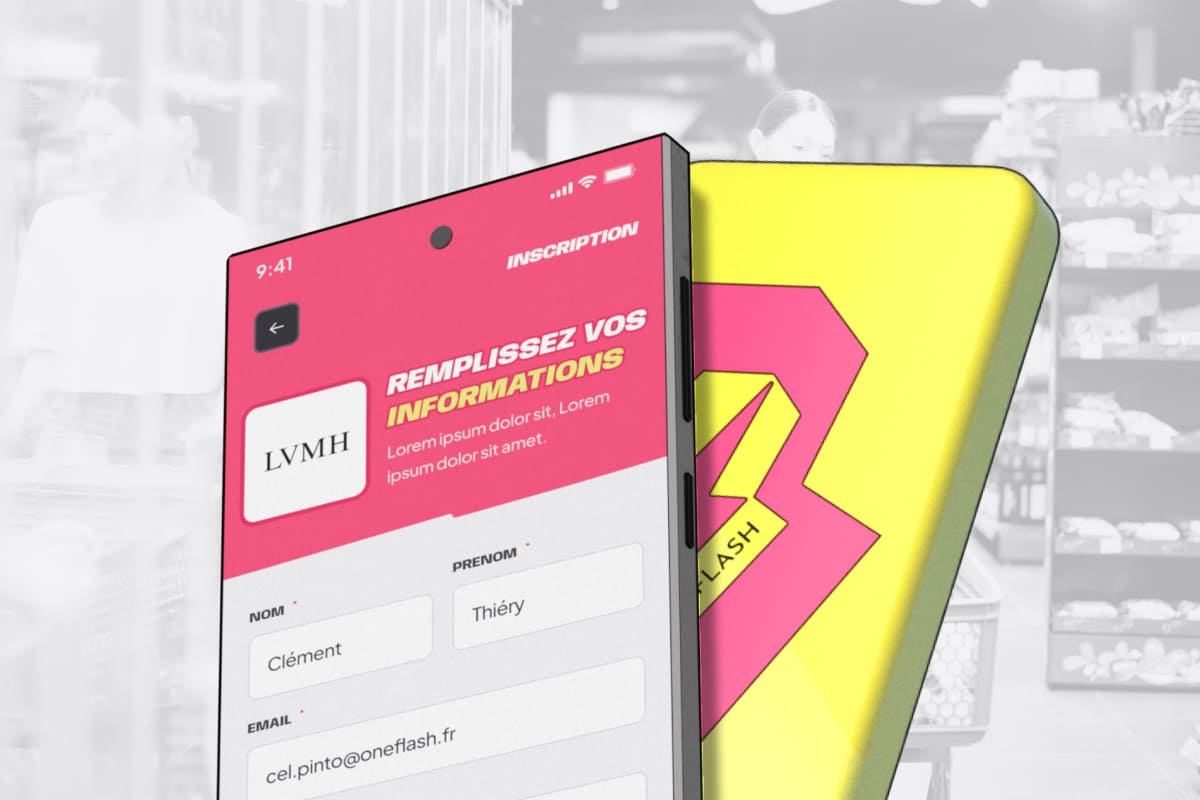
Beyond its immediate usefulness, the charging station is a valuable touchpoint with the customer. The latest models include a touch screen that lets you connect the station to the park's loyalty programme, offer free charging in exchange for signing up to the newsletter, or gather instant feedback on the experience just had. This collection of qualified data, with the visitor's explicit consent, enriches customer knowledge and feeds later marketing campaigns. At a leisure complex receiving several hundred thousand visitors a year, the cumulative effect becomes significant.
Making the station an information hotspot
Well positioned, the charging station can also act as an information point. It naturally attracts visitors looking for services, and its signage can relay waiting times for neighbouring rides, show times, current promotions in the shop or one-off events. This dual function turns a utility item into a genuine strategic point for animating the park.
Which type of charging station to choose for a theme park
Not all charging solutions are equal. Choosing the right equipment depends on the profile of the park and the journey expected for visitors.
Charging locker or portable power bank station?
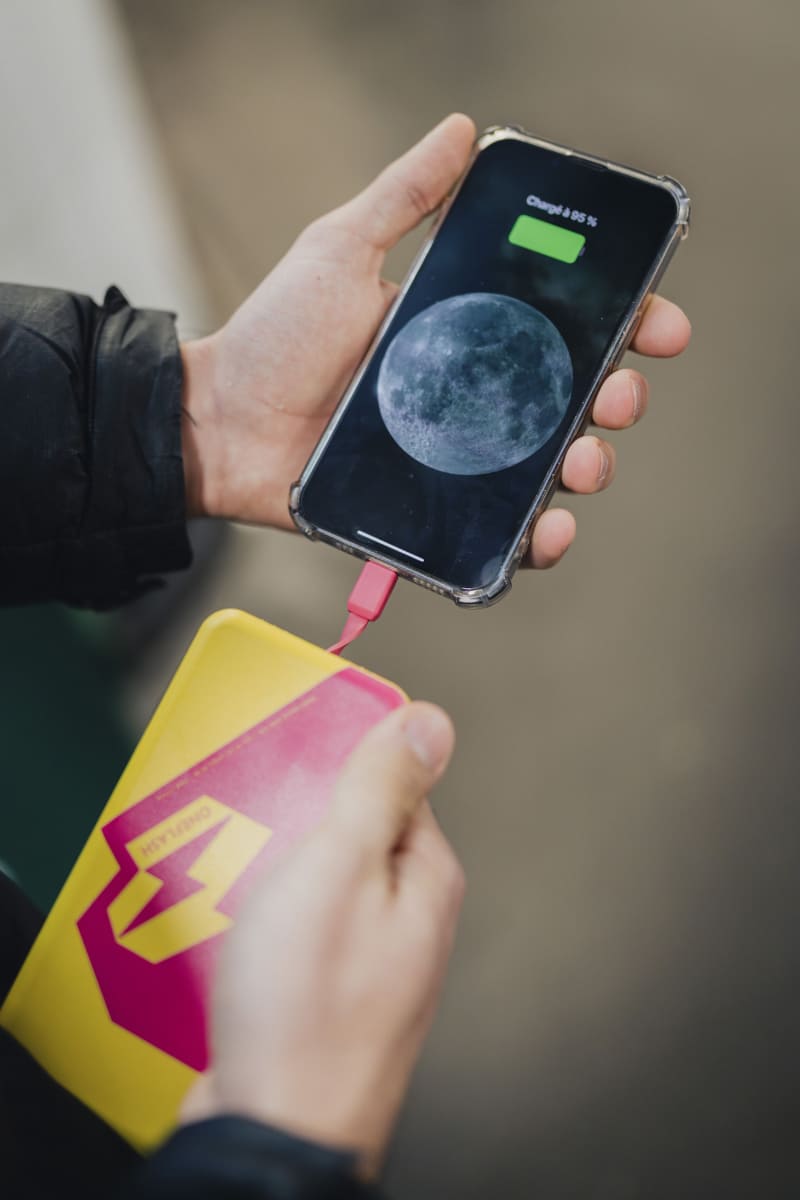
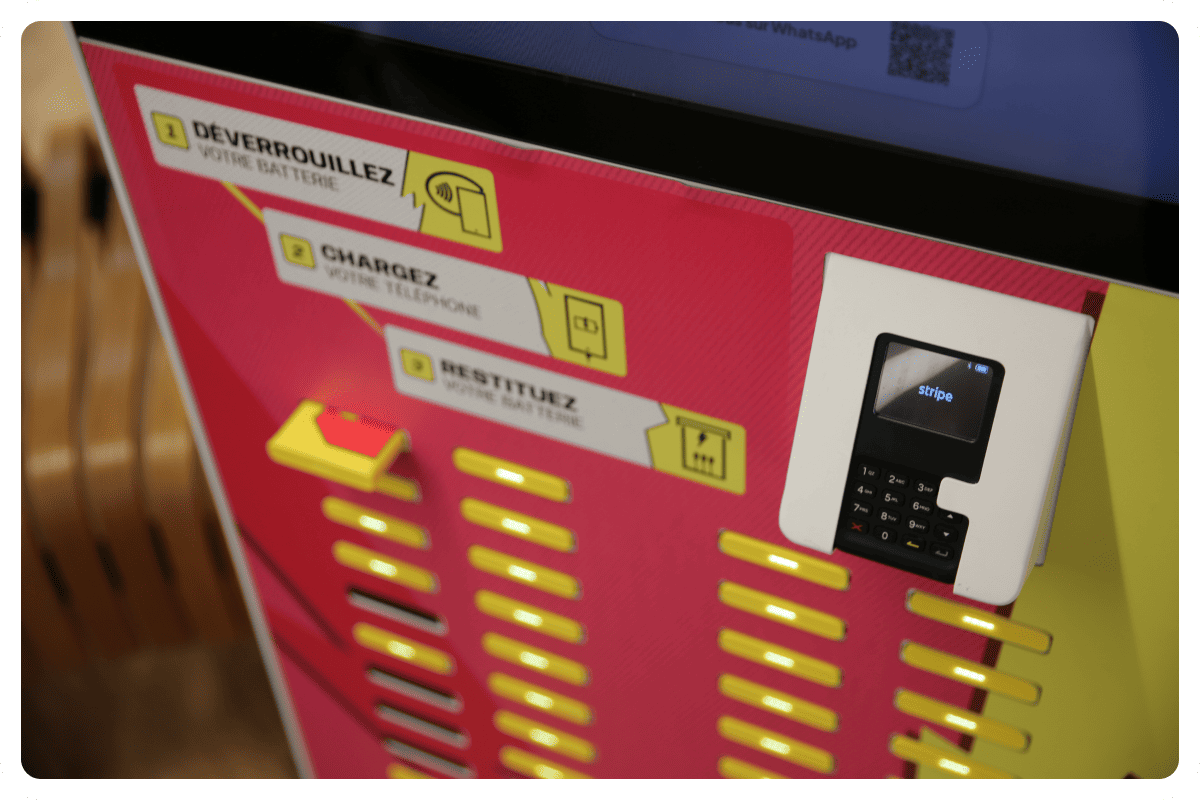
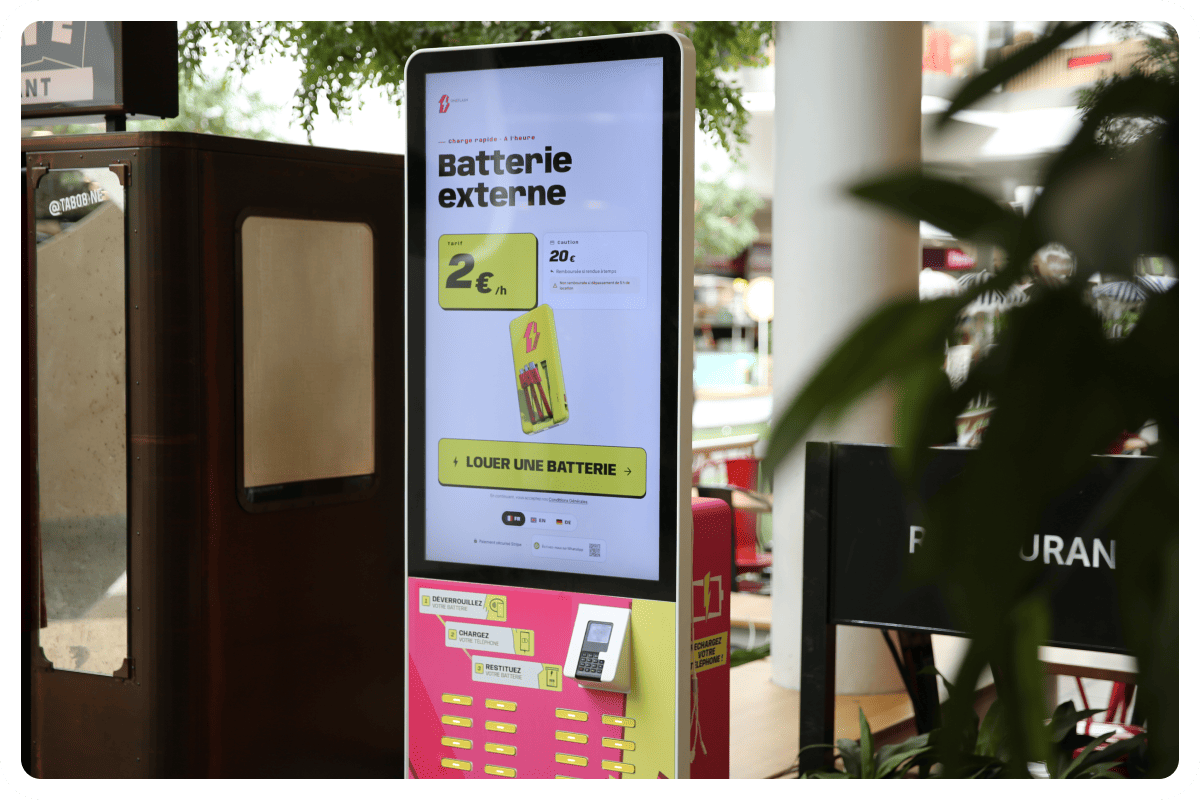
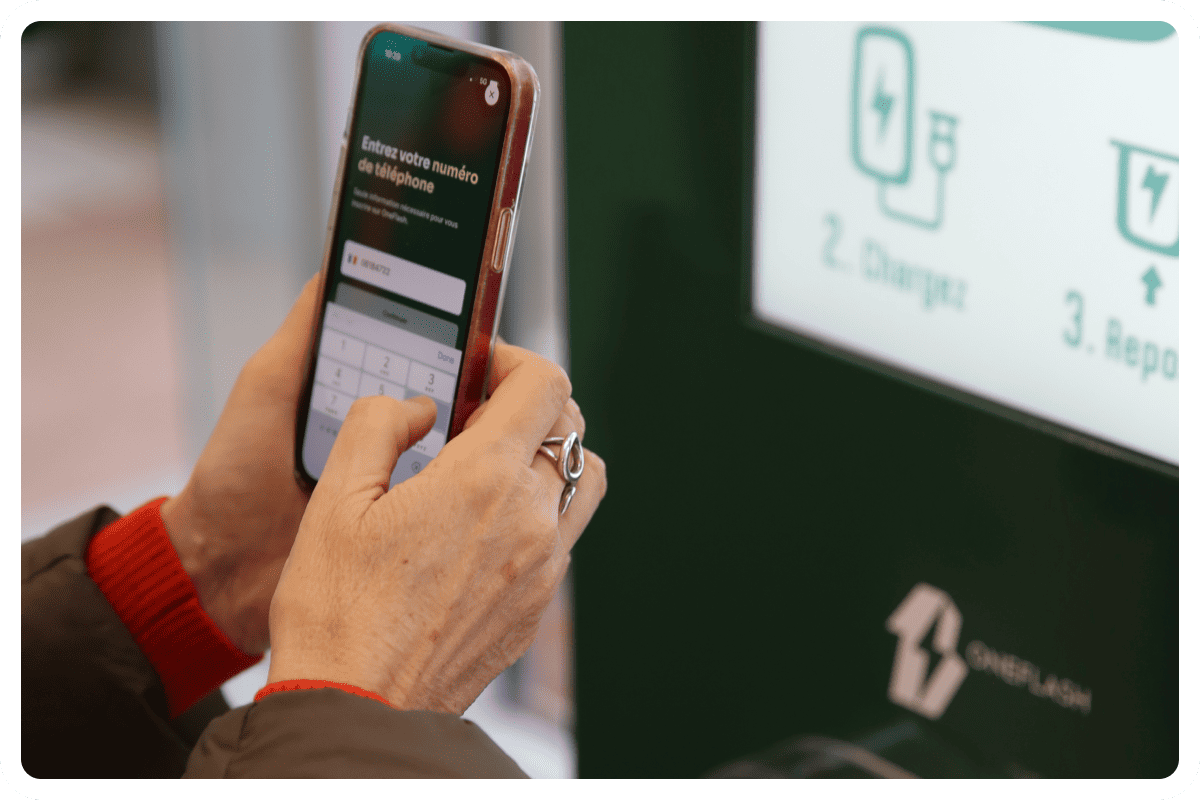
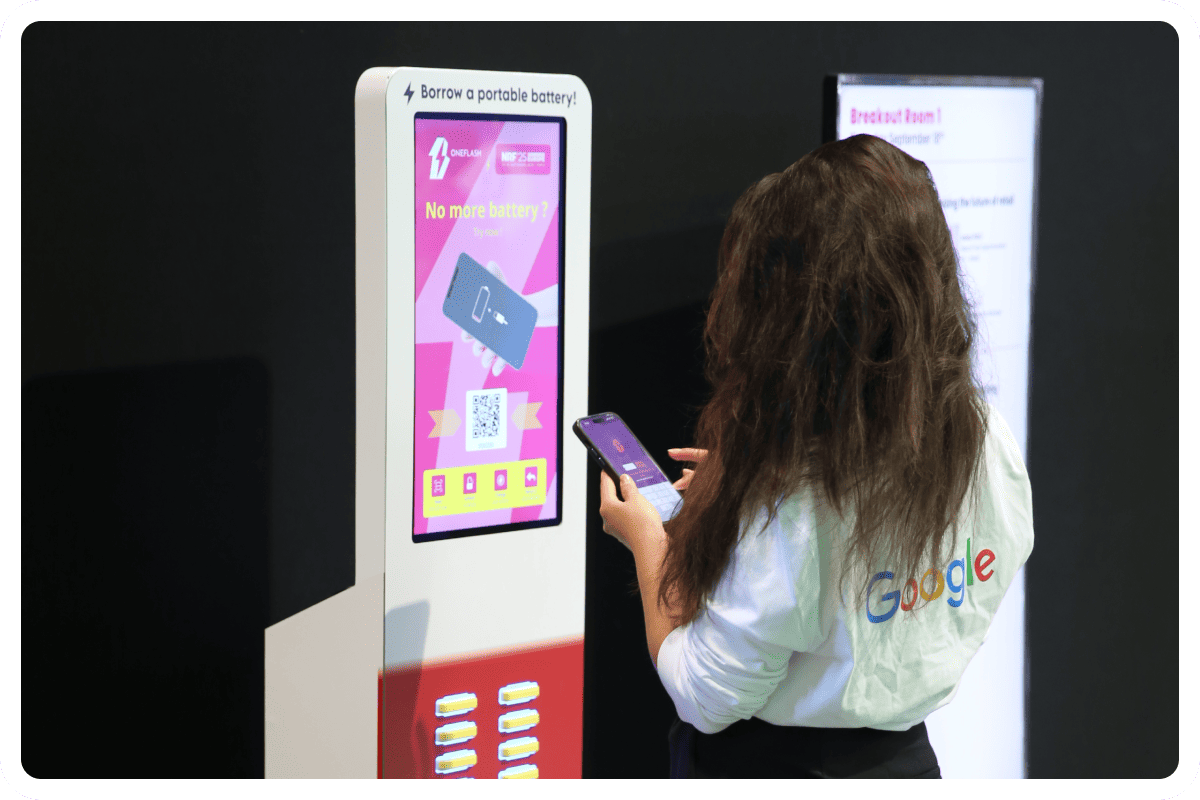
The charging locker shuts the phone in a locked compartment fitted with a USB cable. It physically protects the device but immobilises the visitor, which contradicts the very logic of a dynamic visit to a theme park. The self-service portable power bank station is a far better-suited solution: the visitor scans a QR code, borrows a portable power bank with its built-in cables, slips it in their pocket or backpack, and carries on with their day as normal. They return the power bank at the end of the day to any station in the park. This freedom of movement is incompatible with a fixed locker, which explains the growing preference of leisure site operators for portable power bank stations. To find out more on this subject, read our article on charging lockers.
Sizing the equipment to the park's overall traffic
The number of stations to install depends directly on the volume of visitors expected. A regional park receiving 300,000 visitors a year does not need the same set-up as a national complex welcoming 2 to 3 million. In practice, one station effectively covers a flow of 500 to 1,000 visitors a day. On a high-traffic site, it is better to spread several stations across the park rather than concentrate a single one at the entrance. This distributed approach guarantees constant availability and avoids queues forming in front of the equipment.
Installation process and support in use
Station installation is simple on the latest models: no heavy building work, a standard electrical connection, a small floor footprint. What matters more is the provider's support in getting the park's teams up to speed: training in managing restocking, incident reporting procedures, commercial promotion of the service. A well-structured service provider builds these steps into its offer rather than leaving the operator to fend for themselves after delivery.
How to optimise the installation of stations in a park
Once the principle is validated, several concrete choices make the difference between a successful deployment and under-used equipment.
Choosing strategic locations
The best locations for a charging station in a theme park are those with high natural footfall: main entrance, catering areas, exits of the big rides, souvenir shops, shaded terraces and waiting areas. Positioning the station where visitors are already waiting (the queue for a flagship ride, a food queue) turns downtime into a useful moment, which further improves the perceived experience.
Working with reliable service providers
What steps are needed to install a station in your venue? They often boil down to a call to the right provider. Serious players in the market handle the whole cycle: site audit, location recommendation, turnkey installation, preventive and corrective maintenance, replacement of faulty equipment. OneFlash, the European leader in the segment, already operates several leisure complexes in France, including all the sites of the Partouche group (17 sites equipped, 20 stations), which shows the ability of this type of company to adapt to the specific constraints of theme parks and tourist activity sites. Comparing several offers, demanding verifiable references and checking contractual commitments on network availability remains essential before any commitment.
Ensuring maintenance and monitoring of installations
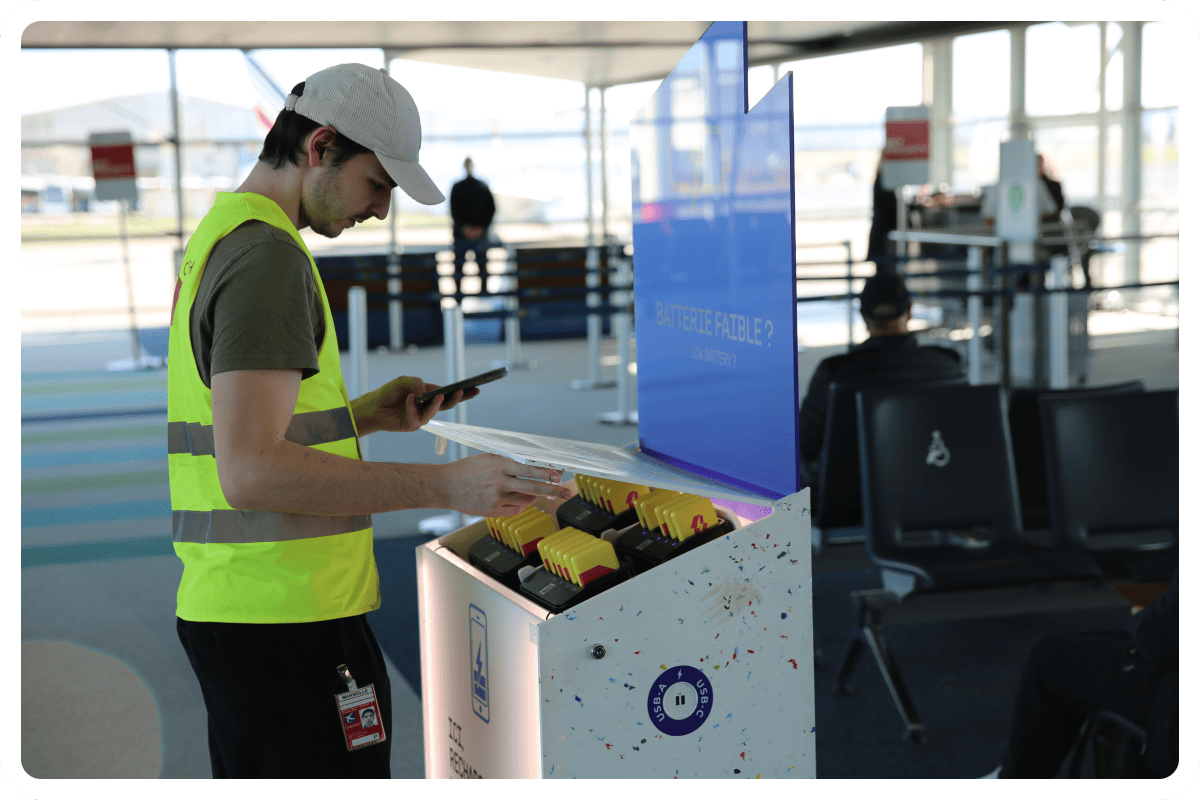
A poorly maintained charging station quickly becomes counterproductive: unavailable power banks, a station out of service, unhappy visitors. Professional providers offer a real-time management platform accessible to the operator, with tracking of availability rate, usage by location and open maintenance tickets. This level of transparency is decisive for running the service over time and adjusting the set-up to the seasonal patterns specific to park activity.
A positive impact on the visitor experience and on sustainability
Installing a charging station is not just a practical service. It also fits a logic of sobriety and pooling.
Controlled electricity consumption
Unlike individual charging devices multiplied endlessly across a park, a portable power bank station pools use across a shared fleet of power banks. Overall electricity consumption is far lower than a set of lockers powered continuously, and the management algorithm optimises charging cycles to extend power bank life. At a leisure complex mindful of its footprint, this type of solution fits naturally into the existing CSR approach.
A green initiative consistent with visitors' expectations
Park satisfaction studies show growing sensitivity among visitors to the environmental commitment of sites. Pooling rather than over-equipping, favouring refurbished power banks over disposable ones, entrusting recycling to approved partners: all elements that contribute to the image of a site mindful of its impacts. This dimension is particularly welcome in a sector often scrutinised for its energy consumption and overall environmental footprint.
How much does installing a charging station cost for businesses?
The question of cost is central for any operator. The good news is that there are now several business models suited to theme parks. The first is to buy the equipment (generally between €3,000 and €8,000 per station depending on options), with a separate annual maintenance contract. The second, lighter financially, relies on long-term rental: the provider installs and maintains the stations for a monthly subscription of a few hundred euros per station. The third model, particularly suited to high-traffic sites, is revenue share: the provider installs the stations free of charge and earns its income from visitors' paid sessions, with a share of the revenue passed back to the park. This last model turns the equipment from a cost item into a source of additional revenue, with no initial investment. The choice between these three solutions depends on visitor volume, the park's pricing strategy and the appetite for generating additional revenue.
In summary
The phone charging station is no longer a trivial piece of equipment in a modern theme park. It extends visitors' day, improves their experience, opens up opportunities for data collection and commercial animation, and fits a responsible approach consistent with market expectations. Choosing the right provider, selecting strategic locations and defining a suitable business model make all the difference between under-used equipment and a genuinely strategic part of the park's service offering. For operators still hesitating, the example of the big leisure complexes already equipped in France is a useful benchmark: they find both a service praised by their customers and a measurable contributor to the site's overall performance.
Discover OneFlash, the European leader in self-service mobile charging!
Découvrez tout nos autres articles :
Self-service power banks: phone charging for bars and nightclubs

Standalone power bank station: phone charging at the restaurant
Customer loyalty in restaurants: bring guests back with phone charging
Customer knowledge: how to collect the right data
Marketing activation: turning every interaction into an engagement lever for your brand
.jpeg)
Phone lockers: the limits and the modern alternative
Charging stations in conference centres: equipping an event
CSR approach: the mobile charging station, a concrete lever for businesses welcoming the public
Grégory Sion (Pierre & Vacances): Share Your Power - Episode 14
Sébastien Manceau (European Camping Group): Share Your Power - Episode 13
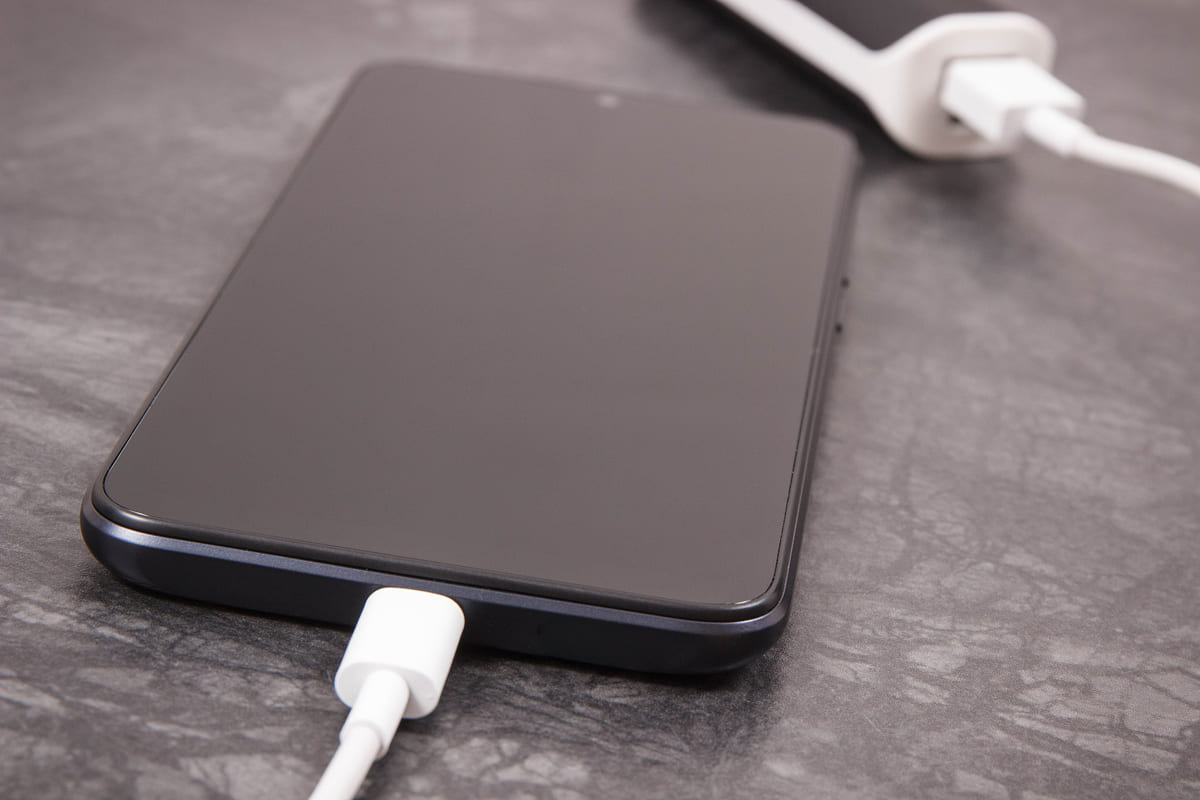
Mobile charging: every way to charge your phone easily
Dominique Thillaud (Compagnie des Alpes): Share Your Power - Episode 12
.jpeg)
Charging stations: the complete guide to choosing
Mike Hadjadj (La Retail Tech): Share Your Power - Episode 11
%2520(1).jpeg)
USB fast charging: the complete guide
Antoine de Tavernost (Auditoire): Share Your Power - Episode 10
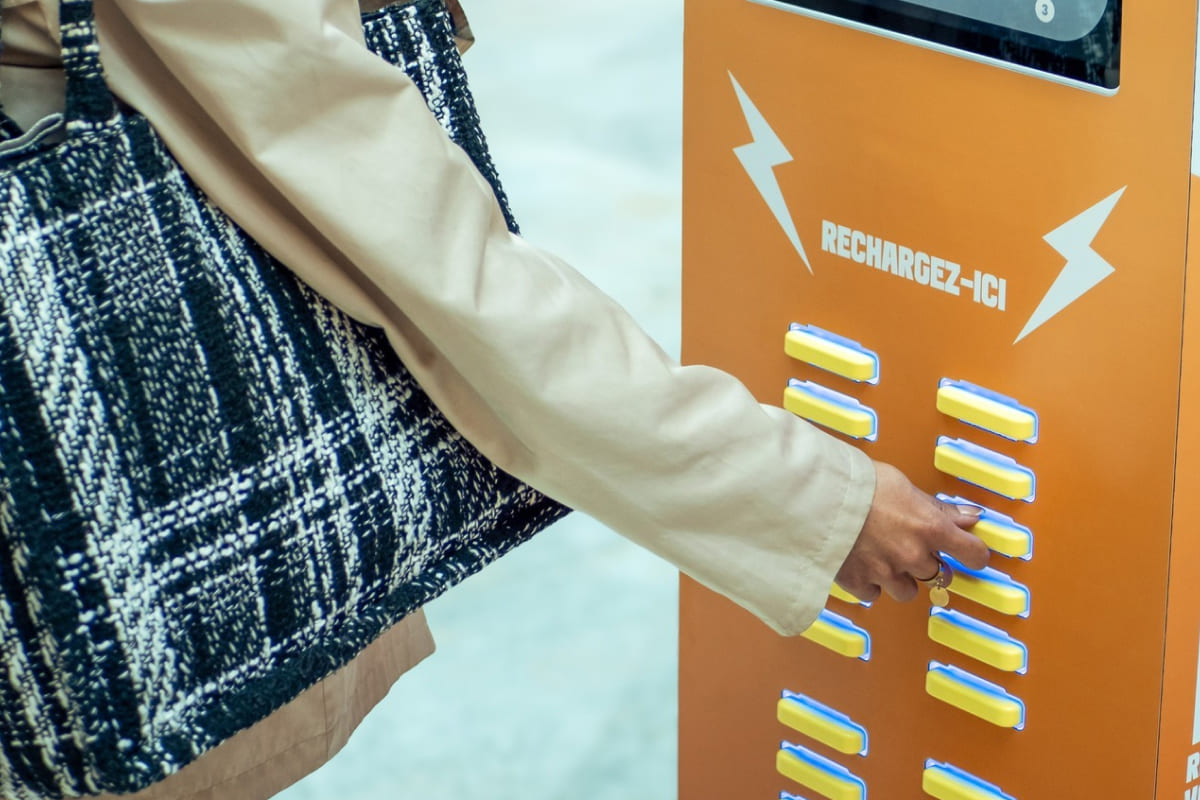
Charging station rental: the complete guide
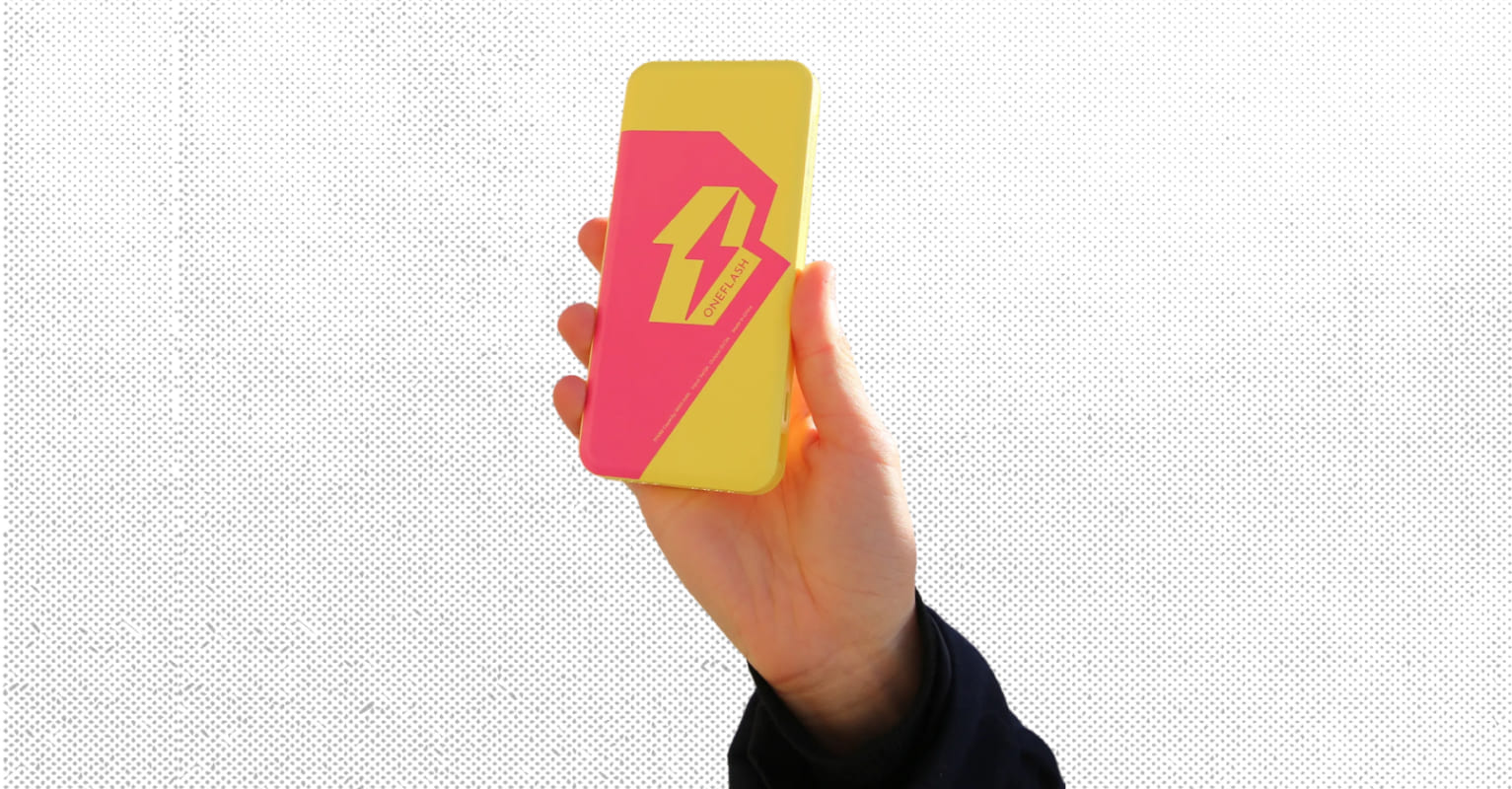
Power banks for mobile devices: the complete guide
Phone charging in public places: wall sockets
Ask Jamy! How does a power bank work?
In-store customer experience tools: the levers to activate

Are portable power banks dangerous?
The best power bank station services