Marketing activation: turning every interaction into an engagement lever for your brand
Marketing activation has become one of the most strategic disciplines for any brand looking to move beyond passive awareness and create genuine engagement with its audience. At a time when consumers are saturated with advertising messages and attention has become the scarcest resource, it is no longer enough to exist in customers' minds: you need to create concrete, measurable, converting moments of interaction. That is precisely what a well-designed activation campaign covers. This guide details what marketing activation really is, why it is now an unavoidable growth lever, how to structure an effective activation strategy, and presents the most effective levers for engaging consumers in physical venues open to the public.
Understanding marketing activation in venues open to the public
Before looking at techniques, it helps to set out a clear definition and understand what distinguishes activation from a conventional advertising operation.
What is marketing activation?
Marketing activation refers to all the actions designed to turn a passive consumer into an active participant in the experience of the brand. Where traditional advertising broadcasts a one-way message, activation creates a two-way interaction: the visitor is invited to act concretely (try a product, sign up to a programme, play a game, give an opinion, download an app). This participatory dimension completely changes the relationship between the brand and its audience. The consumer no longer endures a communication, they live an experience that they remember for a long time and often share spontaneously with those around them.
What is brand activation?
Brand activation is a frequently cited variant that emphasises emotional and identity anchoring. The aim is not only to generate an immediate sale but to create a lasting bond between the consumer and the world of the brand. A good brand activation must be consistent with the overall positioning, bring perceived value to the participant, and leave a positive memory trace that will influence future purchasing decisions.
Why is marketing activation important?
Three main reasons explain the rise of this discipline. First, the cost of traditional advertising campaigns keeps rising, with a return on investment that is increasingly hard to defend. Second, consumers are developing growing resistance to pure advertising messages, which erodes the effectiveness of traditional approaches. Finally, new digital and physical tools now make it possible to create activation set-ups that are measurable, customisable and built into the existing customer journey, which was not possible ten years ago. Combined, these three factors make marketing activation a particularly relevant growth lever for modern businesses.
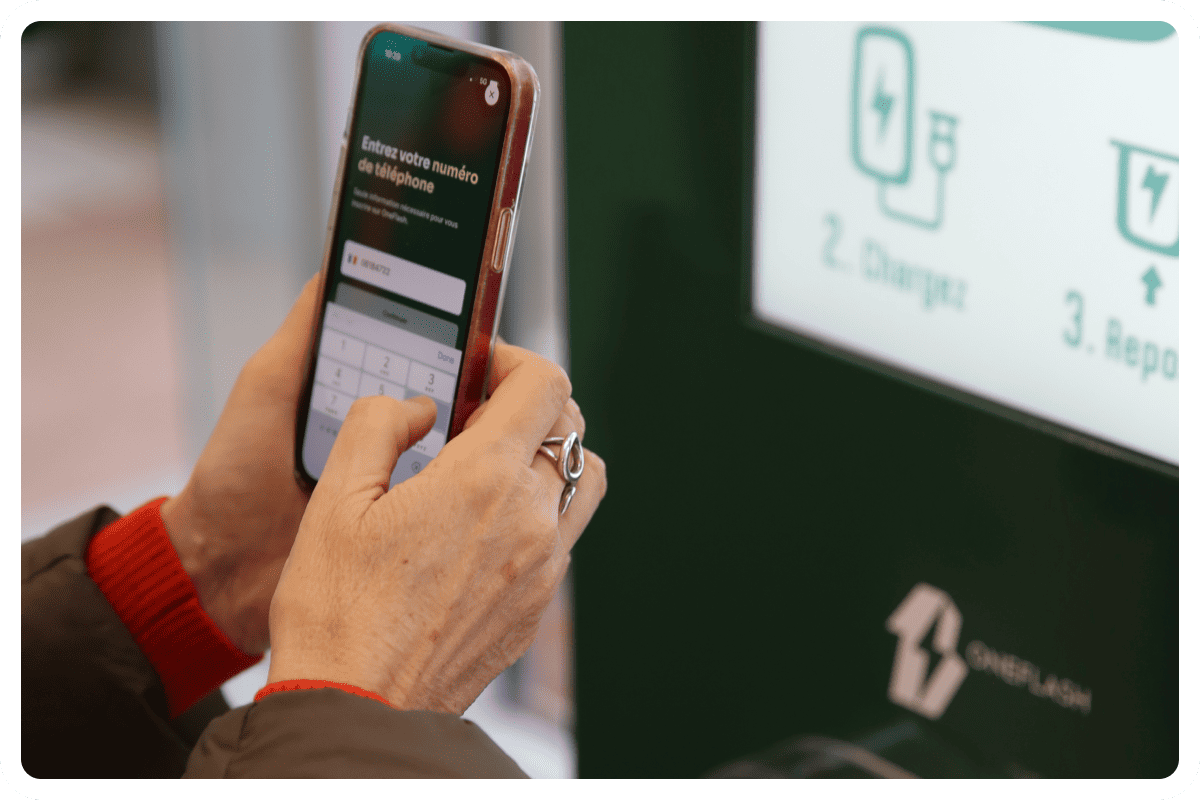
The main in-store activation levers
In physical venues open to the public, several levers coexist and combine to create effective activation set-ups.
Creating an interaction at the right moment of the customer journey
The effectiveness of an activation campaign depends largely on when it comes into the visitor's journey. Approaching a consumer at the entrance to a shop when they are not yet in buying mode produces little. Approaching them at the end of their visit, when they are tired and keen to leave, also has little effect. The optimal moment is generally during downtime or a waiting phase, when the visitor is mentally available and receptive to a value proposition. Identifying these windows of opportunity in the customer journey is the first step of an effective activation strategy.
Turning an anonymous visitor into an engaged customer
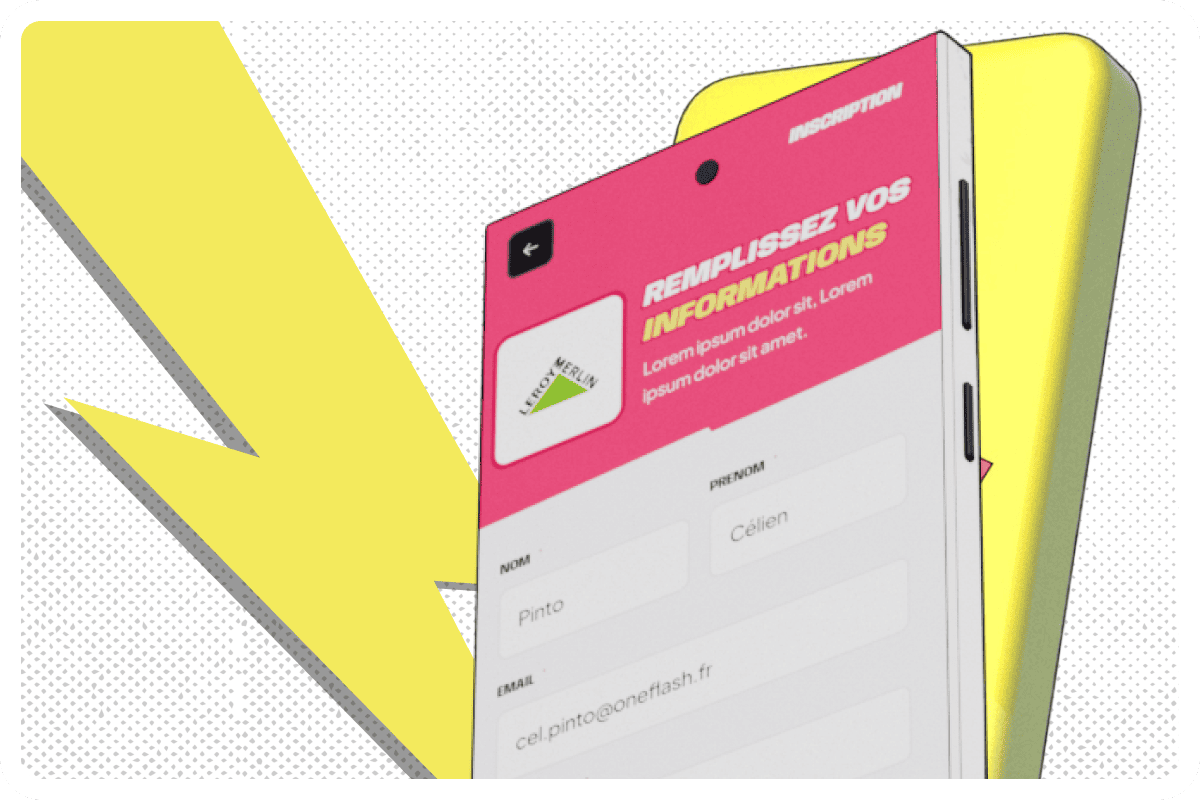
Moving from anonymous to identified customer is the heart of any activation. It means offering a reward attractive enough to justify the visitor's effort of sharing data. This reward can take several forms: a physical gift, an immediate discount, exclusive content, entry into a prize draw, or simply a useful service delivered at the right time. The more the reward is seen as fair, the higher the activation's conversion rate will be.
Combining physical presence with a digital extension
A modern activation is no longer limited to the physical event. It systematically includes a digital extension that extends the life of the interaction beyond the initial moment. A participant in a physical activation can be contacted again by email, engaged on social media, invited to download an app or enrolled in a loyalty programme. This physical-digital continuity multiplies the impact of the operation and turns a single contact into a lasting relationship.
Designing an effective marketing activation strategy
An improvised activation campaign rarely produces the expected results. A methodical approach is needed to maximise return on investment.
Identifying the consumer profiles to target
Before deploying an activation, you need to be precise about which profiles you want to reach. An activation designed to capture young urban professionals does not have the same mechanics as an activation aimed at a senior or family audience. Segmenting the audience upstream determines the choice of levers, messages and activation locations. It is a fundamental exercise that too many brands neglect, preferring a generic approach that dilutes the effectiveness of the campaign.
Defining the expected actions and success indicators
An activation without a measurable objective is a blind bet. Each set-up must be tied to precise expected actions: newsletter sign-up, app download, booking an appointment, trying a product, taking part in a later event. Success indicators must be defined before launch and tracked rigorously throughout the campaign. The number of interactions, the conversion rate, the cost per contact acquired, the value generated at three and six months: these are the metrics that let you judge performance objectively.
How do you measure the impact of a marketing activation?
Measurement rests on three complementary levels of analysis. The first is immediate and quantitative: how many consumers were reached, how many interacted, how many converted. The second is qualitative: what perception of the brand did participants keep, what word of mouth did they generate around them. The third is deferred: what buying behaviour did they adopt in the weeks and months after the activation. It is by cross-referencing these three levels that you get a complete picture of the real impact of the campaign, beyond the often misleading vanity metrics.
Real examples of marketing activation in physical venues
Several formats have become established in recent years in shopping centres, stations, stadiums and other high-traffic venues.
Experiential corners and product demonstrations
The brand temporarily sets up an immersive space where the visitor can test a product in real conditions. This approach works particularly well for new technology, beauty products or consumer goods where touch and handling play a decisive role in the buying decision. The engagement generated by physical trial is incomparably higher than that of a simple advertising exposure.
Interactive and gamified set-ups
Installing an interactive point (touch kiosk, digital screen, fun game) creates a short but memorable interaction with the visitor. The win-win mechanic, in which the participant receives a reward in exchange for a minimal action, has become one of the most effective formats. Digital prize wheel, personalised quiz, live prize draw: all simple to deploy and effective at capturing attention.
The mobile charging station as an activation touchpoint
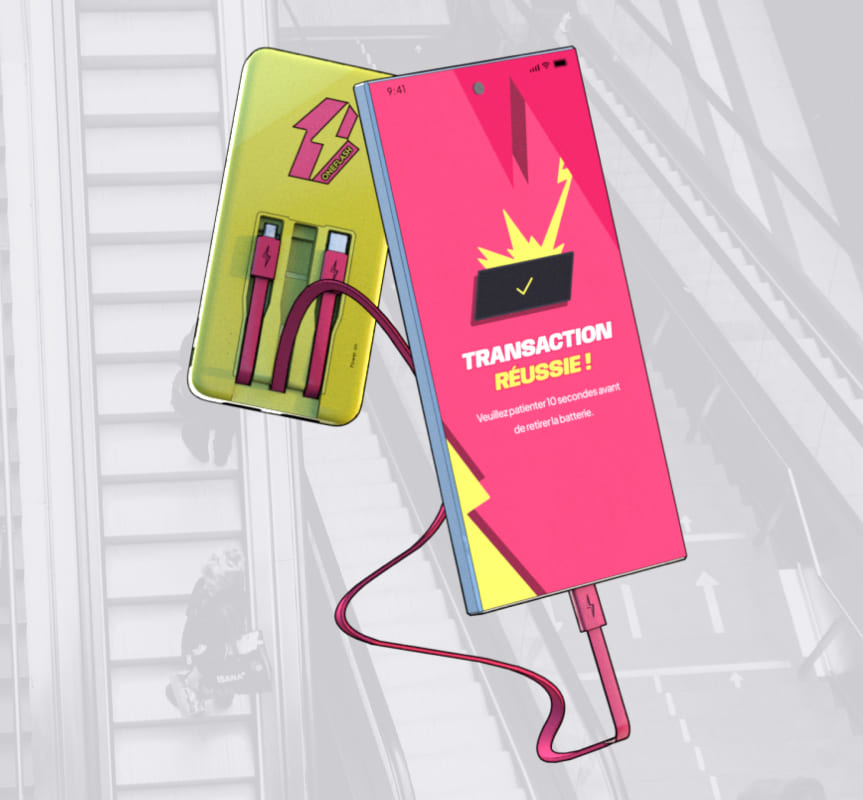
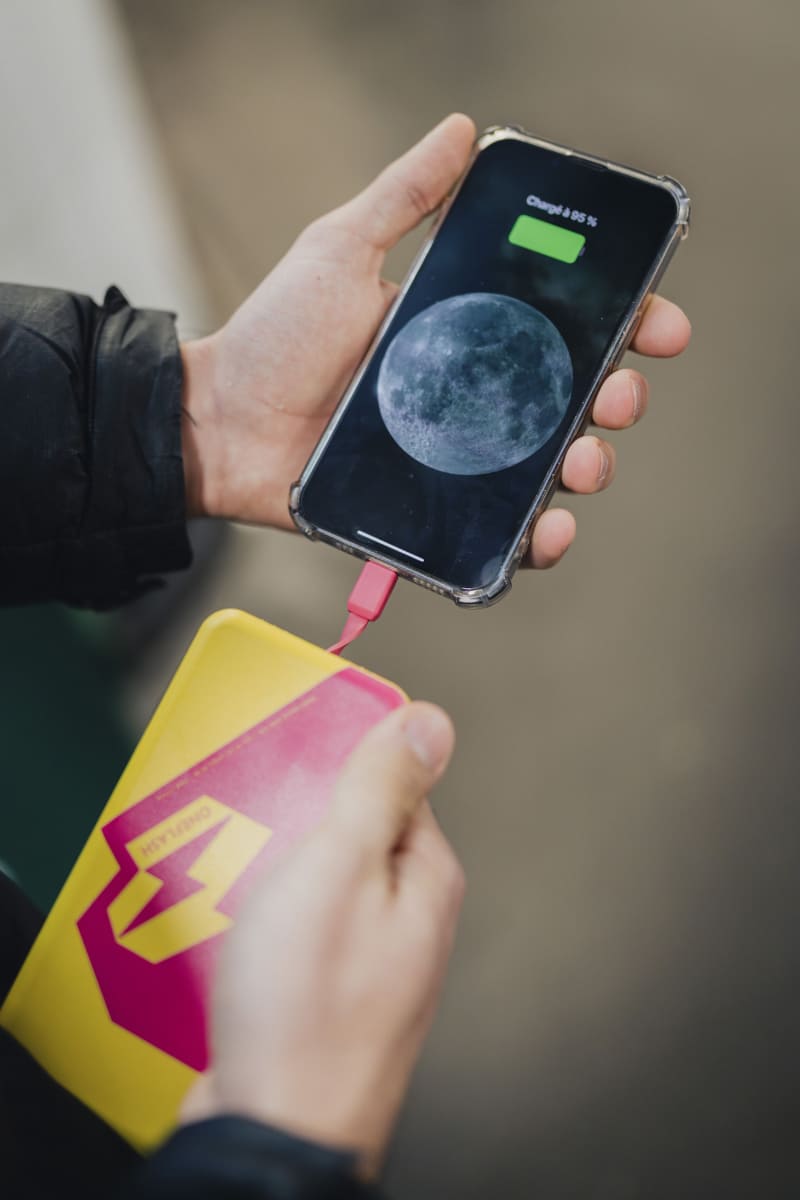
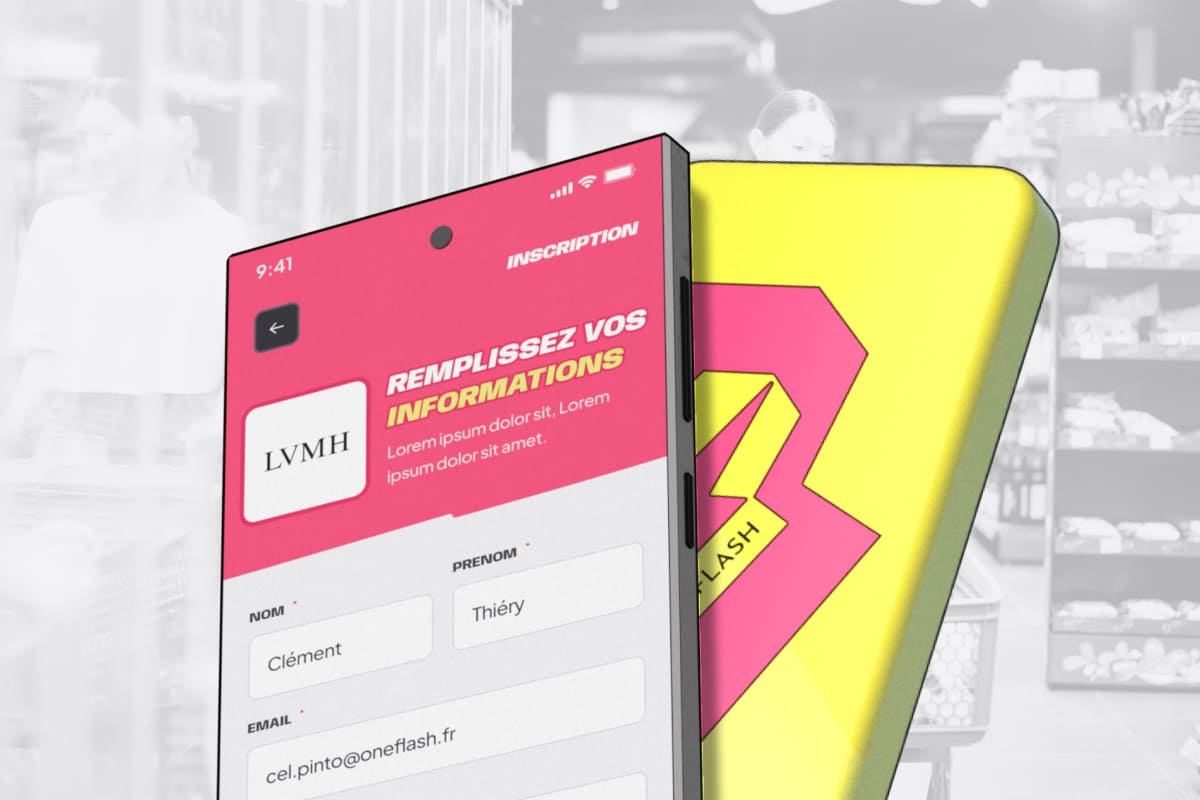
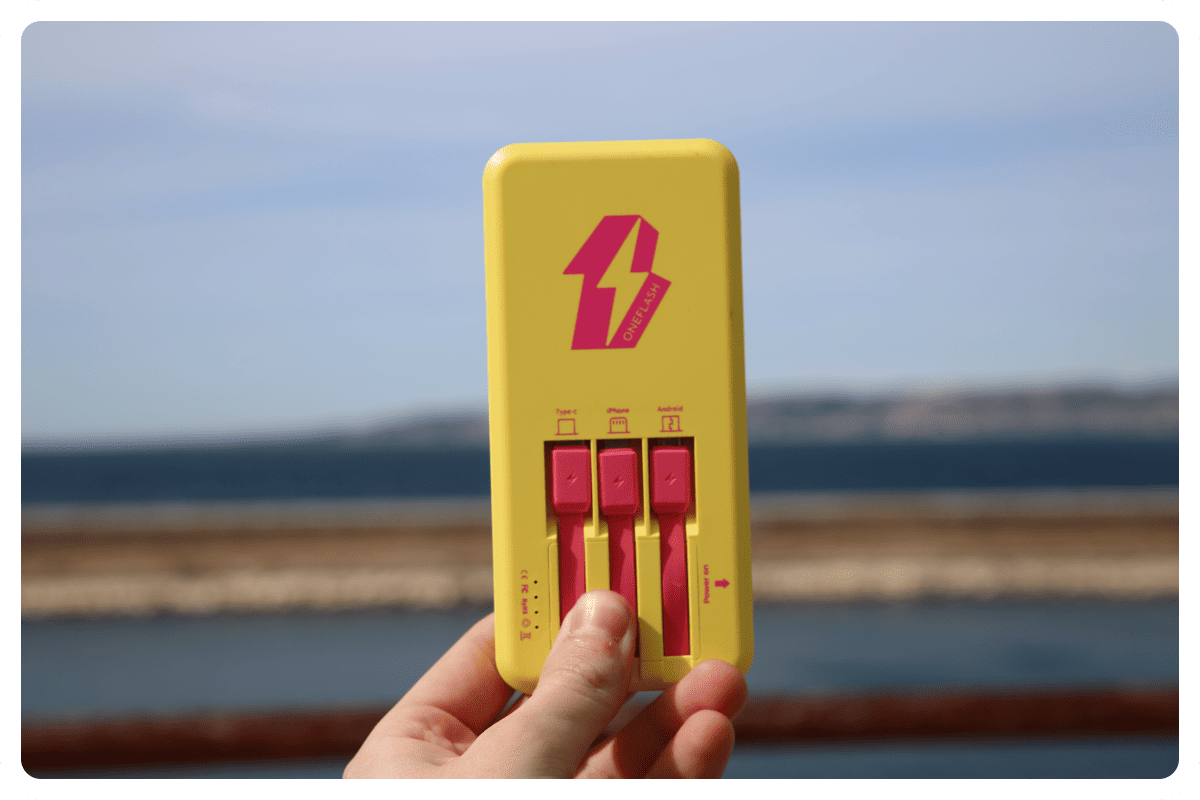
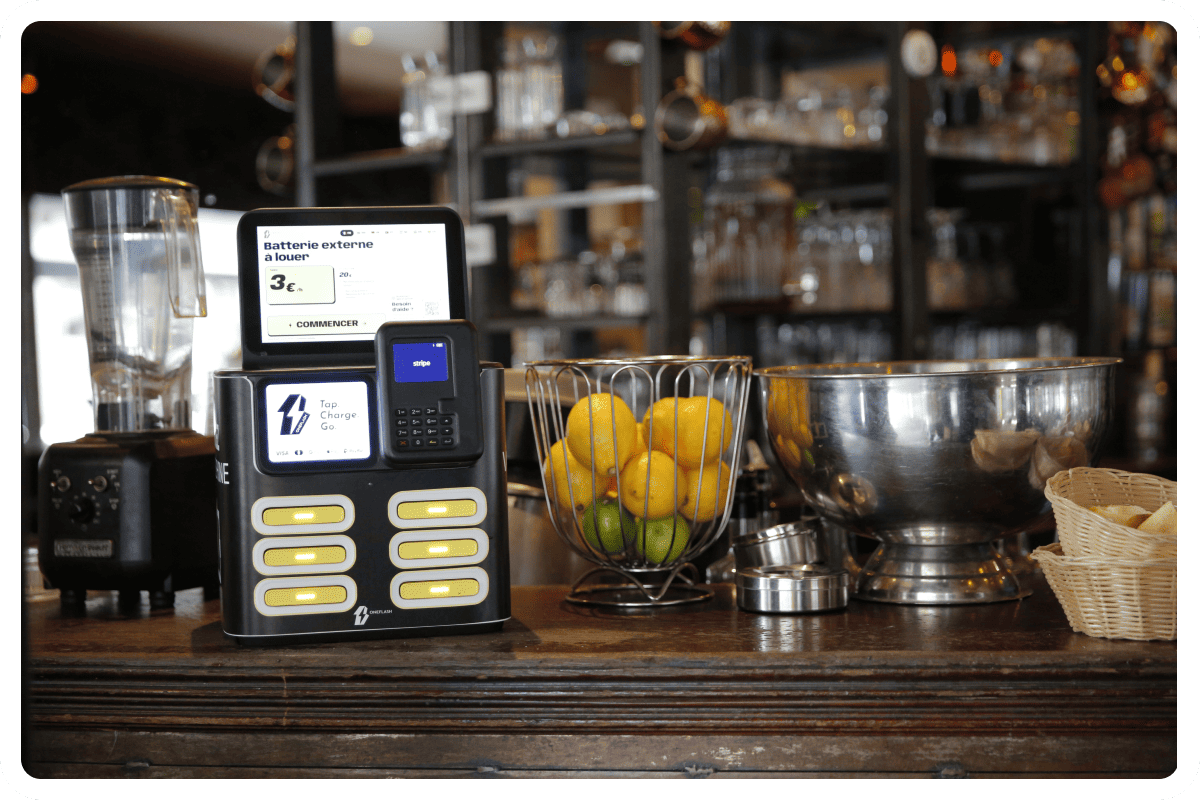
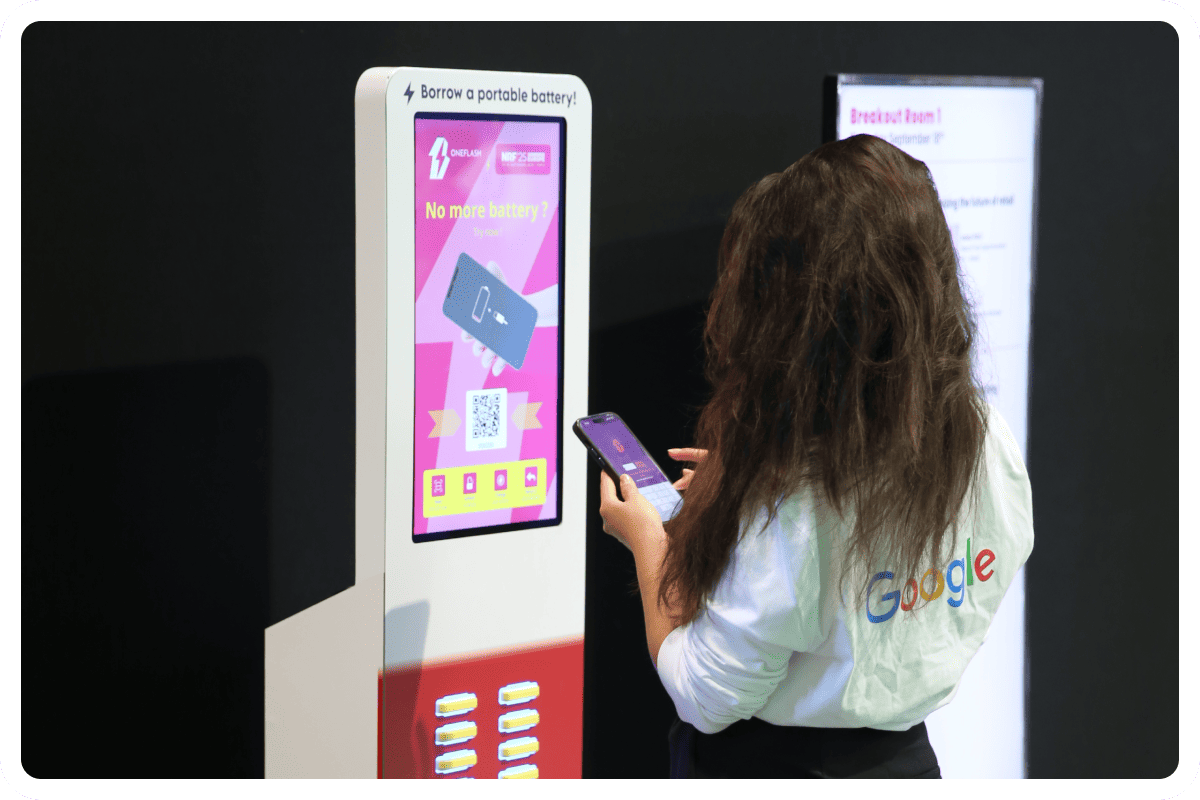
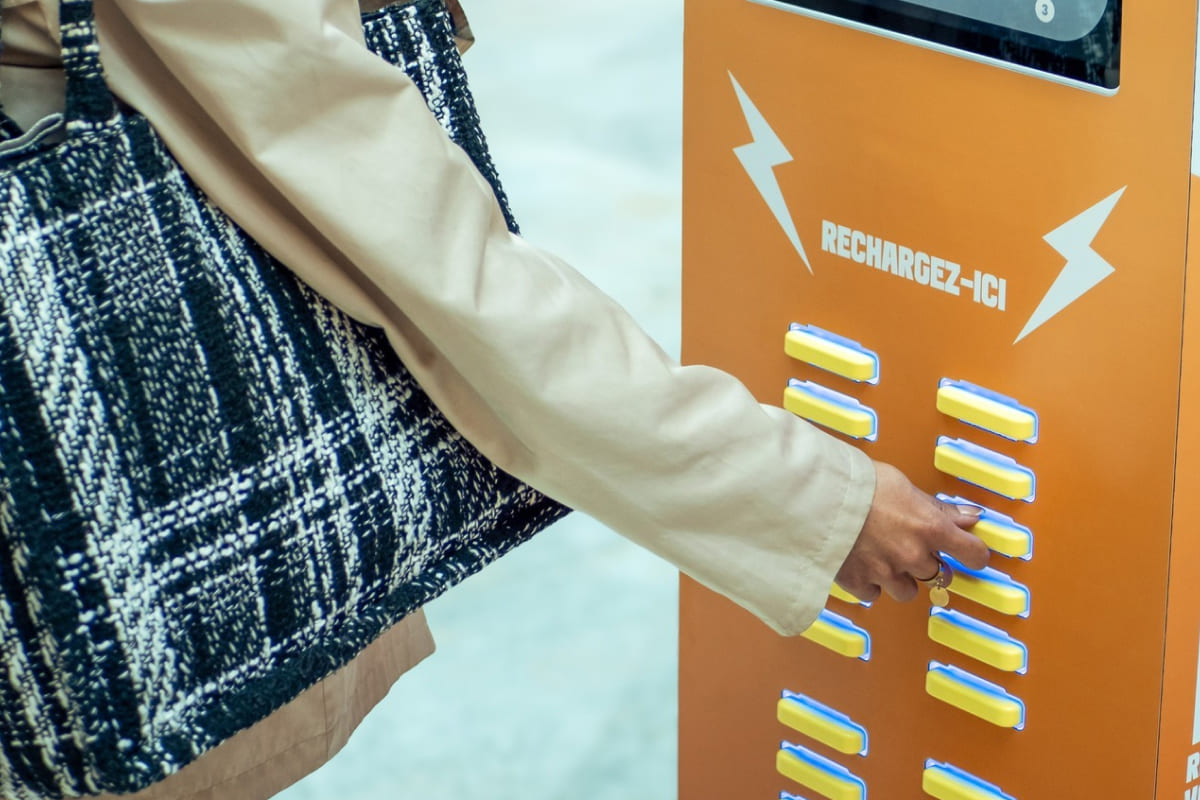
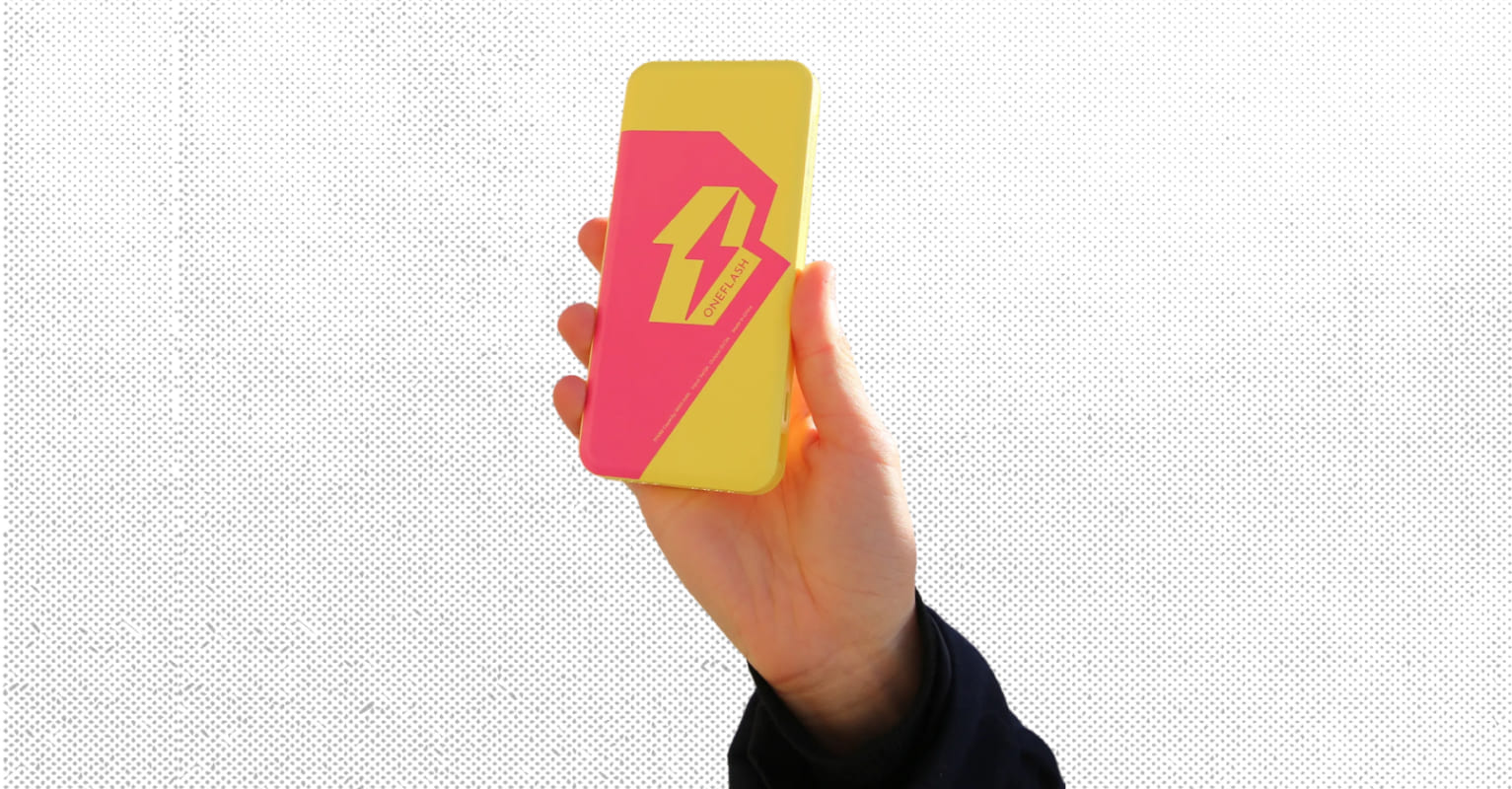
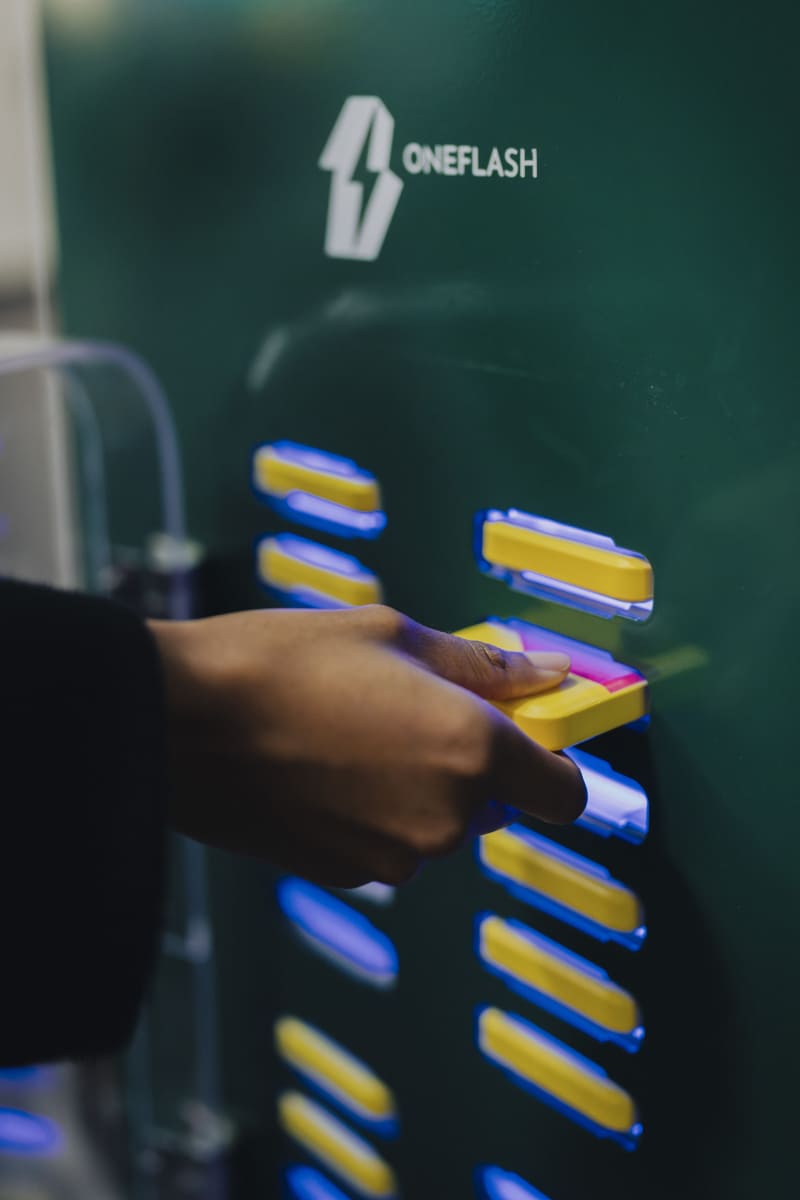
A more recent format is gaining ground quickly: the self-service mobile charging station, used as a genuine marketing activation lever. The principle rests on a service-first logic: the visitor borrows a power bank to keep using their phone, and this utility interaction becomes the opportunity for a valued digital touchpoint. On the OneFlash network, present in more than 2,000 venues across Europe, the latest models include a touch screen that allows several simultaneous activation mechanics: distribution of gift cards, a prize wheel in the brand's colours, sign-up to a loyalty programme in exchange for free charging, a chatbot to answer visitors' questions, interstitial advertising on the touch screen just before the power bank is released.
This format combines several structural advantages. The engagement rate is high because the user has a real need that predisposes them to interaction. The reward is immediate and seen as fair. Data collection is smooth and respects consent. Finally, the device works permanently in the venue, unlike a one-off activation that has to be rebuilt for each campaign. For brands deploying this type of solution with their partners (shopping centres, airports, stadiums, retail), the station becomes a continuous activation channel, built into the customer journey with no repeated set-up effort.
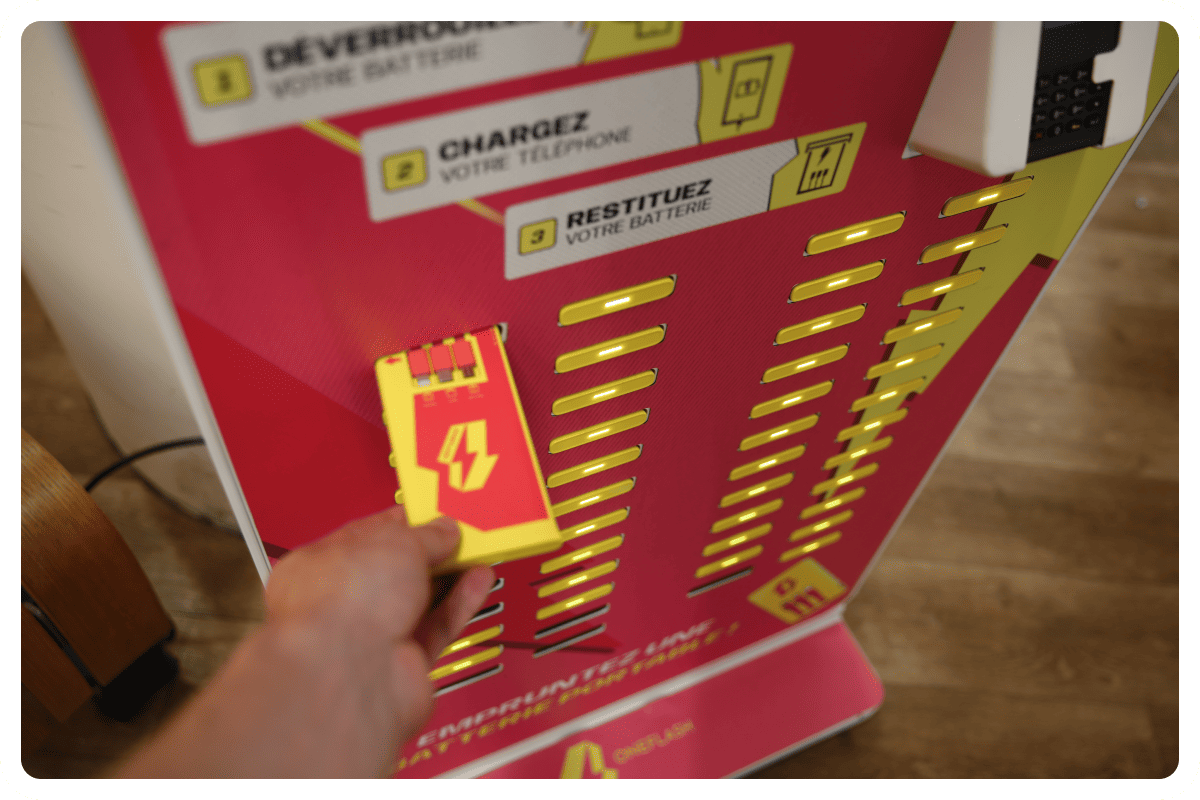
Deploying a high-impact activation campaign
Once the strategy is defined and the lever chosen, a few operational principles ensure a successful deployment.
Choosing high-traffic, high-affinity venues
Activation must be positioned where the target audience naturally is. A set-up installed in a low-footfall venue, even if perfectly designed, will mechanically produce few results. Conversely, even a simple set-up installed in a very busy venue well aligned with the profile you are after can generate considerable volumes. This geographical dimension is too often underestimated when designing campaigns.
Customising the set-up in the brand's colours
Activation must visually extend the world of the brand. A standardised set-up that does not carry the advertiser's graphic codes loses much of its awareness impact. The best providers now offer full visual customisation (equipment wrap, content shown on screen, personalised messages) that turns the equipment into a genuine physical extension of the brand.
Generating lasting interactions on social media
A well-designed activation also produces shareable content that extends its impact beyond the initial moment. Photos, short videos, customer reviews, mentions on social media: all digital traces that feed the brand's presence over time. Building this viral dimension in from the design of the campaign considerably multiplies its return on investment.
In summary
Marketing activation is no longer an optional extra in modern brand strategies. It is now the most effective lever for creating real engagement with consumers, at a time when classic advertising is losing impact. Well thought out, it relies on fine audience segmentation, clearly defined measurable objectives, levers suited to the customer journey and rigorous measurement of results. Among the most promising formats, the self-service mobile charging station stands out as a particularly effective tool: it combines a useful service for the visitor, a high interaction rate, customisation in the brand's colours and the collection of first-party data that is immediately usable. For businesses that welcome the public, or advertisers who want to activate their target in a physical environment, this type of device is now one of the best opportunities to turn an ordinary touchpoint into a genuine growth lever.
Découvrez tout nos autres articles :
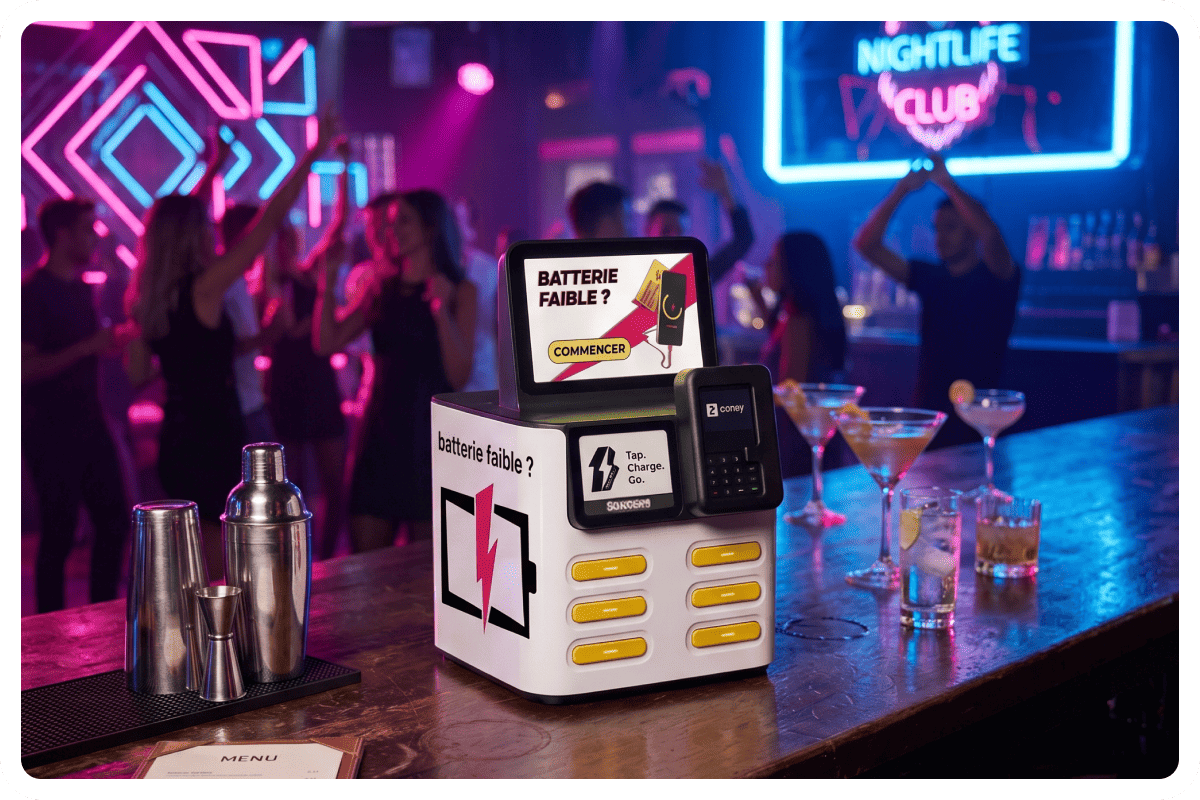
Self-service power banks: phone charging for bars and nightclubs
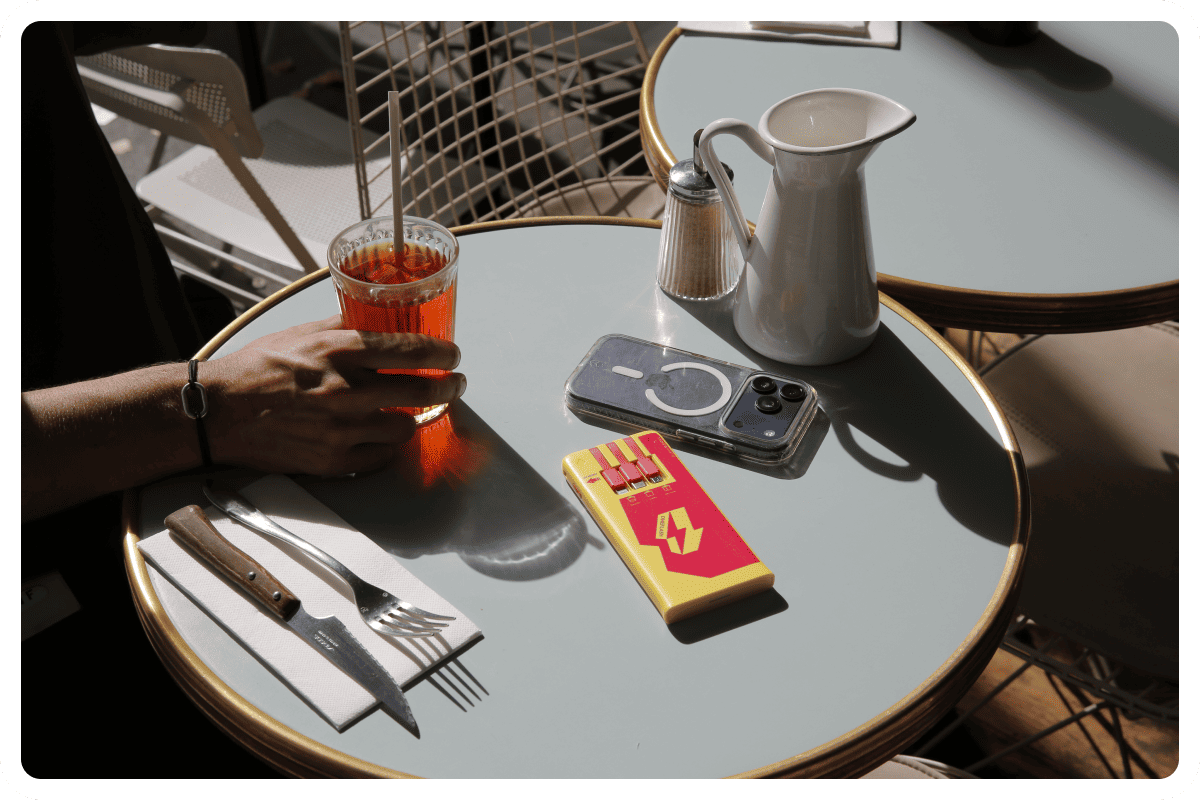
Standalone power bank station: phone charging at the restaurant
Customer loyalty in restaurants: bring guests back with phone charging
Customer knowledge: how to collect the right data
.jpeg)
Phone lockers: the limits and the modern alternative
Charging stations in conference centres: equipping an event

Charging stations in theme parks: improving the visitor experience all day long
CSR approach: the mobile charging station, a concrete lever for businesses welcoming the public
Grégory Sion (Pierre & Vacances): Share Your Power - Episode 14
Sébastien Manceau (European Camping Group): Share Your Power - Episode 13
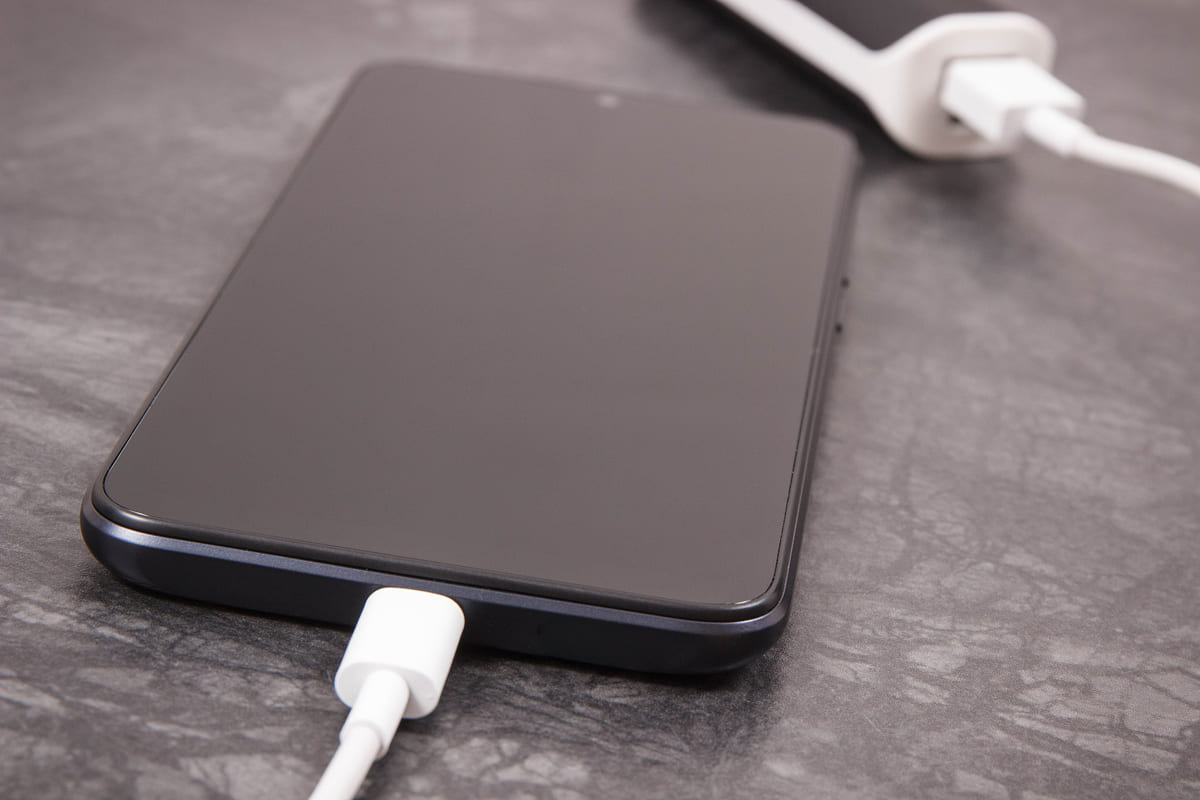
Mobile charging: every way to charge your phone easily
Dominique Thillaud (Compagnie des Alpes): Share Your Power - Episode 12
.jpeg)
Charging stations: the complete guide to choosing
Mike Hadjadj (La Retail Tech): Share Your Power - Episode 11
%2520(1).jpeg)
USB fast charging: the complete guide
Antoine de Tavernost (Auditoire): Share Your Power - Episode 10
Charging station rental: the complete guide
Power banks for mobile devices: the complete guide
Phone charging in public places: wall sockets
Ask Jamy! How does a power bank work?
In-store customer experience tools: the levers to activate

Are portable power banks dangerous?
The best power bank station services