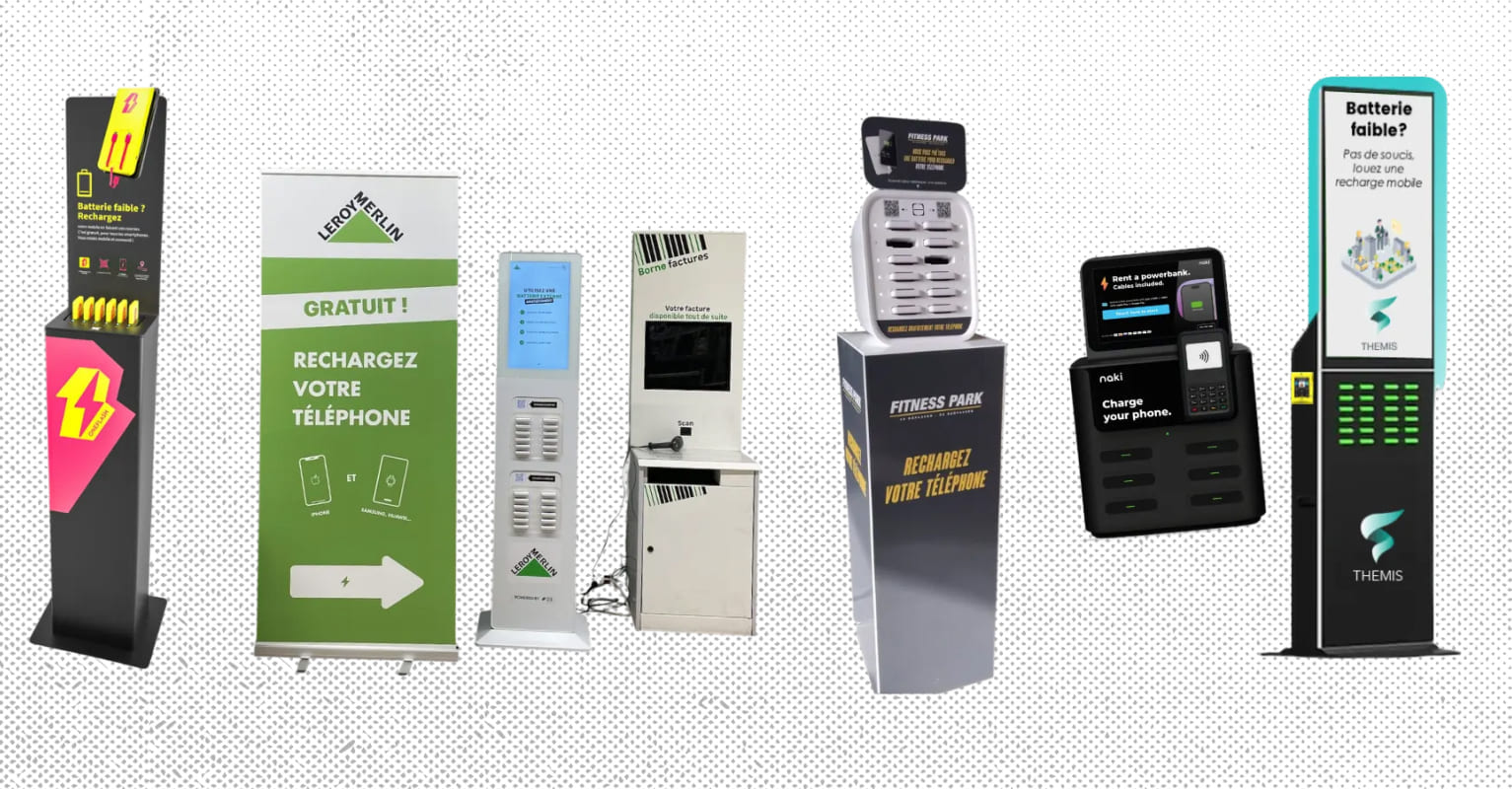
From the charging locker to the portable power bank station
Imagine this: a visitor arrives at your venue with 7% battery. Everything is in their smartphone: entry ticket, map, contacts, means of payment, and even their social networks to share their day. They spot a charging locker, hesitate... and give up: "No way am I parting with my phone, even with no battery."
The idea of leaving their phone behind no longer matches their reality.
Phone charging lockers: an obsolete solution?
The promise remains the same: to offer an on-site phone charging service. But between the classic locker and a modern charging station, the way of delivering it has changed radically.
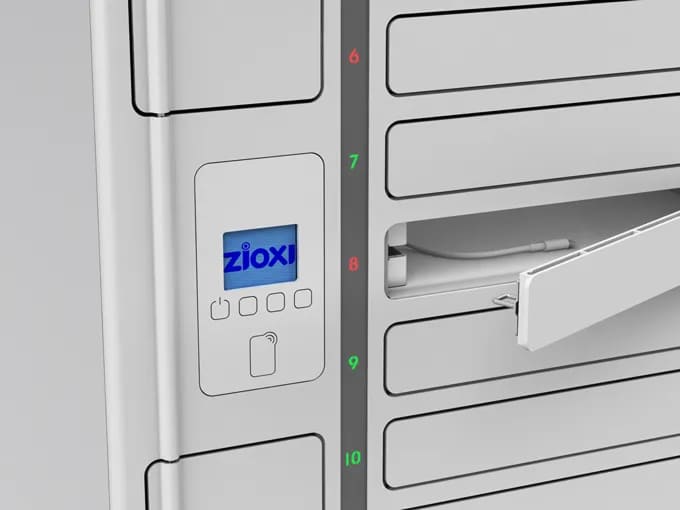
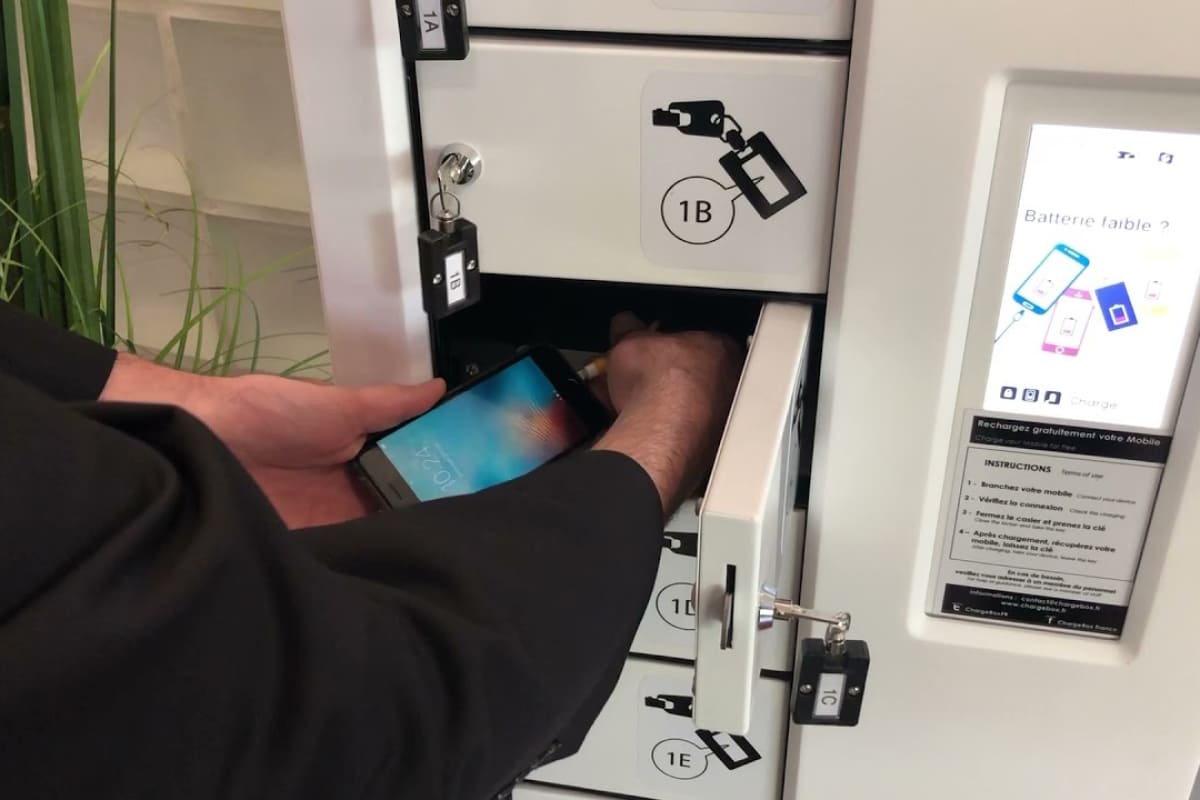
Technically, it is a compartmentalised unit connected to the mains, with individual compartments lockable by code, badge or QR code. Inside, you find a low-voltage power supply and built-in cables (Lightning, USB, USB-C depending on the model).
The principle is simple: the user opens a locker, plugs in their phone, locks it, then comes back later to collect it charged. On your side, you need to provide a visible location, a socket nearby, sometimes a network connection to monitor the equipment and a minimum of maintenance on the cables and locks.
This model made sense for a long time in environments where people accepted being parted from their phone for an hour. Today, the constraint is no longer perceived in the same way at all.
When the locker no longer keeps up with how people use their phones
Ask yourself very concretely: how many of your customers, visitors or employees can afford to leave their smartphone at a distance for more than an hour?
The locker imposes a sharp break: you drop off the device, hope you do not get the code wrong, walk away... and cross your fingers that you will not need your phone in the meantime. The slightest surprise, whether an important call or a bank authorisation, turns the charging service into an irritant.
On the operational side, the locker format also creates friction:
access incidents, lockers occupied by forgotten phones, cables that age faster than smartphone generations, difficulty tracking real usage precisely. The equipment stays fixed in one place, while the flows of people change from one event or season to the next.
Without saying so openly, this model assumes the user can “pause their digital life” for the length of the charge, just as with a wall socket where the user would have to stay put. That is simply no longer the case. And this is where the phone charging station designed for mobility completely changes the logic.
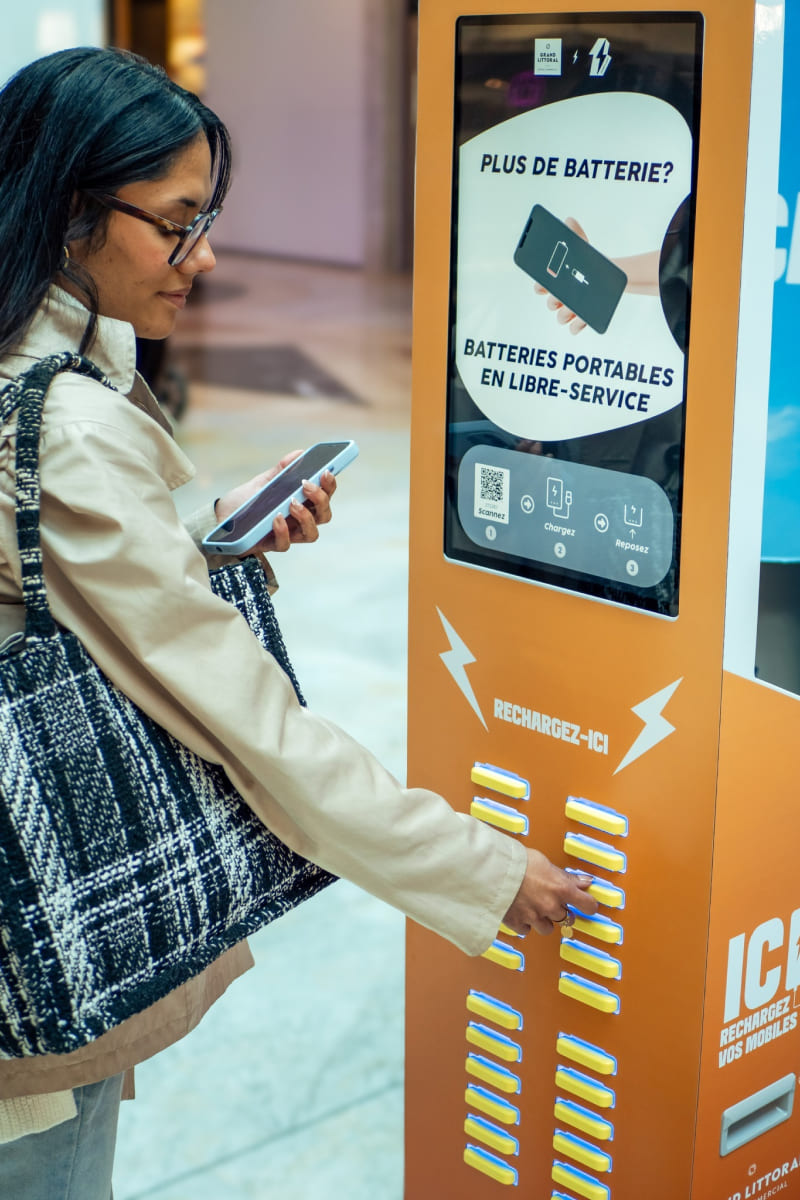
Phone charging station: an architecture designed for continuous mobility
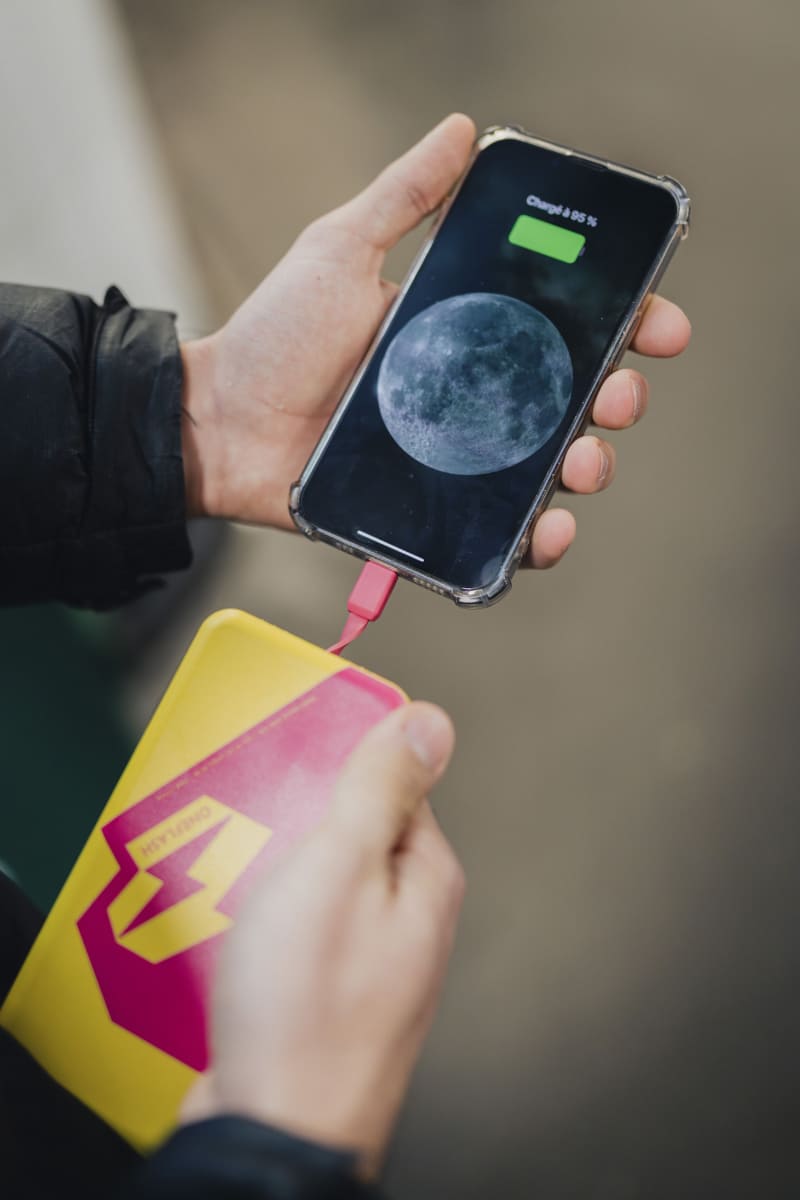
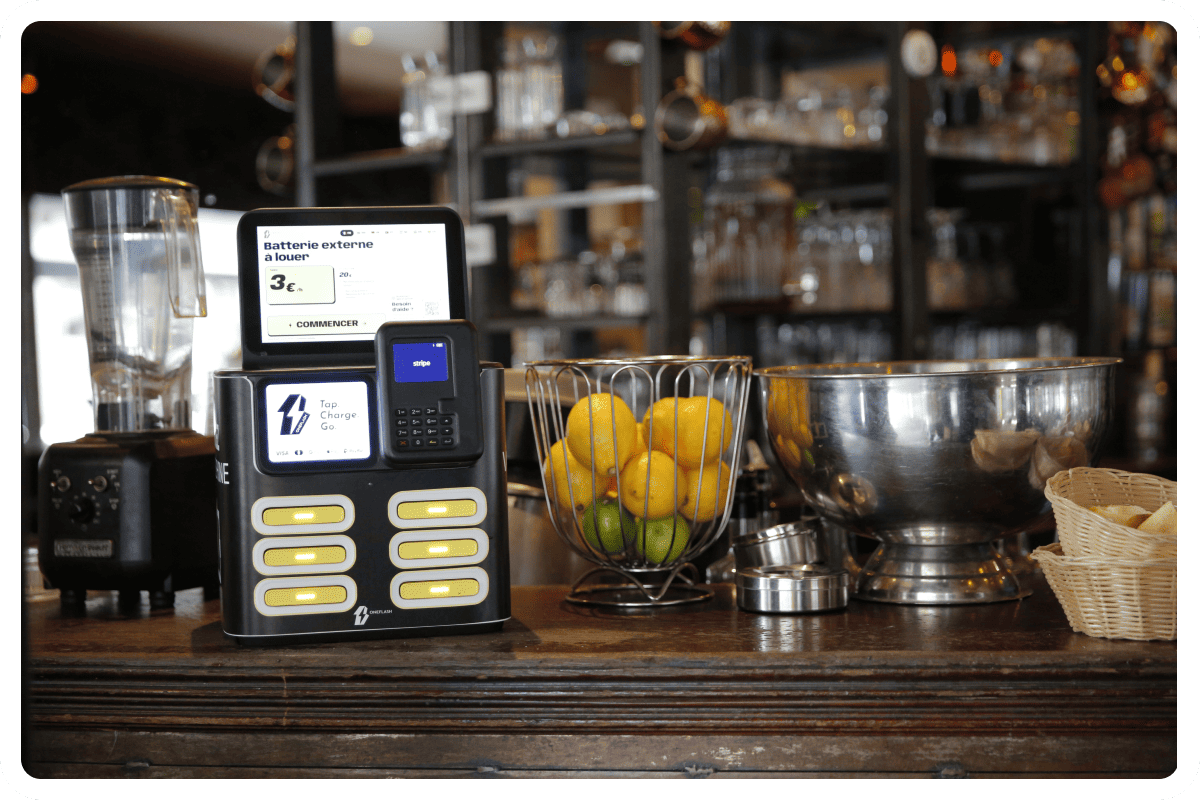
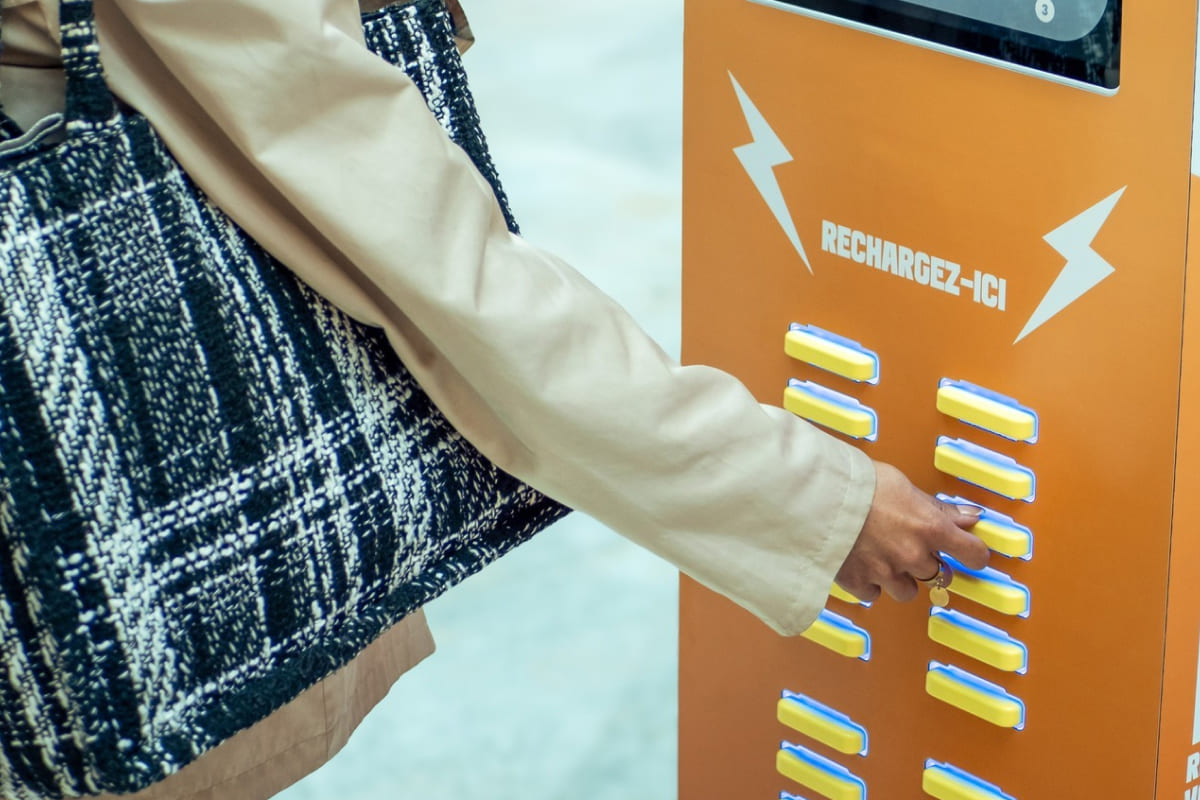
A charging station starts from the opposite principle: the phone stays with the user, it is the energy that moves. Instead of locking the device in a locker, you provide a portable power bank that the person takes with them.
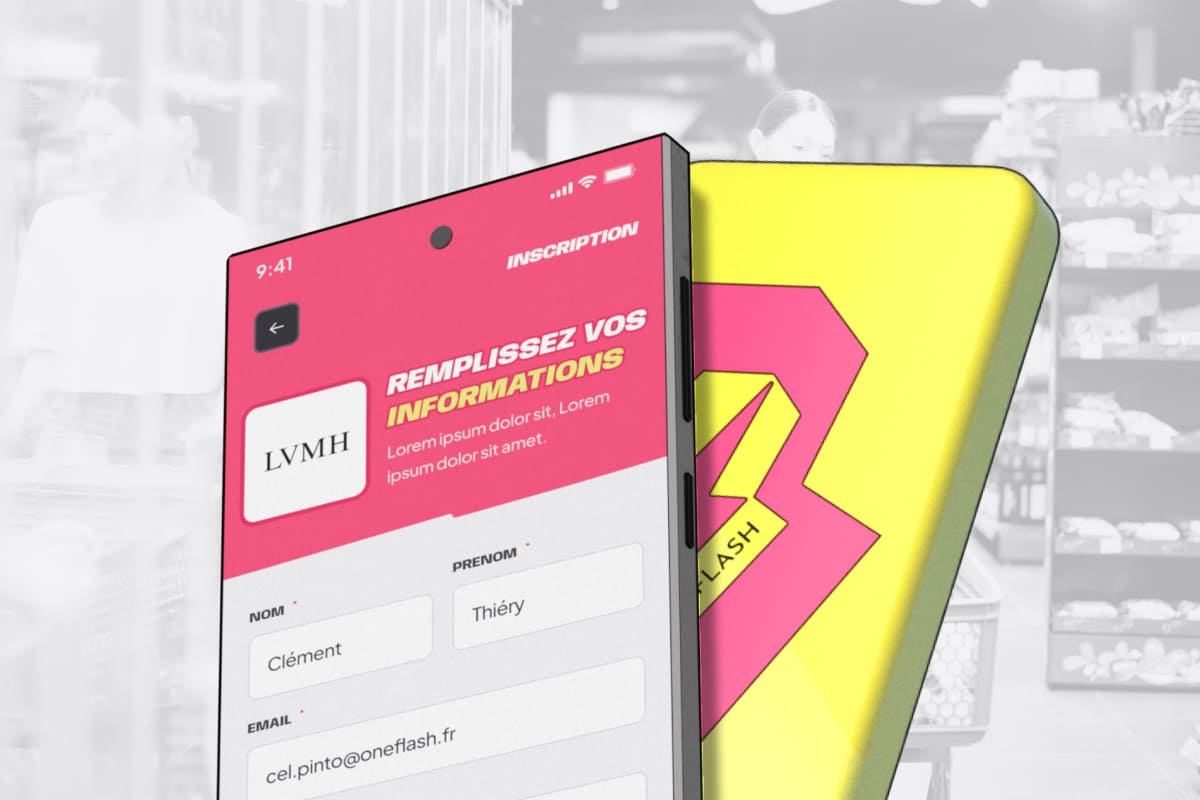
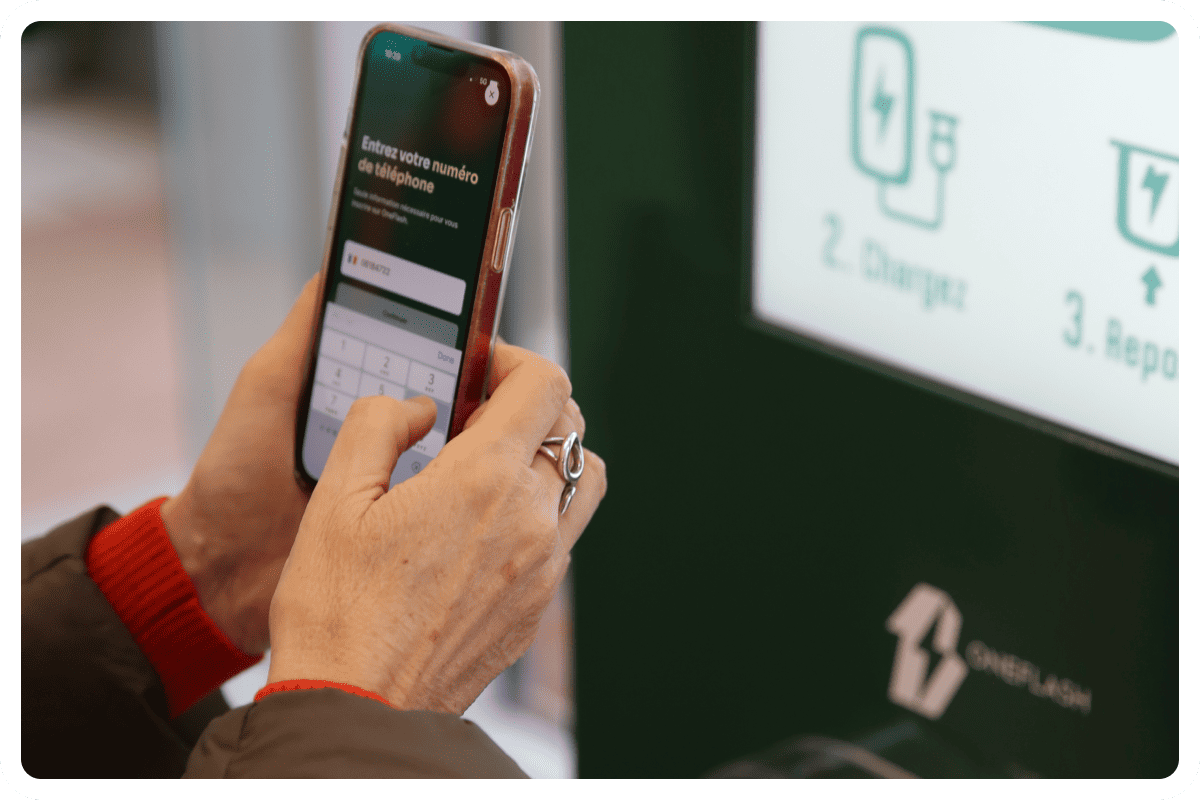
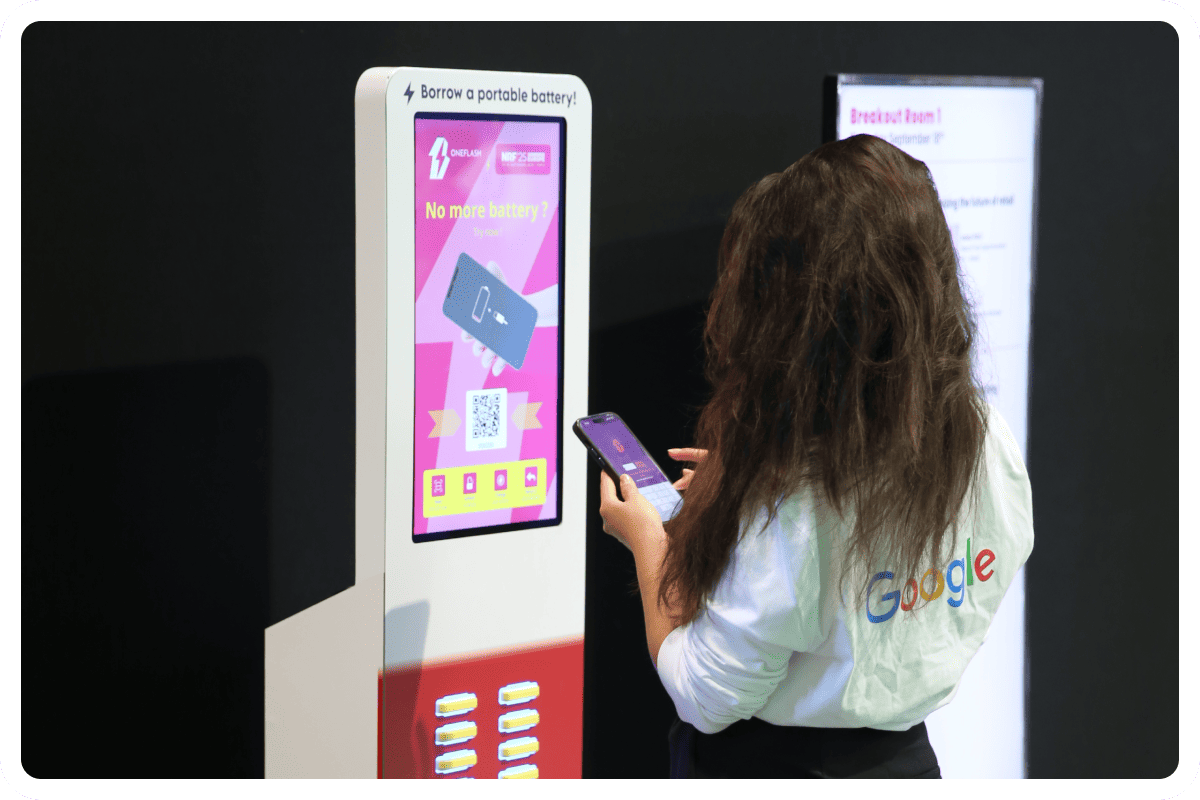
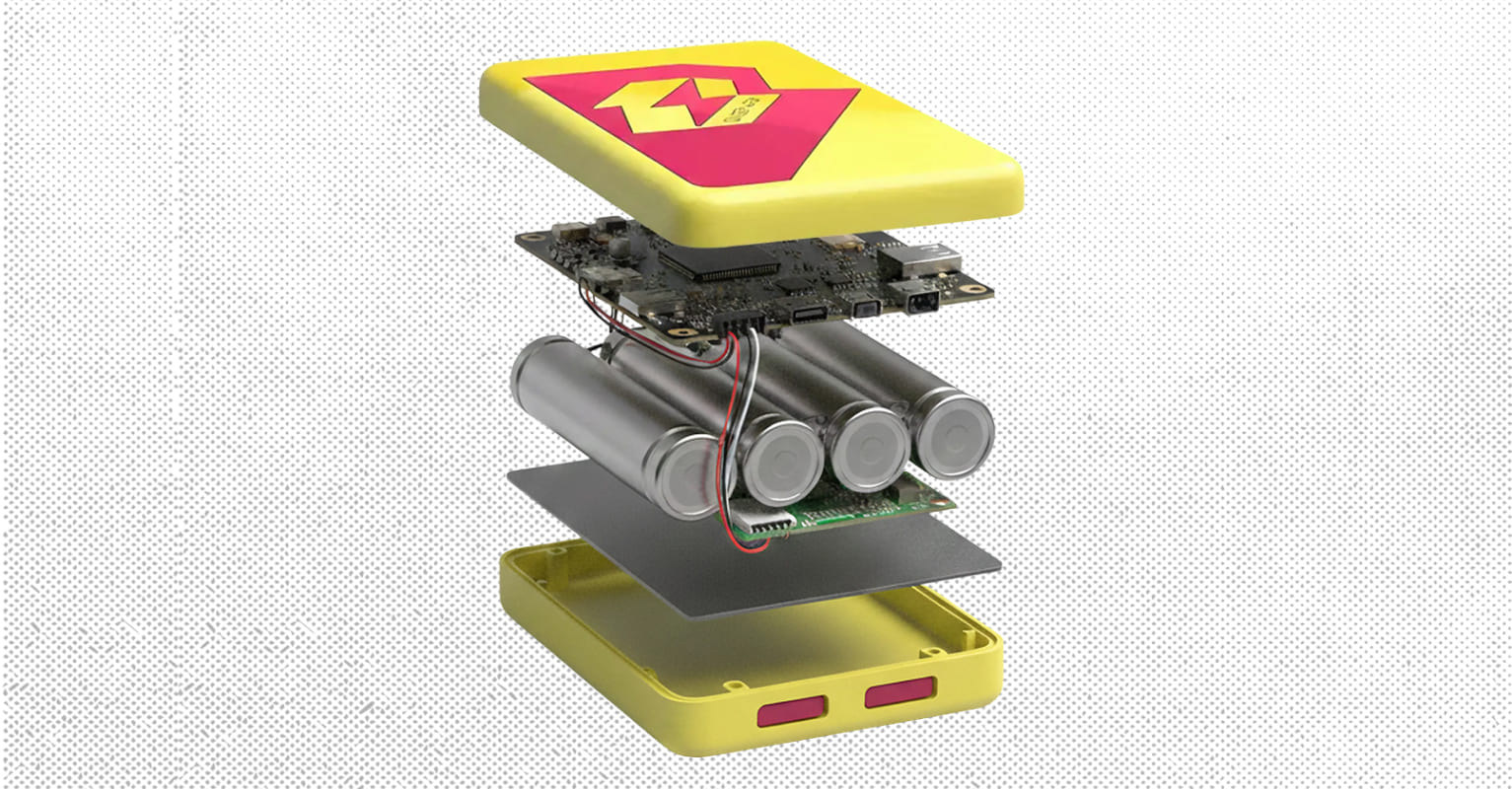
In concrete terms, the station stores and recharges a fleet of external power banks. Each power bank includes protection electronics (BMS), enough capacity for one or more full charges and connectors suited to the main smartphones. The user identifies themselves via QR code, mobile app or dedicated terminal, takes a power bank and plugs in their phone... while carrying on with their journey as normal.
For your audiences, the difference is immediate: no more having to choose between “staying reachable” and “charging”. The phone charging station fits into the existing experience: doing the shopping, attending a match, visiting a trade show, working in an open-plan office. Charging becomes a discreet but essential service that accompanies movement instead of stopping it.
For you, on the B2B side, this change of model is just as structuring. You no longer manage just a piece of furniture with sockets, but a micro-infrastructure of energy mobility: sizing the power bank fleet, managing rotation, real-time monitoring, possible integration with your tools (app, CRM, ticketing system, guest Wi-Fi...). A well-designed charging station produces useful data: usage rate, peak times, busiest areas, user behaviour.
Read our guide to choosing the best provider here.
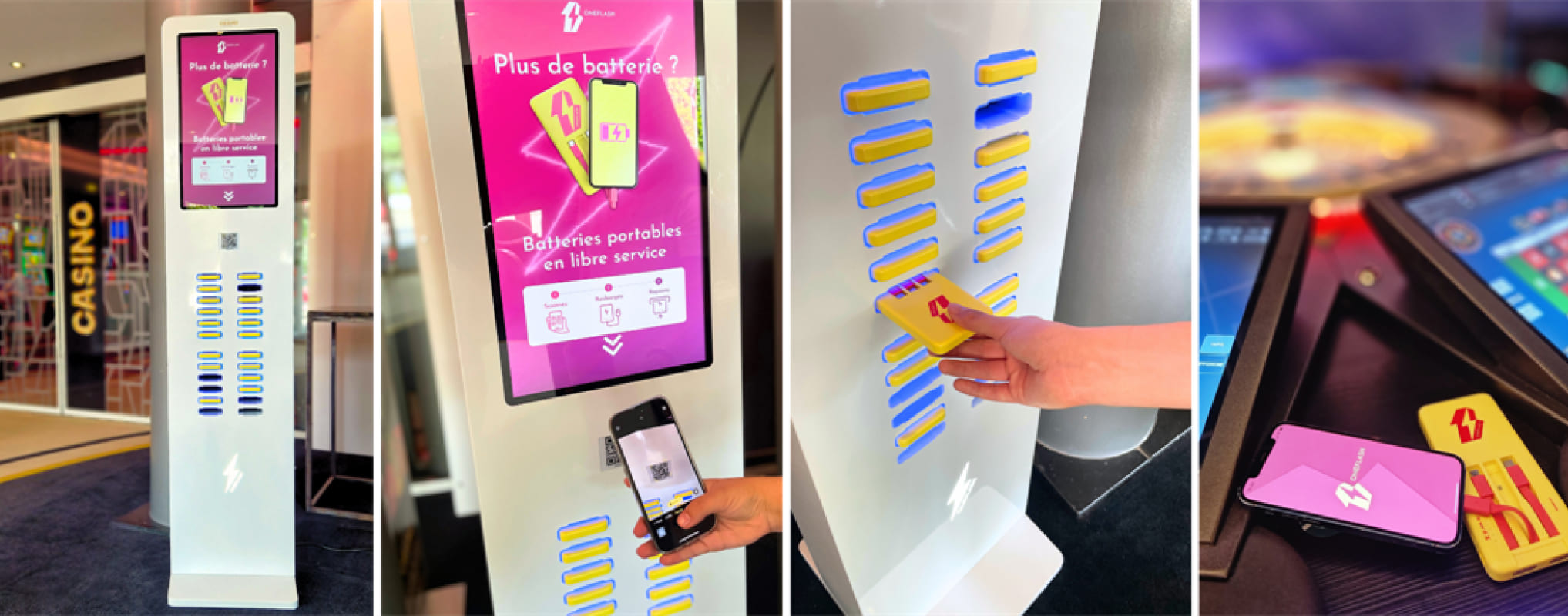
In the end, the question is not whether a locker can still charge a phone: technically, yes. The real question is whether this model still keeps pace with your users. The mobile charging station answers the same original promise: avoiding a dead battery on site, but with an architecture and an experience aligned with current habits: on the move, connected and rarely ready to part with their smartphone, even for a few more percent of battery.
Discover OneFlash, the European leader in self-service mobile charging!
Découvrez tout nos autres articles :
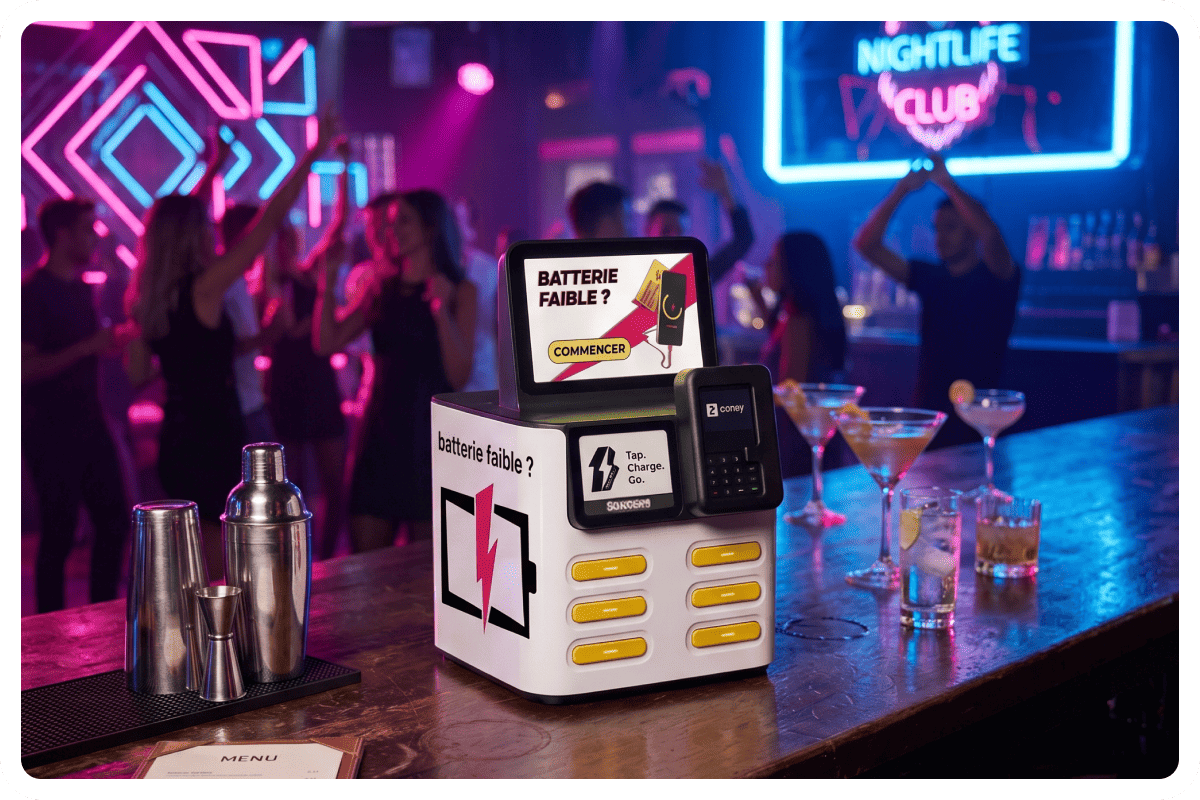
Self-service power banks: phone charging for bars and nightclubs

Standalone power bank station: phone charging at the restaurant
Customer loyalty in restaurants: bring guests back with phone charging
Customer knowledge: how to collect the right data
Marketing activation: turning every interaction into an engagement lever for your brand
.jpeg)
Phone lockers: the limits and the modern alternative
Charging stations in conference centres: equipping an event

Charging stations in theme parks: improving the visitor experience all day long
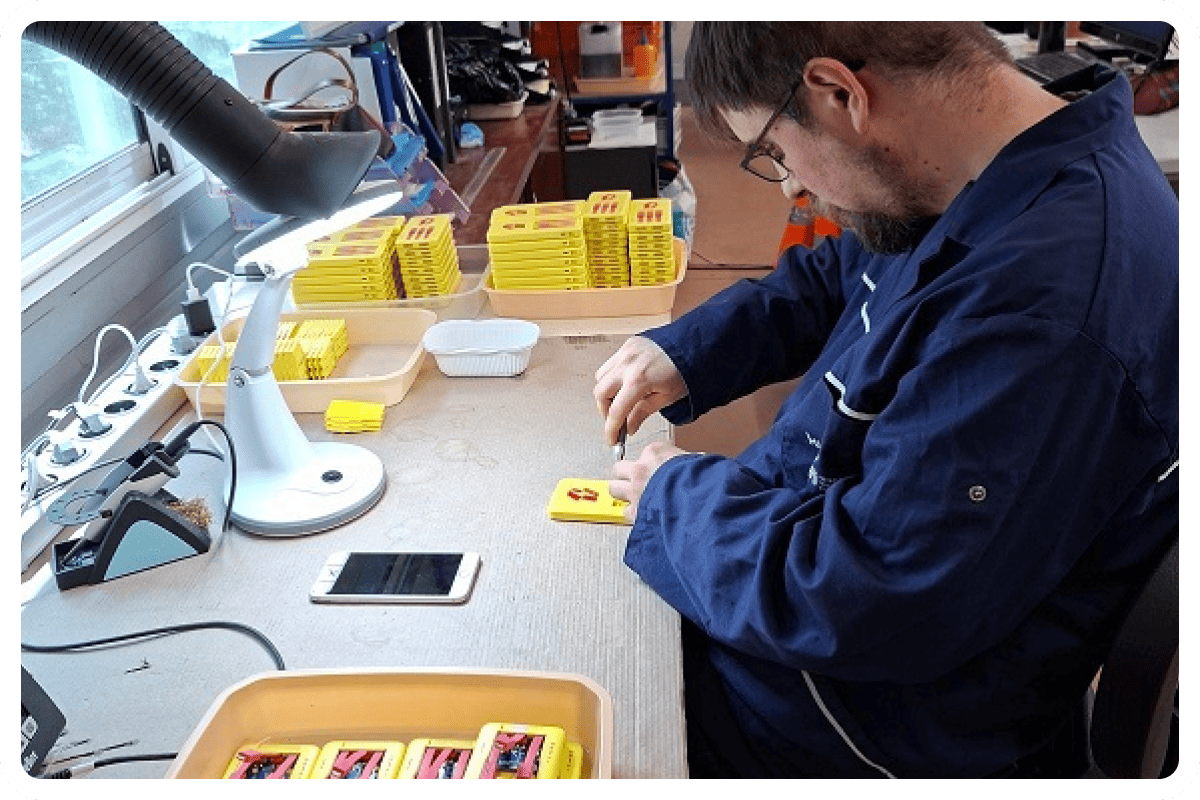
CSR approach: the mobile charging station, a concrete lever for businesses welcoming the public
Grégory Sion (Pierre & Vacances): Share Your Power - Episode 14
Sébastien Manceau (European Camping Group): Share Your Power - Episode 13
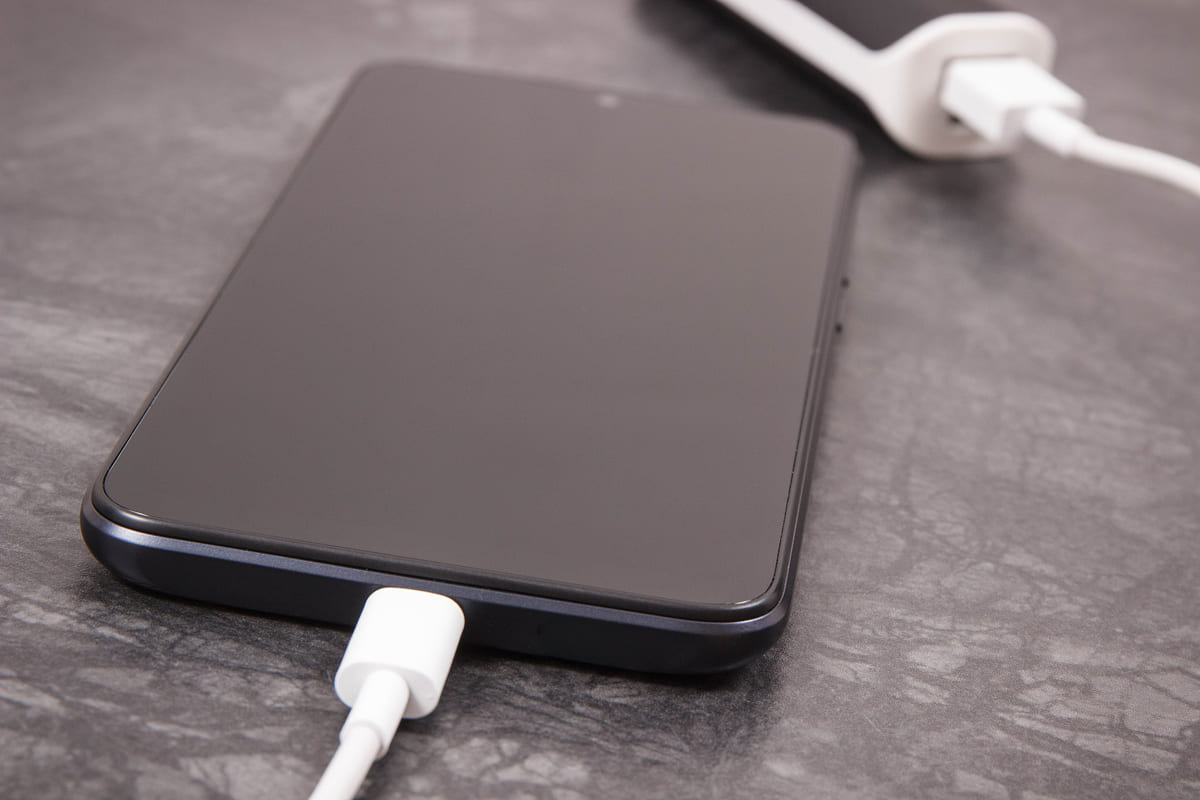
Mobile charging: every way to charge your phone easily

Dominique Thillaud (Compagnie des Alpes): Share Your Power - Episode 12
.jpeg)
Charging stations: the complete guide to choosing

Mike Hadjadj (La Retail Tech): Share Your Power - Episode 11
%2520(1).jpeg)
USB fast charging: the complete guide

Antoine de Tavernost (Auditoire): Share Your Power - Episode 10
Charging station rental: the complete guide

Power banks for mobile devices: the complete guide
Phone charging in public places: wall sockets
Ask Jamy! How does a power bank work?

In-store customer experience tools: the levers to activate

Are portable power banks dangerous?