USB fast charging: the complete guide
Fast charging has become a decisive criterion when buying a new smartphone or a charger. In just a few years, charging technologies have multiplied to the point that it is hard to find your way around USB PD, Quick Charge, VOOC and other proprietary standards. Yet understanding these differences is essential to choose a genuinely high-performing product, compatible with your device and able to charge its battery efficiently and safely. This complete guide explains how fast charging works, which are the best standards available, how to identify the right mains adaptor and the right cable, and above all how to avoid the pitfalls that can damage your phone or shorten the life of its battery.
Understanding fast charging technology
Before choosing a USB charger, you need to grasp exactly what the term fast charging covers. Fast charging is not simply a gain in power: it relies on an intelligent dialogue between the device and the charger.
Defining fast charging and its basic principles
Fast charging refers to any charging technology able to deliver significantly more power than the historic standard of 5 volts and 1 amp, or 5 watts. In practice, as soon as a charger exceeds 15 watts, you enter fast charging territory. The principle is to increase either the voltage, the current, or both at once to reduce the time needed to fill the battery. The device and the charger then negotiate an optimal voltage-current combination through a built-in protocol, which lets the maximum power be adapted to the battery's instantaneous health.
Exploring the USB PD and Quick Charge standards
Two standards dominate the market today. The first is USB PD, or USB Power Delivery, an open standard backed by the USB Implementers Forum. It is based on the USB-C type and can climb up to 240 watts in version 3.1, which comfortably covers the needs of smartphones, tablets and even laptops. The second is Qualcomm's Quick Charge, available in several generations, the most recent being Quick Charge 5. This Qualcomm standard stands out for its ability to deliver more than 100 watts while limiting heat through intelligent current splitting. Many recent chargers support both USB PD and Quick Charge, which maximises compatibility with the different devices on the market.
Analysing the differences between charging technologies
Beyond these two standards, some manufacturers have developed their own proprietary protocols. Oppo popularised VOOC technology, now offered as SuperVOOC able to reach 240 watts on some models. Samsung long used its own Adaptive Fast Charging standard before largely switching to USB PD PPS for its recent Samsung Galaxy phones. Apple, for its part, uses USB PD on its iPhone Pro and Pro Max. These proprietary technologies often offer higher performance than open standards, provided you use the original charger and cable supplied by the brand. Without this specific combination, the device automatically falls back to standard USB PD fast charging, which remains very acceptable but does not take advantage of the maximum power announced by the manufacturer.
Why opt for fast charging? The benefits for users
Why choose a fast charger rather than a standard model? The benefits go well beyond simply saving a few minutes.
A significant time saving when charging your devices
The main argument for fast charging is obviously speed. Where a standard 5-watt charger takes more than two hours to fill a modern smartphone, a 65-watt fast USB charger can take the battery from 0 to 80 percent in under thirty minutes. On some models fitted with VOOC or SuperVOOC, that stretch is even covered in under fifteen minutes. For intensive professional use or for travellers who only have short windows to plug their phone into a socket, the gain is huge.
The real impact on battery life
Does fast charging damage the battery? The question comes up constantly, and the answer deserves nuance. Fast charging puts more strain on lithium-ion cells because of the higher power and the heat generated. However, the algorithms built into modern smartphones manage charging intelligently: they deliver full power only in the first phase, then gradually reduce the current as the battery fills. As a result, the extra wear is marginal, generally under 10 percent over the battery's total lifetime, provided you use a certified charger and follow a few simple rules that we detail below.
Wide compatibility with smartphones and other devices
Which smartphones are compatible with fast charging? Almost all high-end models sold since 2020 support at least one fast charging standard. On the Apple side, every iPhone from the iPhone 8 onwards accepts USB PD, with a progressive increase in power across the iPhone Pro and Pro Max generations. At Samsung, recent Samsung Galaxy S and Note phones support up to 45 watts via USB PD PPS. Oppo and OnePlus stand out with VOOC and SuperVOOC, while Xiaomi pushes maximum power beyond 200 watts on some models. Beyond smartphones, USB fast charging also benefits wireless earbuds, smartwatches, tablets and even many recent laptops.

Choosing the right equipment for efficient charging
All the promises of fast charging depend on the quality of the equipment used. A poor cable can divide the power your device actually receives by three.
Comparing the mains adaptors and cables available
The mains adaptor and cable pair should be thought of as a coherent whole. A 65-watt USB PD adaptor is useless if the cable used is an old model limited to 2.4 amps. To make full use of fast charging, favour USB-C to USB-C cables marked E-Marker, which include a chip able to handle high voltages and currents above 3 amps. On the adaptor side, GaN models, based on gallium nitride, have become the reference: they offer the same power in a format half the size of a conventional silicon mains adaptor.
Spotting reliable, certified brands
Not all products are equal. To choose a certified, reliable product, look to recognised brands that invest in electrical safety and component quality. Several manufacturers now include recycled materials certified to the GRS standard, the Global Recycled Standard, which guarantees a share of material from recycling validated by an independent body. Choosing a GRS-certified product lets you combine technical performance and environmental standards, a criterion increasingly taken into account by consumers concerned about the ecological impact of their accessories.
Decoding the technical specifications: amps, volts and watts
Three units appear systematically on charger data sheets. The volt measures voltage, the amp measures current, and the watt is the product of the two and expresses real power. A quality fast charger lists several voltage-current combinations, for example 5V/3A, 9V/3A, 15V/3A and 20V/3A, to suit each device. The wider the range, the broader the compatibility. Be wary of models that announce a theoretical maximum power without specifying the USB PD profiles actually supported: these are often entry-level products with disappointing real-world performance.
Ensuring safety when using fast charging
The extra power of fast charging comes with safety requirements that users need to know about to protect their devices and battery.
Anticipating the risks of overheating and damage to devices
The main risk associated with fast charging remains overheating. A hot battery ages faster and loses its ability to deliver the same battery life over the cycles. Avoid charging your phone under a duvet, in a car exposed to the sun or in any environment above 30 degrees. If you notice your smartphone heating abnormally while charging, unplug it and let it cool down before carrying on. Uncertified chargers are also a real threat: a low-end adaptor can deliver unstable voltage and damage your device's motherboard or battery. To sort the myths from the realities on how dangerous a battery is, read our dedicated article.
Adopting good practice for safe use
A few simple rules let you enjoy fast charging with peace of mind. Always use a USB charger from a recognised manufacturer, check for the CE marking and favour products certified by your smartphone's manufacturer. Inspect your cables regularly: a cable with a damaged sheath or oxidised pins should be replaced immediately. Finally, never leave a charger plugged into a socket when you are not using it, not for fear of fire, but because it wears out its internal components prematurely and can open the way to malfunctions in the medium term.
Finding fast charging on the move when no socket is available
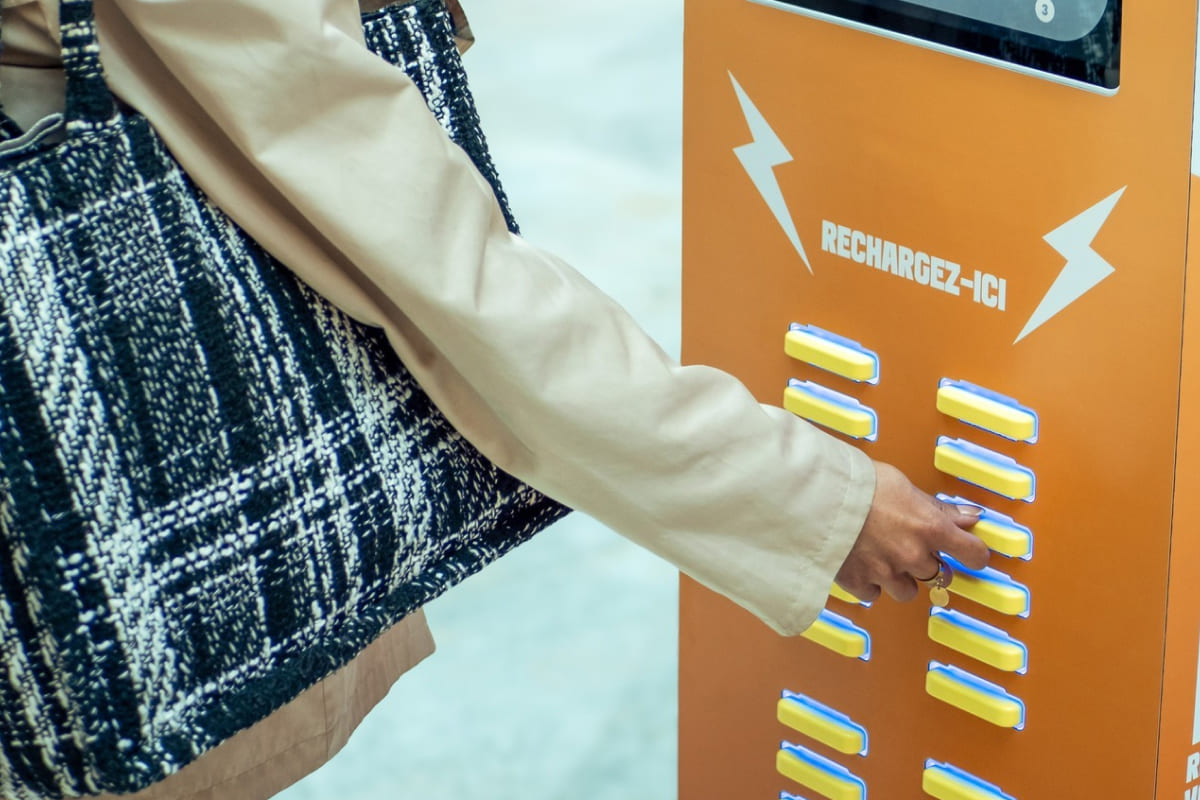
One of the paradoxes of fast charging is that its power is useless if you do not have access to a mains socket when you need one. On the move, on transport, in a shopping centre or at an event, it can sometimes be hard to find an accessible charging point. Portable power banks are a first solution, but they require you to remember to charge them beforehand. A second, more practical answer has taken hold in recent years in busy venues: self-service mobile charging stations, which let you borrow a power bank that is already charged and return it to any partner station in the network. These systems now equip stations, airports, shopping centres, stadiums, casinos and conference centres, and offer a credible alternative to the classic charger for anyone who values freedom of movement.
In summary
How does fast charging work? By increasing the power delivered and intelligently managing voltage and current through protocols such as USB PD, Qualcomm's Quick Charge or Oppo's VOOC, it lets you charge a smartphone in a fraction of the time needed with a standard charger. To get the most out of it, choose a USB charger from a recognised brand, pair it with an E-Marker compatible USB-C cable, and follow good safety practice to preserve your battery. Whether you use an iPhone Pro Max, a Samsung Galaxy or an Oppo model, fast charging is now a mature, accessible and safe standard, provided you use equipment up to the technologies it claims to exploit.
Discover OneFlash, the European leader in self-service mobile charging!
Découvrez tout nos autres articles :
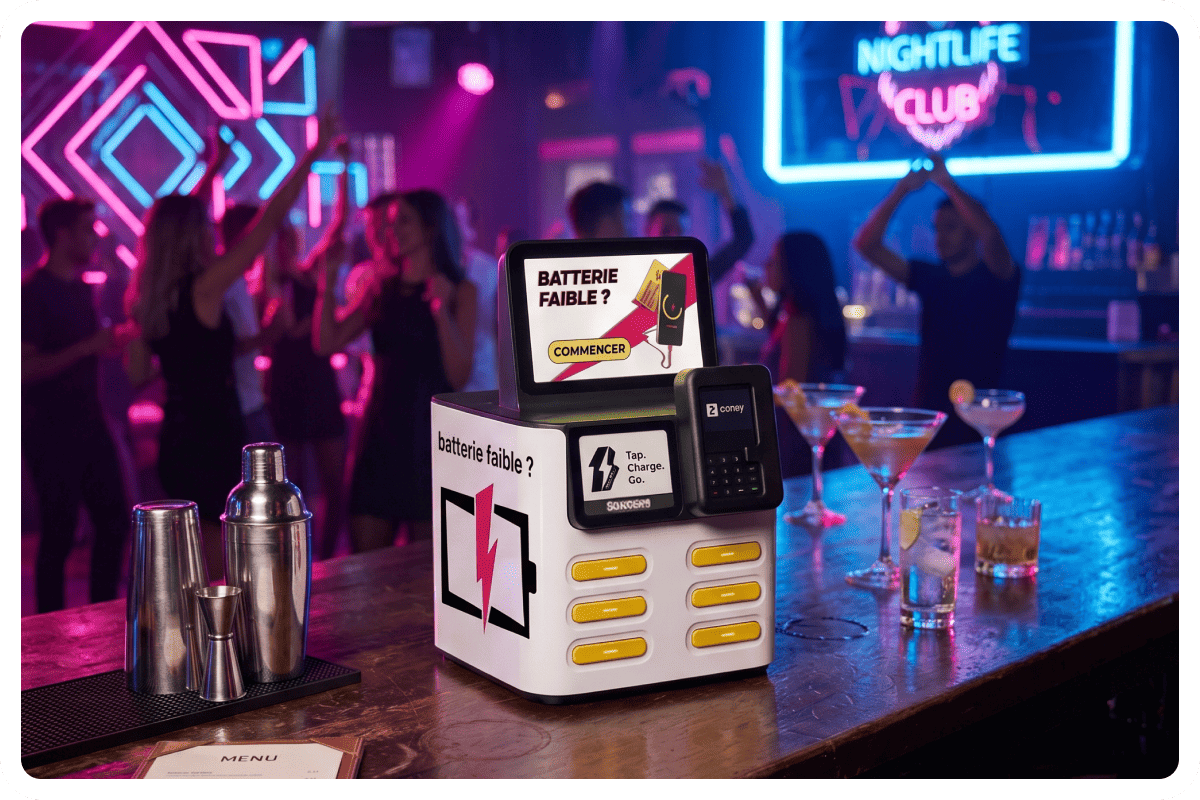
Self-service power banks: phone charging for bars and nightclubs

Standalone power bank station: phone charging at the restaurant
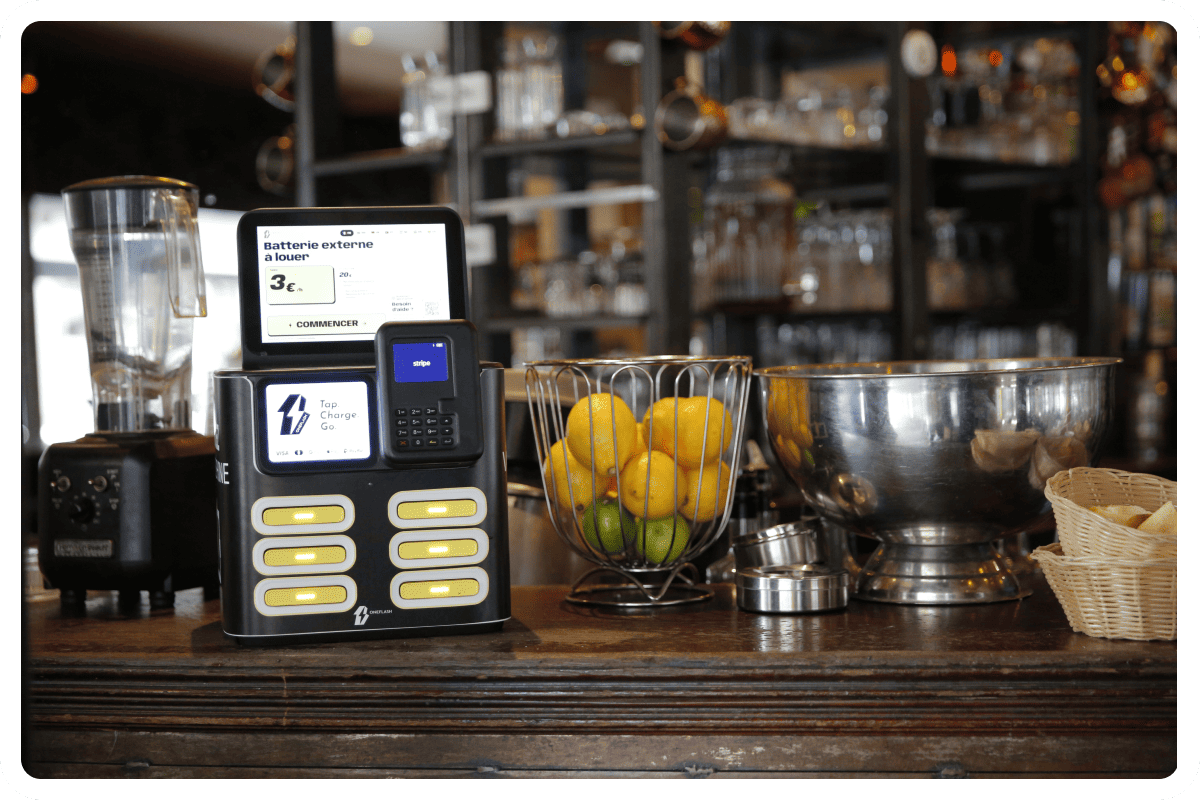
Customer loyalty in restaurants: bring guests back with phone charging

Customer knowledge: how to collect the right data
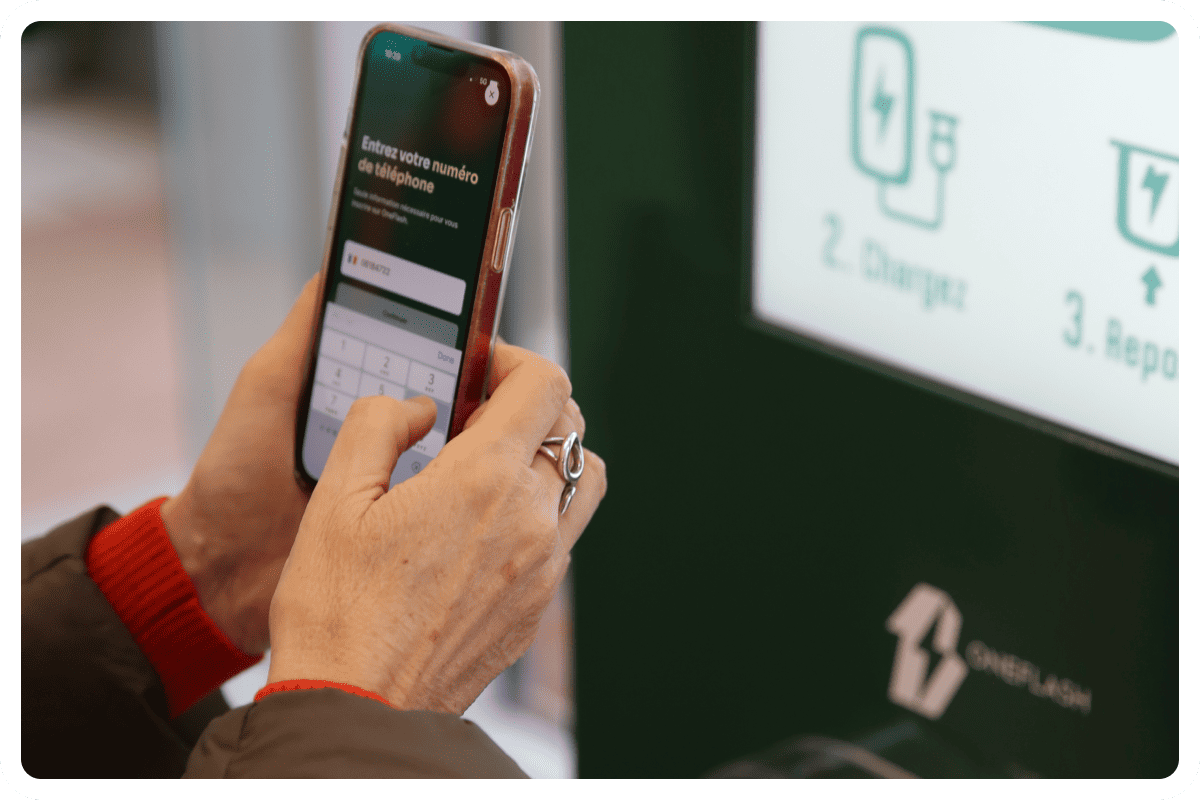
Marketing activation: turning every interaction into an engagement lever for your brand
.jpeg)
Phone lockers: the limits and the modern alternative
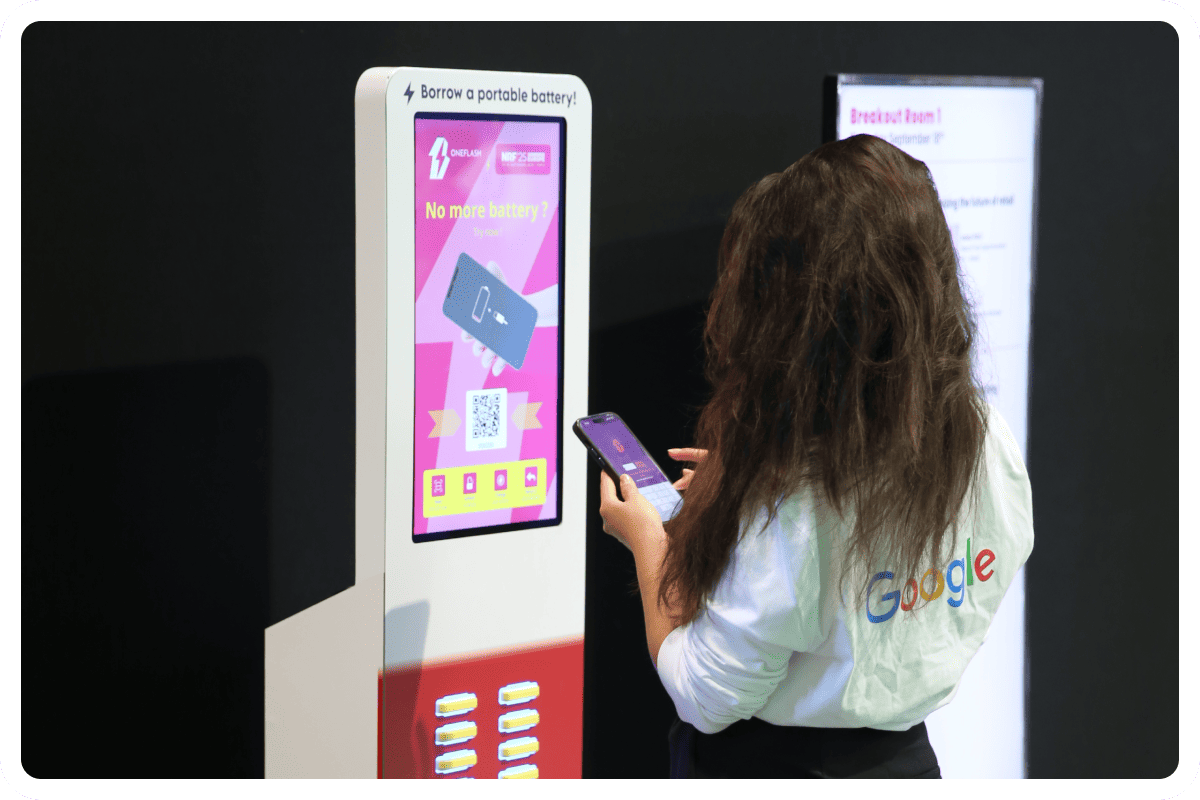
Charging stations in conference centres: equipping an event

Charging stations in theme parks: improving the visitor experience all day long

CSR approach: the mobile charging station, a concrete lever for businesses welcoming the public

Grégory Sion (Pierre & Vacances): Share Your Power - Episode 14
Sébastien Manceau (European Camping Group): Share Your Power - Episode 13
Mobile charging: every way to charge your phone easily

Dominique Thillaud (Compagnie des Alpes): Share Your Power - Episode 12
.jpeg)
Charging stations: the complete guide to choosing

Mike Hadjadj (La Retail Tech): Share Your Power - Episode 11

Antoine de Tavernost (Auditoire): Share Your Power - Episode 10
Charging station rental: the complete guide

Power banks for mobile devices: the complete guide
Phone charging in public places: wall sockets
Ask Jamy! How does a power bank work?

In-store customer experience tools: the levers to activate

Are portable power banks dangerous?
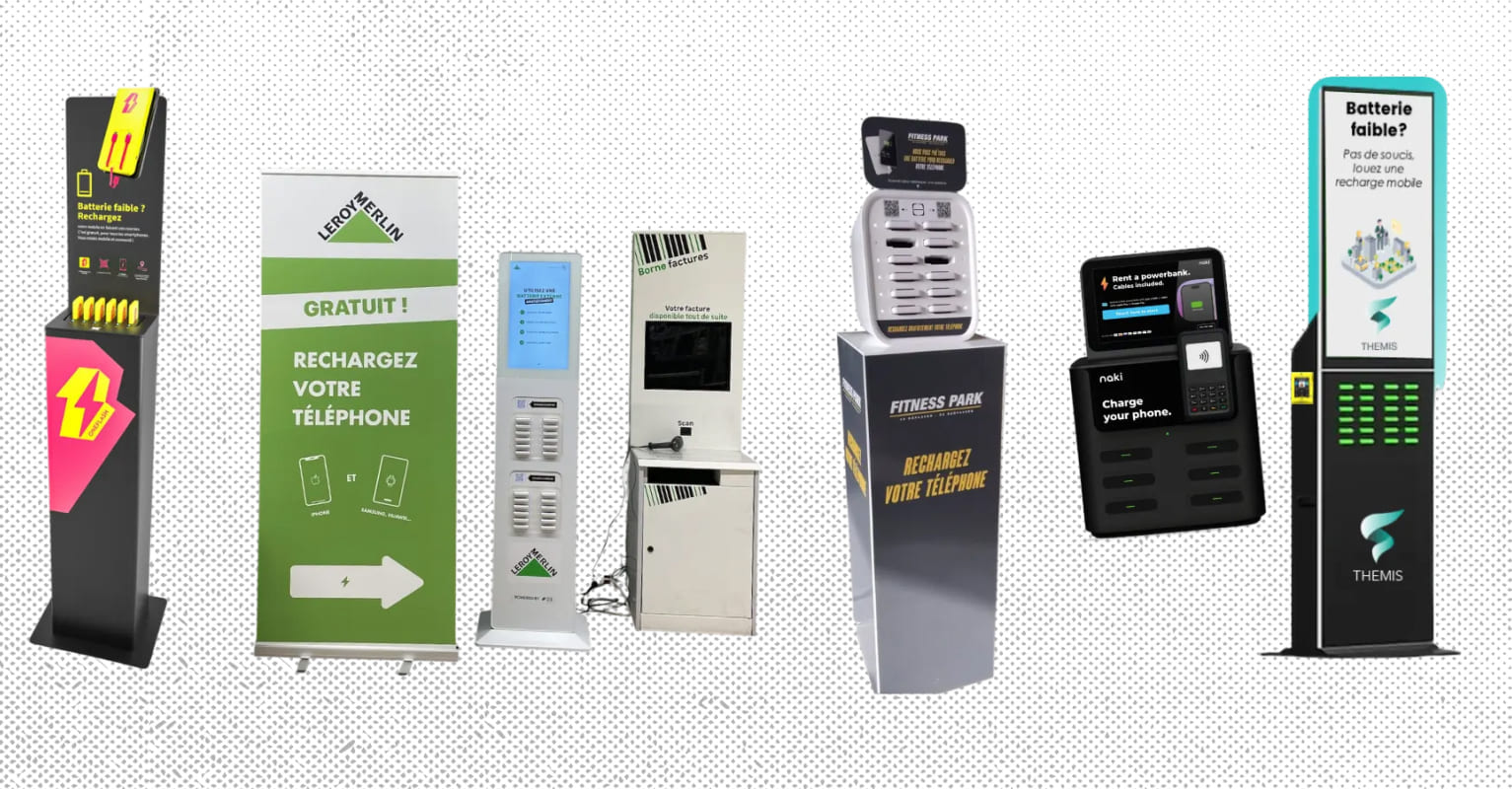
The best power bank station services