Customer knowledge: how to collect the right data

Customer knowledge has become one of the most strategic assets of a modern business. Without usable data on the profiles, habits and expectations of its customers, no personalisation or loyalty strategy can work. For physical venues that welcome the public (shopping centres, retail, airports, stations, leisure venues), the challenge is particularly complex: visitors come in, move around and leave, often without leaving any usable trace, which deprives the business of an essential raw material. This guide details the challenges of customer knowledge, the tools available to collect quality customer data, and presents a new category of physical devices that turn a concrete mobile charging need into a genuine touchpoint generating knowledge.
What is customer knowledge?
Before talking about tools and methods, it is worth clarifying exactly what this notion covers and why it holds such a central place in contemporary strategies.
A definition centred on lasting understanding of the customer
Customer knowledge refers to all the information collected, structured and used by a business to understand in depth who its customers are, what they are looking for, how they behave and what they expect from the commercial relationship. This knowledge is not limited to cold data such as a name or email address. It includes behavioural dimensions (visit frequency, shopping journey), transactional ones (history, average basket) and declarative ones (preferences, satisfaction, opinions expressed). It is the combination of these layers of information that builds an actionable view of the customer.
The distinction between raw data and usable knowledge
An isolated piece of customer data has little value. It is its integration into a coherent process, its connection with other information and its operational use that turn it into knowledge. A business can hold millions of records in its database without really knowing its customers, if this data is neither structured, nor analysed, nor used to guide decisions.
Why is it important to know your customers?
Three reasons justify the effort. First, personalisation: only content perceived as relevant truly captures the consumer's attention in a saturated environment. Second, loyalty: a recognised customer comes back more often, spends more and recommends more readily. Finally, financial performance: customer knowledge lets you optimise marketing investment, focus effort where it will produce the best return and reduce the risks linked to badly calibrated launches.
The specific challenges for venues open to the public
For a public venue, customer knowledge raises particular challenges that need to be understood before choosing suitable tools.
The paradox of the anonymous visitor
A shopping centre receives several thousand visitors a day but individually knows almost none of them. Unlike an e-commerce site that tracks every visit, the physical venue has no natural collection mechanism. Visitors come in, move around, sometimes buy, and leave without leaving any usable trace. This paradox deprives retailers of an essential raw material for improving their service and personalising their relationship with their customers.
Respecting rights and consent
Collection in a physical environment falls within a strict legal framework. The GDPR governs how consent is obtained, information procedures and the rights of the people concerned (access, rectification, erasure). Modern tools build these requirements in by design.
The balance between perceived value and effort required
Collection only works over time if the customer sees a benefit equal to the effort asked of them. A form that is too long or an insufficient reward produces few results and can even damage overall perception. Designing devices that first provide a useful service before asking for any information is the best approach to maximise the quality of collection.
Which tools can help with customer knowledge?
Several categories of tools now coexist to feed a business's customer knowledge.
The CRM as the foundation of the customer relationship
The CRM is the backbone of the approach. It centralises all the information available on each contact and serves as the single reference for all employees in contact with customers. Modern solutions such as HubSpot, Salesforce or Zoho offer advanced segmentation and analysis features that turn the contact database into a genuine sales management tool. Read our article on the benefits of a loyalty programme here.
BI tools for behavioural analysis
BI tools such as Tableau or Power BI make it possible to analyse customer behaviour in depth. They cross-reference multiple sources (sales, web browsing, marketing campaigns) to produce a unified view that feeds strategic decisions. In a high-volume B2C setting, these tools quickly become unavoidable.
Satisfaction surveys and customer reviews
Direct surveys remain one of the most reliable ways of gathering an opinion on the experience. Platforms such as Google, Trustpilot or Verified Reviews complete this set-up by capturing spontaneous feedback, particularly useful for a venue's local reputation.
Physical collection devices at the point of sale
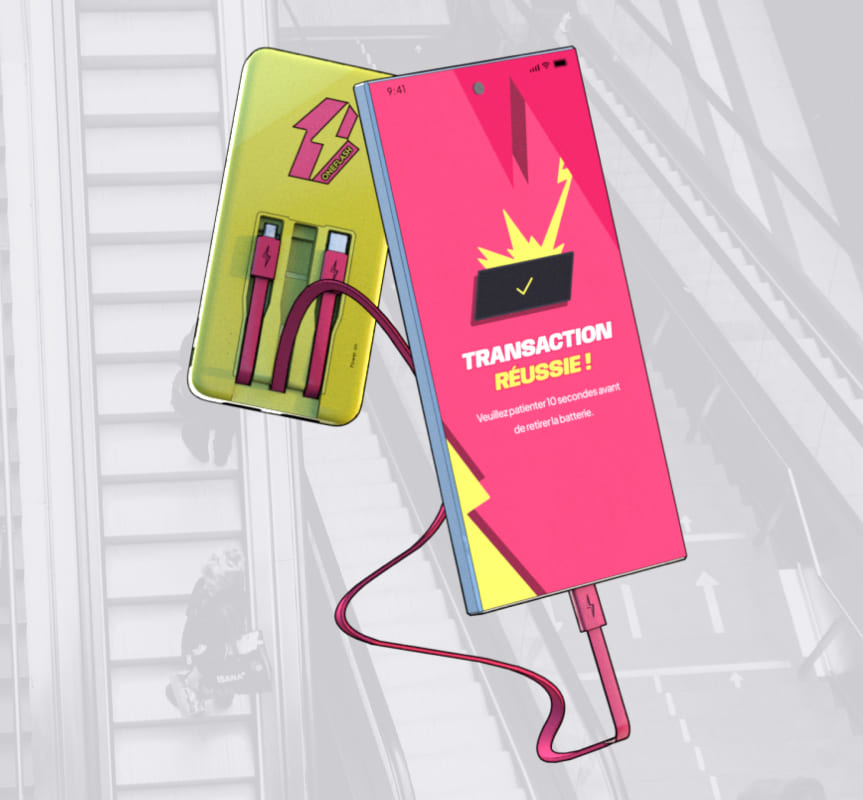
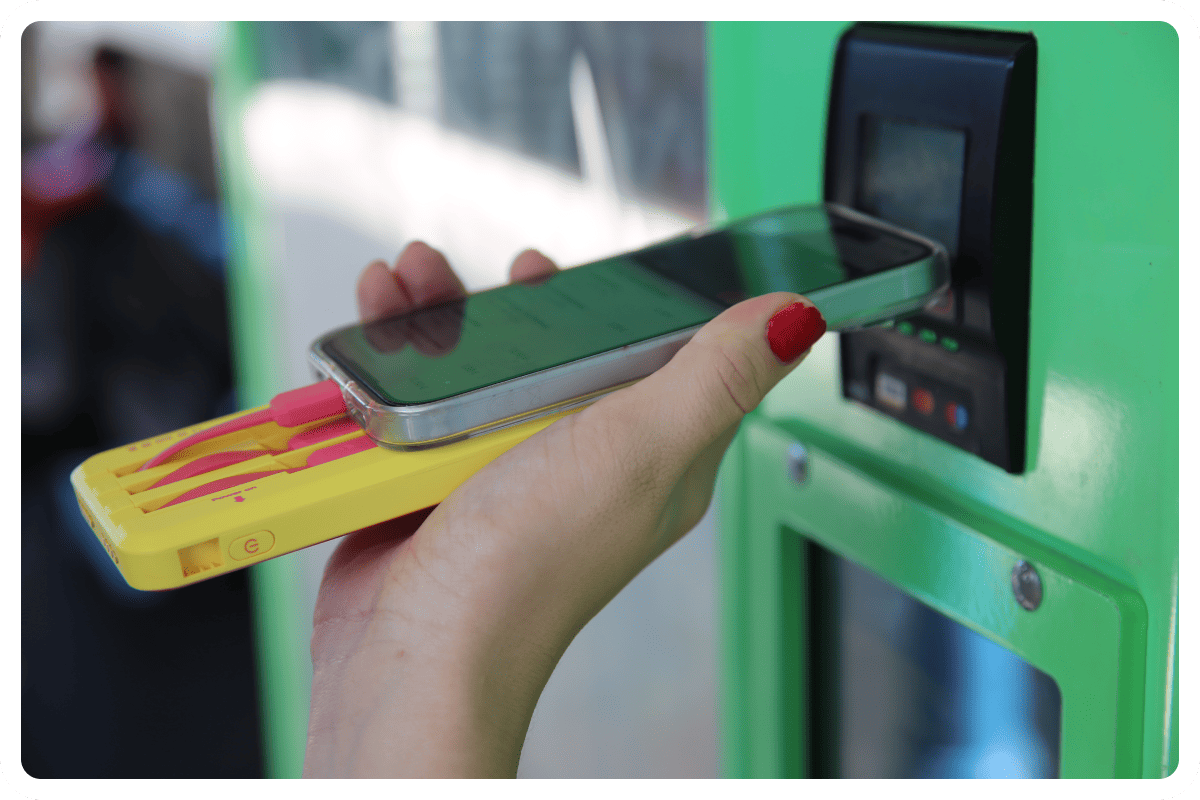
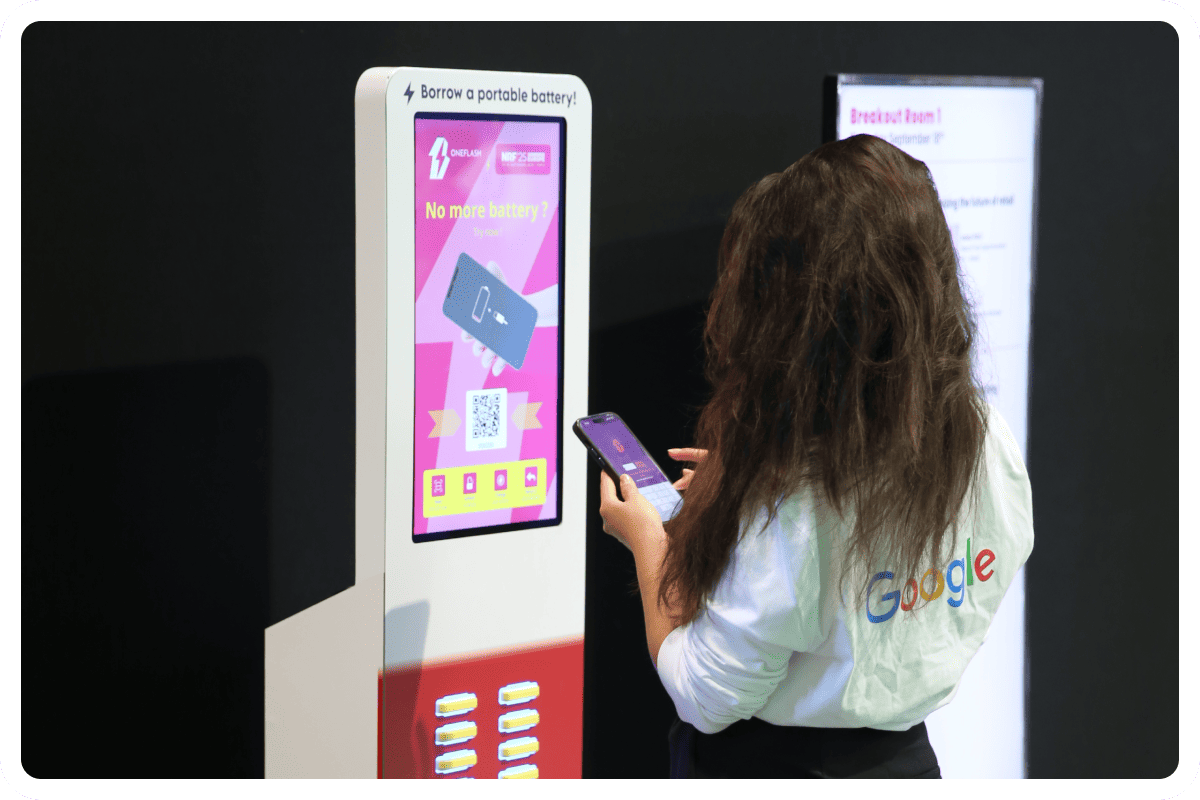
A new category is emerging: devices installed directly in welcome areas, which collect data at the very moment the customer is living their experience. Touch kiosks, interactive devices, connected screens, self-service mobile charging stations with built-in collection mechanisms: these tools finally make it possible to solve the paradox of the anonymous visitor. OneFlash is one of these tools: discover the service here.
The charging station as a touchpoint generating knowledge
Among physical devices, the self-service mobile charging station has established itself as one of the most effective tools for turning a utility need into an opportunity for customer knowledge.
The principle of a balanced value exchange
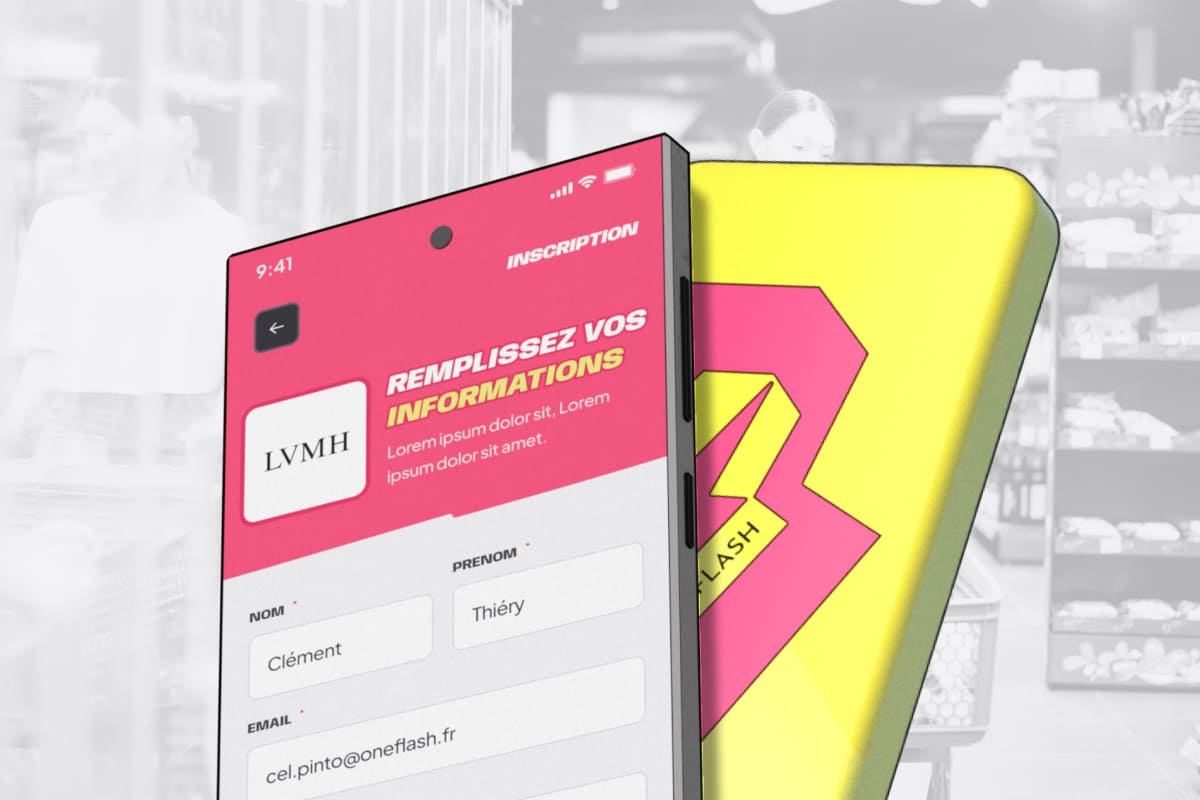
The strength of the model lies in a balanced win-win relationship. A visitor to a shopping centre, an airport or a stadium whose battery is running low finds an immediate solution to a real need. In exchange for minimal information (newsletter sign-up, joining a loyalty programme, GDPR consent), they get free charging. This place for a fair exchange produces a sign-up rate far beyond that of a standard web form.
Integrating the data into the CRM
Modern stations, such as those of the OneFlash network deployed in more than 2,000 venues across Europe, allow several collection formats. Contact details, stated preferences, loyalty programme membership, instant feedback on the experience: all information that feeds directly into the partner business's CRM via API. The data becomes immediately usable to segment the customer base and optimise commercial offers.
Valuable qualitative material on real habits
Beyond declarative data, the stations provide behavioural information rarely available otherwise: how often the same customer visits, preferred times, seasonality of use. This material considerably enriches the venue's knowledge of its activity and its real customer base.
How do you fill in a customer knowledge sheet?
Creating a structured sheet is the culmination of the approach. A few principles ensure it will be usable.
Structuring the information by category
An effective sheet organises information into coherent categories: identity and contact, demographics, preferences, interaction history, transaction history, satisfaction indicators. This structure lets any employee quickly find the information they need.
Enriching gradually rather than collecting everything at once
The classic mistake is to try to obtain everything at the first interaction, which produces high drop-off rates. The right approach is incremental: first collect the essential information, then gradually enrich the sheet at each new touchpoint.
Updating regularly to avoid obsolescence
A piece of data three years old often has no value left. Good management means regular updating, either by asking the customer directly or by inference from their recent behaviour. Without this hygiene, the contact database quickly degrades.
In summary
Customer knowledge has become an essential strategic asset for any business that wants to build a lasting relationship with its customers. It rests on the structured collection of reliable information, its use through suitable tools such as the CRM or BI solutions, and continuous updating. For physical venues, long disadvantaged by the paradox of the anonymous visitor, new in-store collection devices open transformative prospects. The self-service mobile charging station illustrates this shift well: it provides a concrete service, offers a fair exchange and feeds the CRM directly with qualified data, turning an everyday utility need into a genuine lever for lasting customer knowledge.
Discover OneFlash, the European leader in self-service mobile charging!
Découvrez tout nos autres articles :
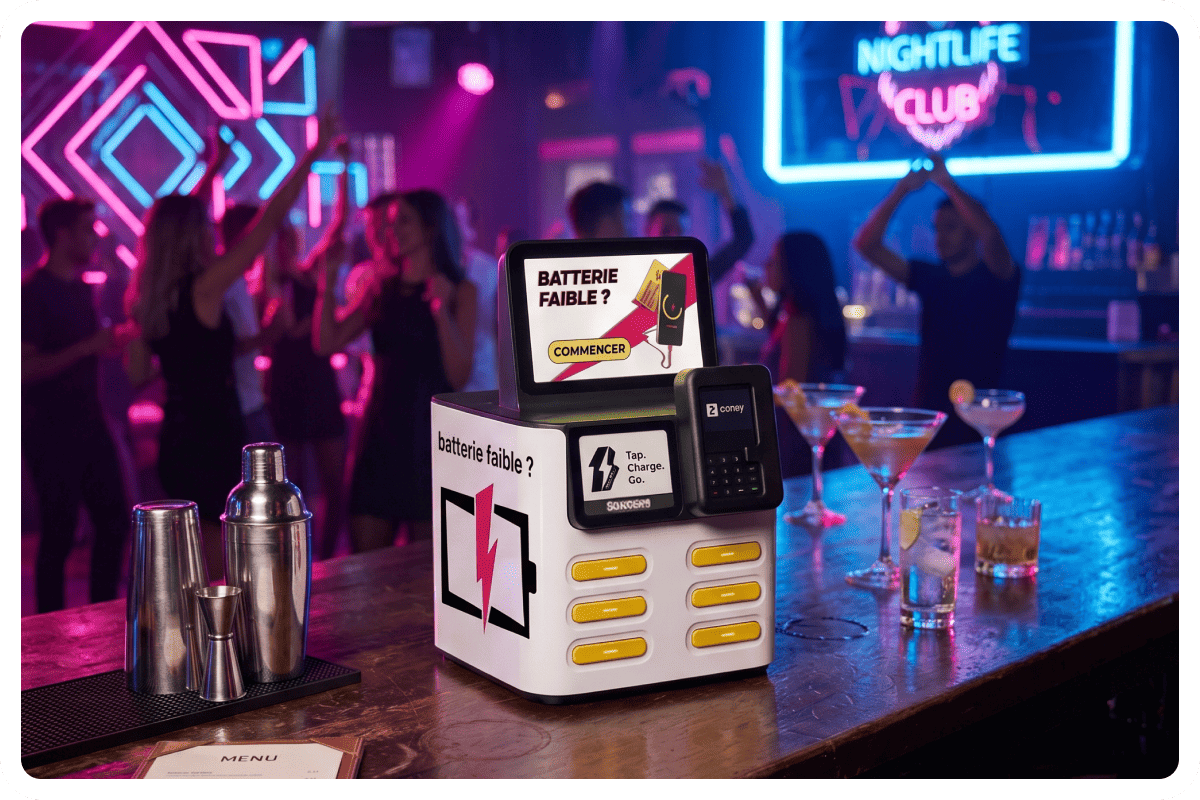
Self-service power banks: phone charging for bars and nightclubs
Standalone power bank station: phone charging at the restaurant
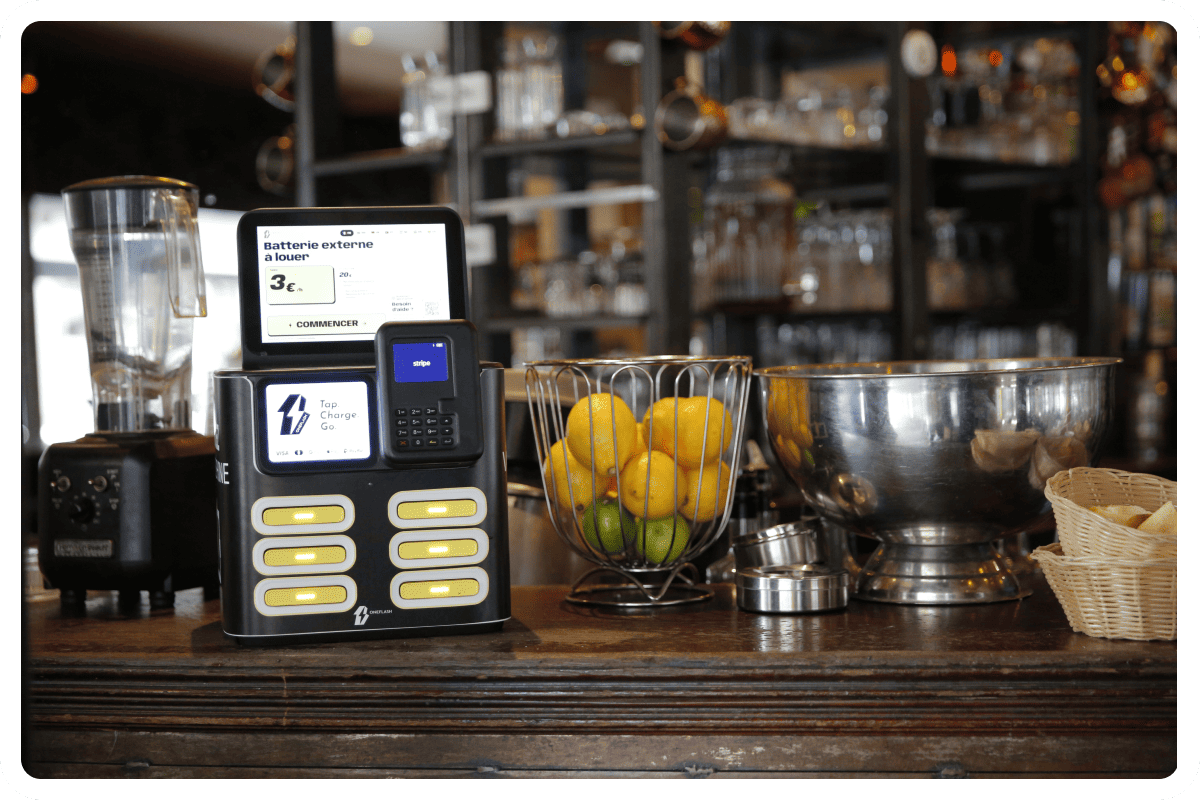
Customer loyalty in restaurants: bring guests back with phone charging
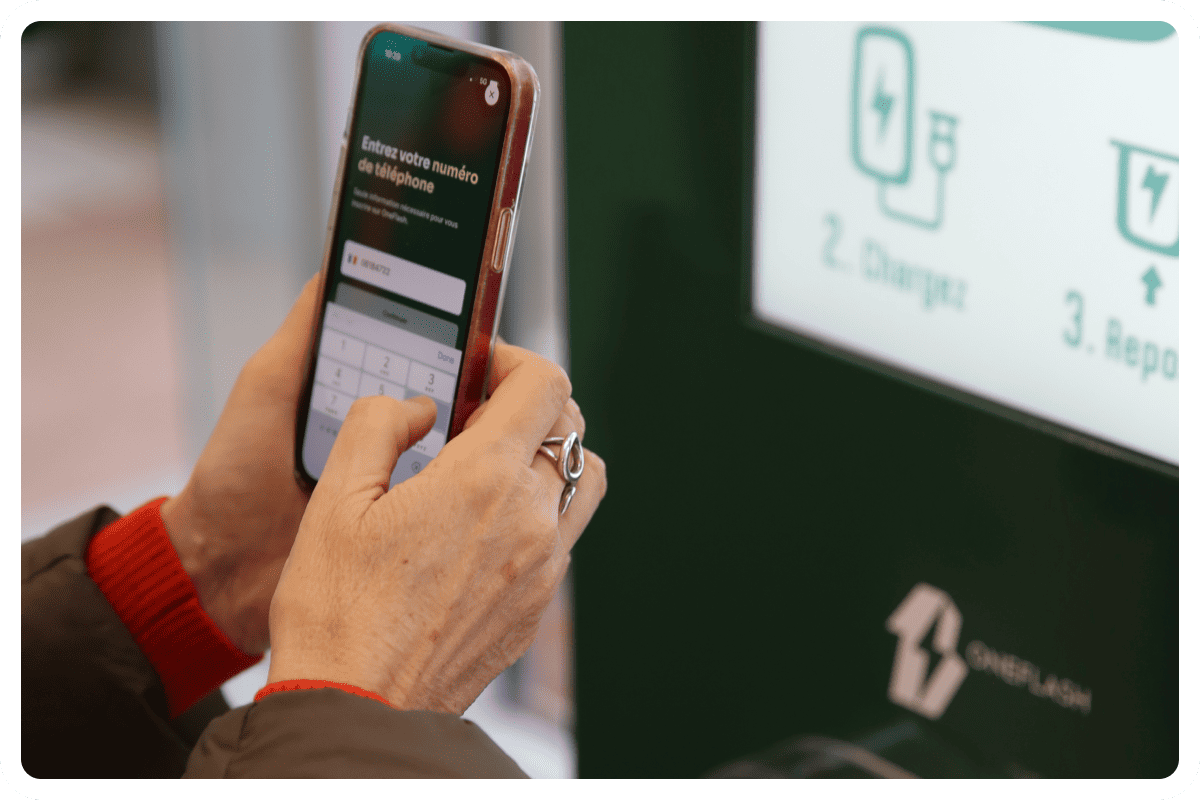
Marketing activation: turning every interaction into an engagement lever for your brand
.jpeg)
Phone lockers: the limits and the modern alternative
Charging stations in conference centres: equipping an event

Charging stations in theme parks: improving the visitor experience all day long
CSR approach: the mobile charging station, a concrete lever for businesses welcoming the public
Grégory Sion (Pierre & Vacances): Share Your Power - Episode 14
Sébastien Manceau (European Camping Group): Share Your Power - Episode 13
Mobile charging: every way to charge your phone easily

Dominique Thillaud (Compagnie des Alpes): Share Your Power - Episode 12
.jpeg)
Charging stations: the complete guide to choosing
Mike Hadjadj (La Retail Tech): Share Your Power - Episode 11
%2520(1).jpeg)
USB fast charging: the complete guide
Antoine de Tavernost (Auditoire): Share Your Power - Episode 10
Charging station rental: the complete guide
Power banks for mobile devices: the complete guide
Phone charging in public places: wall sockets
Ask Jamy! How does a power bank work?

In-store customer experience tools: the levers to activate

Are portable power banks dangerous?
The best power bank station services