Phone charging in public places: wall sockets

You are at the station. Your train shows a 35-minute delay. Your battery drops below 10% and your ticket is on your phone. You spot a wall socket and tell yourself you are fine... then you realise it is next to the toilets, too far from a seat, and that the charge barely moves. After five minutes, you have gained 1%. Technically, “it works”. In real life, nobody wants it.
That is exactly the problem with wall sockets in public places: they exist, but they do not meet the need. Charging is not judged on its presence, but on its ability to help quickly, effortlessly, safely and without tying people down.
If you run a venue open to the public, the question is therefore not “do we have a socket?”. It is rather: do we offer a charging service that is genuinely usable, here, now, for most visitors? And if the answer is no, there are more reliable alternatives, notably power bank station rental and the self-service power bank.
Why a wall socket “does not work” even though it is there
When a visitor says “the socket does not work”, they are not necessarily talking about an electrical fault. They are talking about their experience. In a public place, “it works” means: I plug in, I get enough battery to last, and I can carry on. If any of these is missing, the socket is perceived as useless.
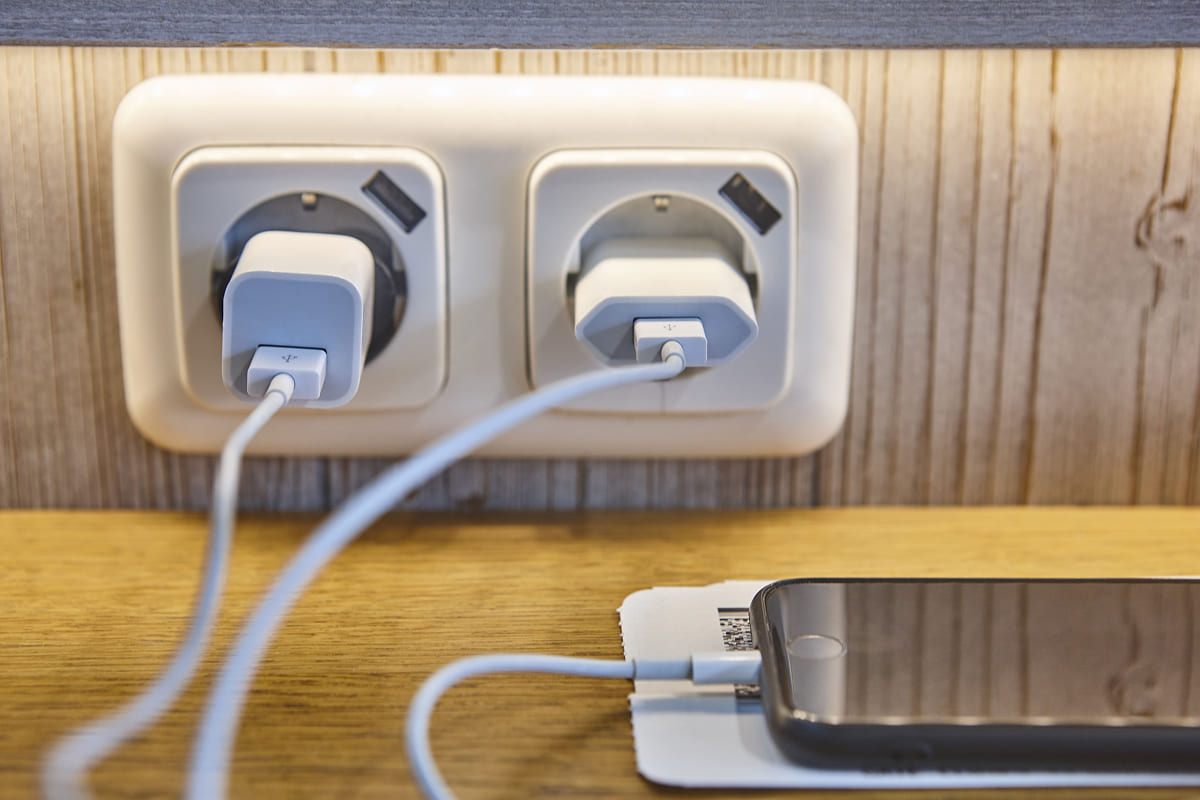
The first issue is slow charging. Even if the phone shows the little lightning bolt, the power actually delivered can be low: shared installation, ageing power strips, worn USB ports, a poor cable, a low-end adaptor. And there is a very concrete detail: people use the phone while it charges. The result: it feels like wasting time.
The second issue is accessibility. A socket that is too low, too far from a seat, in a corridor or an uncomfortable spot makes charging a pain. You can install ten sockets: if they are badly placed, they “exist” but they do not help. In a high-footfall venue, this quickly turns into frustration.
To sum up what visitors mean by “it does not work”:
- Charging too slow to be useful during the time on site
- Impractical socket (no seating, thoroughfare, discomfort)
- Hardware friction (wrong cable, no adaptor, bad contact)
- Risk / supervision (people do not want to leave their phone)
The real causes on the venue side and the user side (and why it gets worse over time)
Venue side: a “good intention” with no framework
A wall socket is often installed to be helpful... then left to its own devices. Yet charging in a public place quickly degrades if it is not treated as a service: mechanical wear (repeated plugging, knocks), dust, humidity, bad contacts. Even without an outright failure, the charge becomes unstable and the user leaves annoyed.
Second point: maintenance is often reactive. It gets repaired when someone complains. But most visitors report nothing: they give up and are left with the impression that the venue is “not practical”. In B2B this matters: charging directly affects the customer experience and the perception of how modern the site is.
User side: modern usage is incompatible with “staying glued to the wall”
Even if the socket is fine, the user may give up: they are missing an accessory, they do not want to keep watch over their smartphone, they need their phone while it charges. And there is a more discreet factor: social discomfort. Crouching down, isolating yourself in a corner, stretching a cable across a walkway... many people would rather keep 6% than expose themselves.
At bottom, wall sockets do not “fail” only for technical reasons. They fail because they demand too much effort for too little benefit.
If you keep wall sockets: how to avoid failure without making life complicated
It is possible to make a “wall socket” strategy work, but only if you frame it. Otherwise you create a ghost service: present on paper, disappointing on the ground. The idea is not to invest heavily, it is to make usage genuinely simple.
Start with location: a useful socket is one where waiting already happens, or where people can sit down without getting in the way. Avoid corridors and “technical” areas. And if your venue is busy, avoid the “single point”: a single concentrated area creates friction, even if it is well equipped.
Next, clarify the rule on accessories. Many venues fall into the in-between: sometimes there is a cable, sometimes not. That is the perfect recipe for frustration. Either you provide (and maintain). Or you do not provide (and say so clearly). Visitors accept an explicit rule better than an implicit promise that is not kept.
Express checklist (to make it genuinely usable)
- seating area, visible, without obstructing circulation
- several charging points rather than a single spot
- simple signage (“Charge here”)
- clear rule: cables provided or not provided
- regular check (even a quick one) + a reporting channel (QR code / reception)
Reliable alternatives when the wall socket is not the right answer
When your venue is lively, visitors move around, and you want a solution that works in use, you often need to change logic: let people charge without tying them down, without trailing cables, and without adding daily maintenance for you.
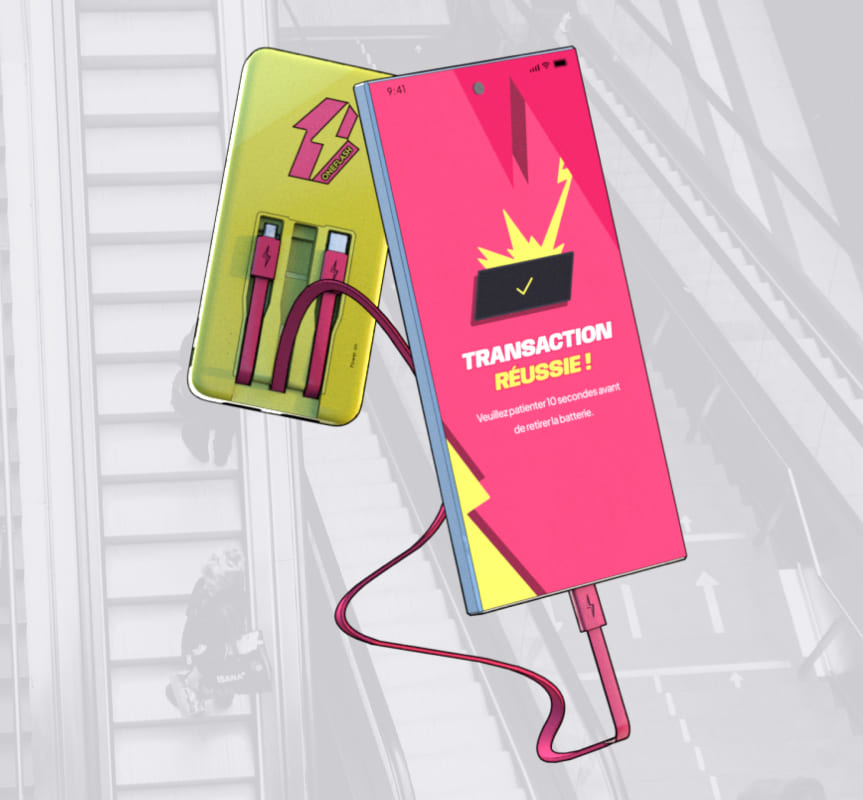
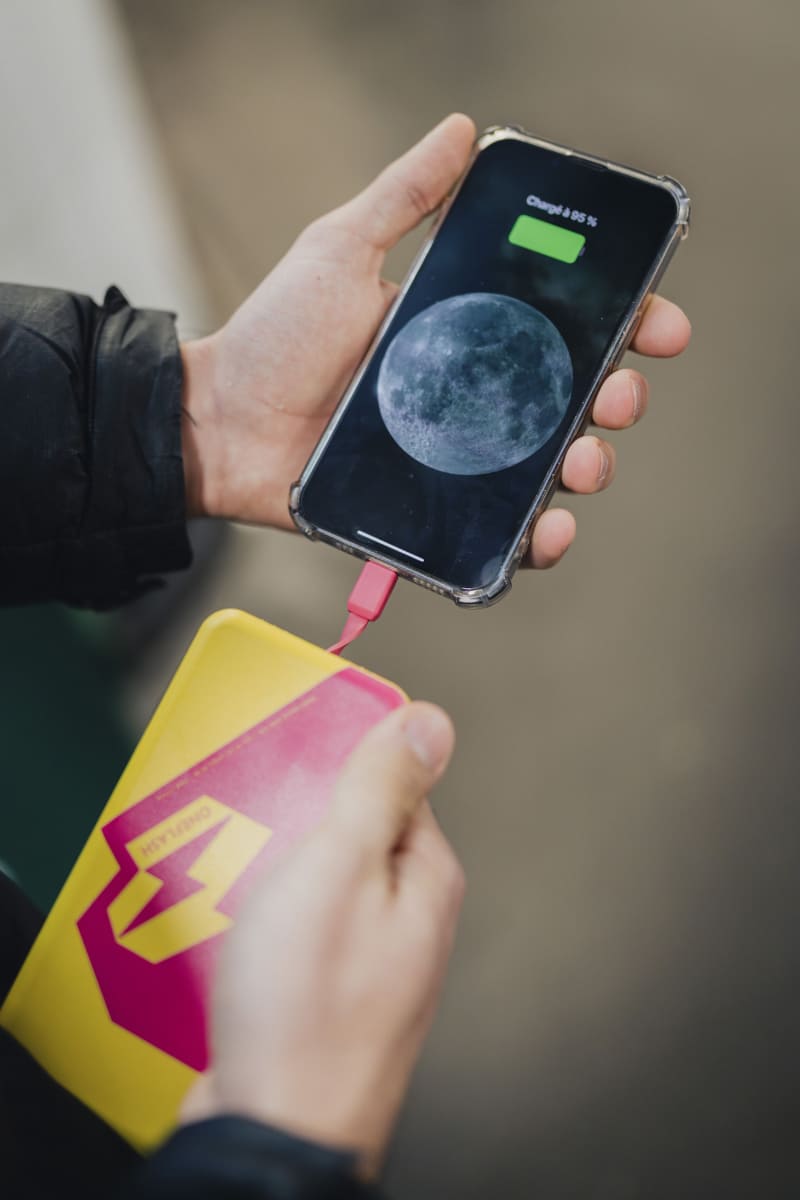
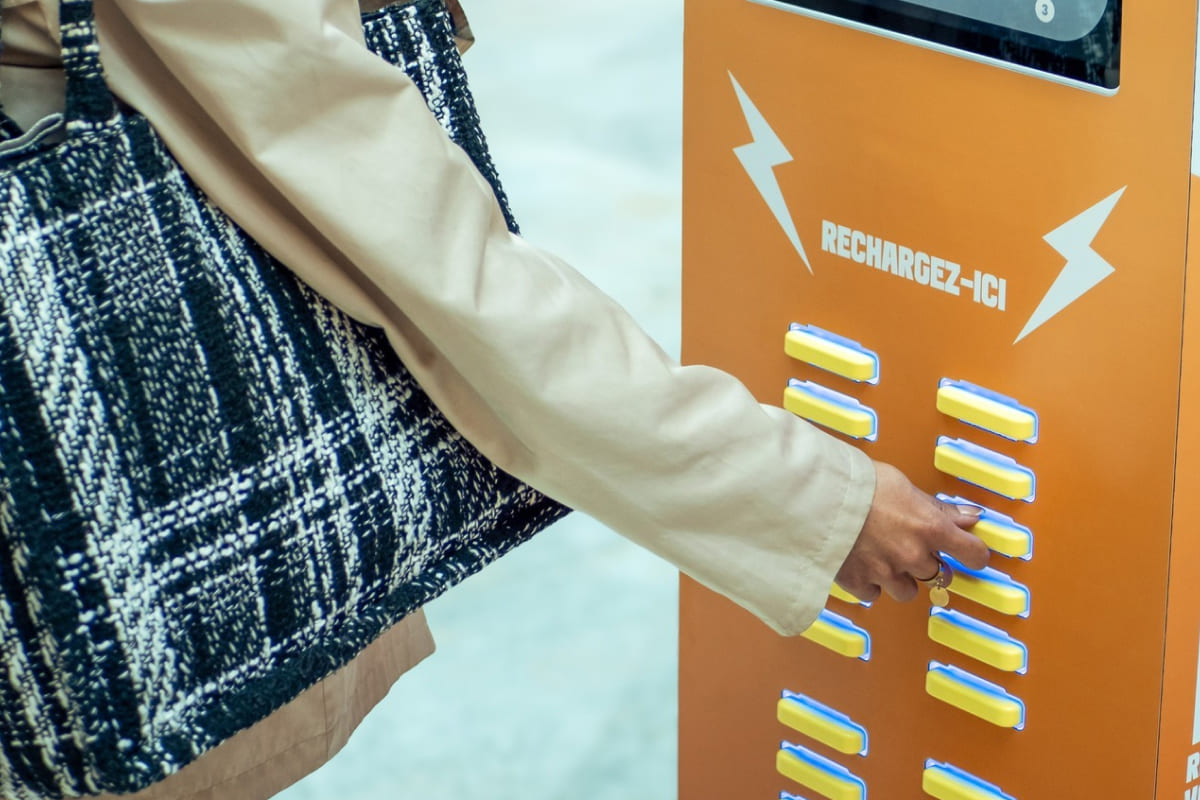
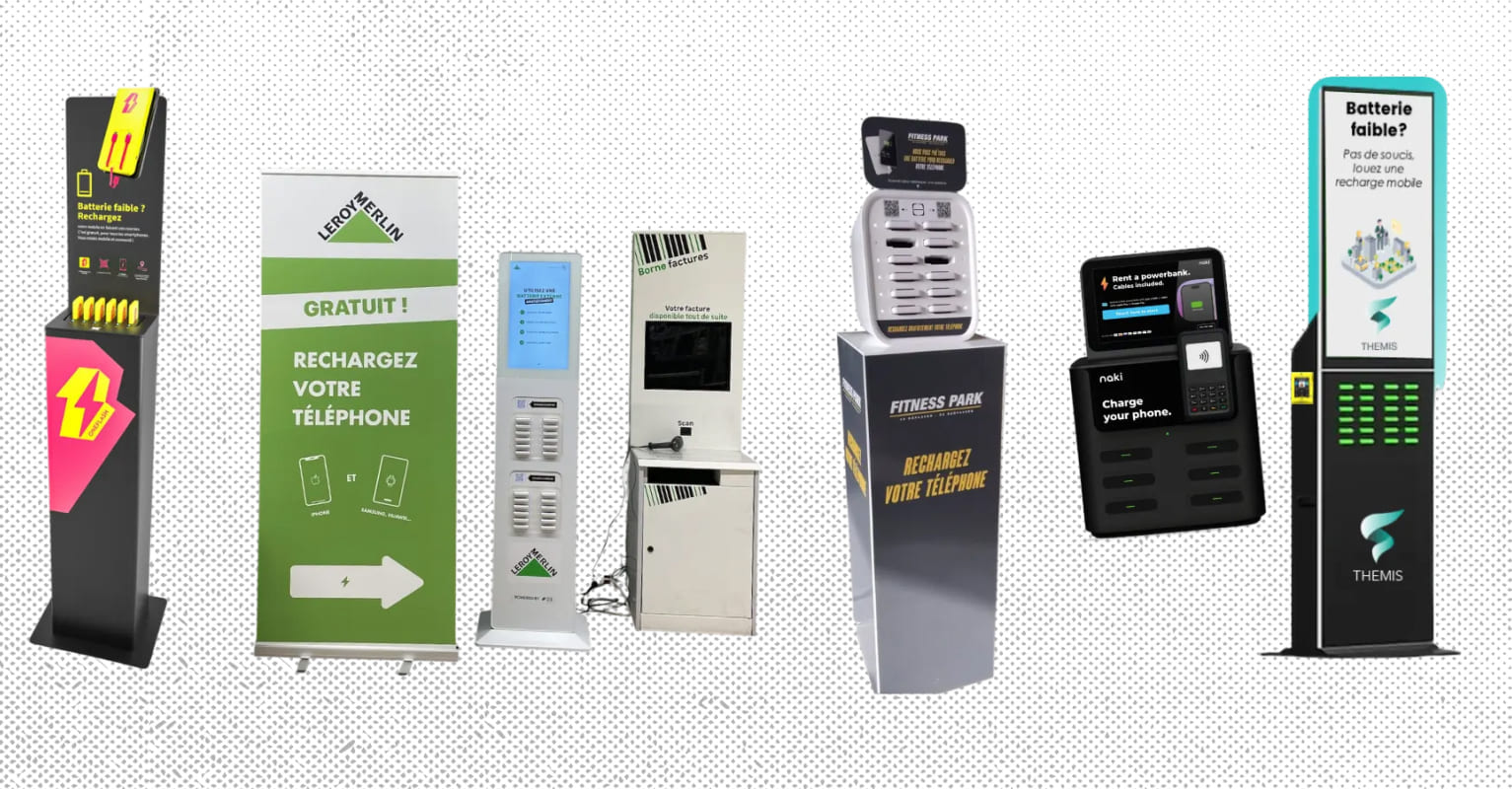
The most coherent solution in many cases is the self-service portable power bank. Rather than forcing visitors to stay near a wall, you let them borrow a power bank and carry on with their journey. That is precisely the point of a power bank station or a charging station for power banks: charging becomes mobile, smooth and immediately useful. In B2B, people often talk about phone charging station rental or portable power bank station rental, because the model is designed for operation in public venues.
Discover the best self-service mobile charging services!
Where it is most useful
Mobile charging via self-service power banks is particularly relevant in venues where people wait, move around, or need their phone continuously:
- Stations and transport hubs (waiting, tickets, connections)
- Shopping centres (long journey, mobility, continuous use)
- Retail and department stores (customers on the move, payment, loyalty)
- Events (high density, immediate need, demand peaks)
- Hospitals and clinics (waiting, companions, stress)
- Universities and campuses (long days, travel)
- Hotels and tourist sites (mobile visitors, photos, maps)
Why OneFlash?
With OneFlash, the point is not just to “install a charging point”. It is to offer a phone charging station as a service: visible, understood, used, and compatible with visitor mobility.
OneFlash recommendation
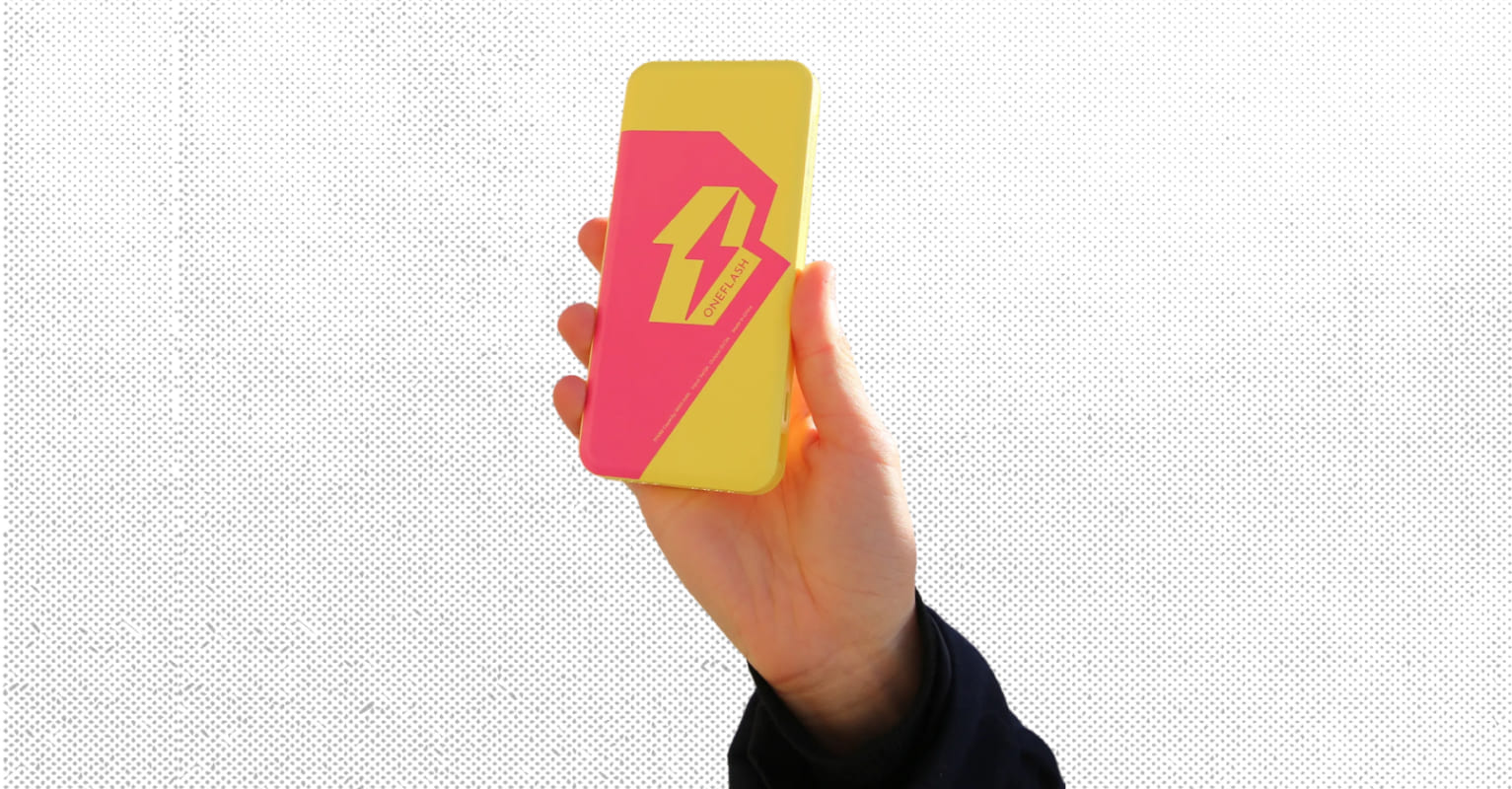
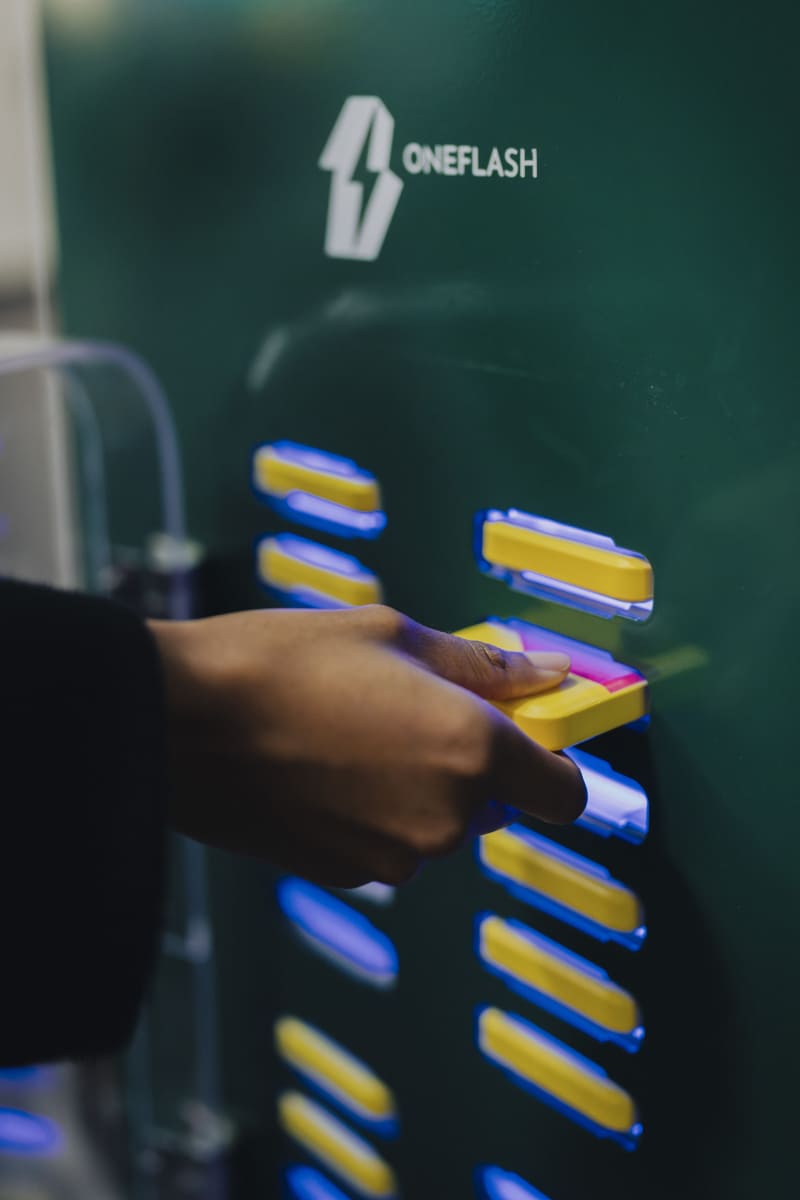
- Self-service power bank: your visitors borrow a portable power bank, carry on with their journey, then return it to a station.
- Visitor mobile charging: charging follows real usage, not the other way round.
- Operational charging station: a clear service on site, rather than sockets “somewhere”.
- Power bank station: less friction (cables, space, supervision), more adoption.
To go further, visit the FAQ for any practical question, and if you want to see whether it suits your venue, get in touch!
Découvrez tout nos autres articles :
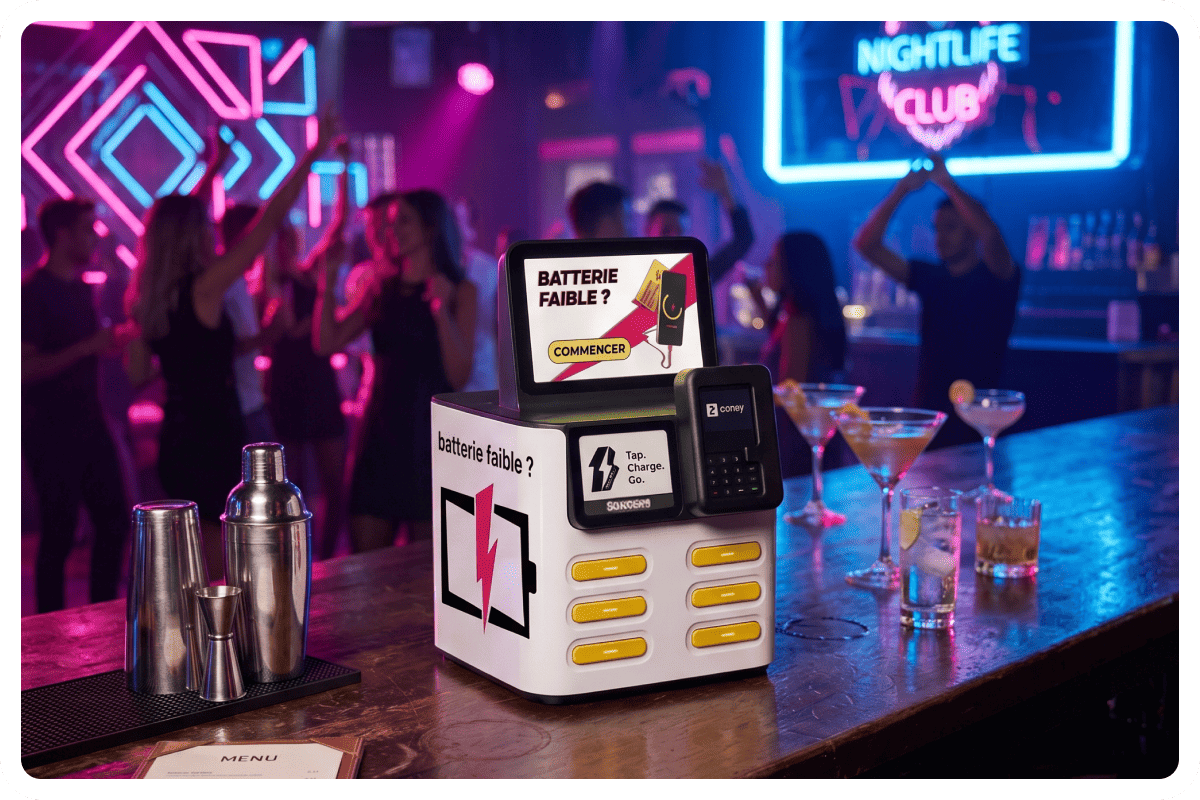
Self-service power banks: phone charging for bars and nightclubs
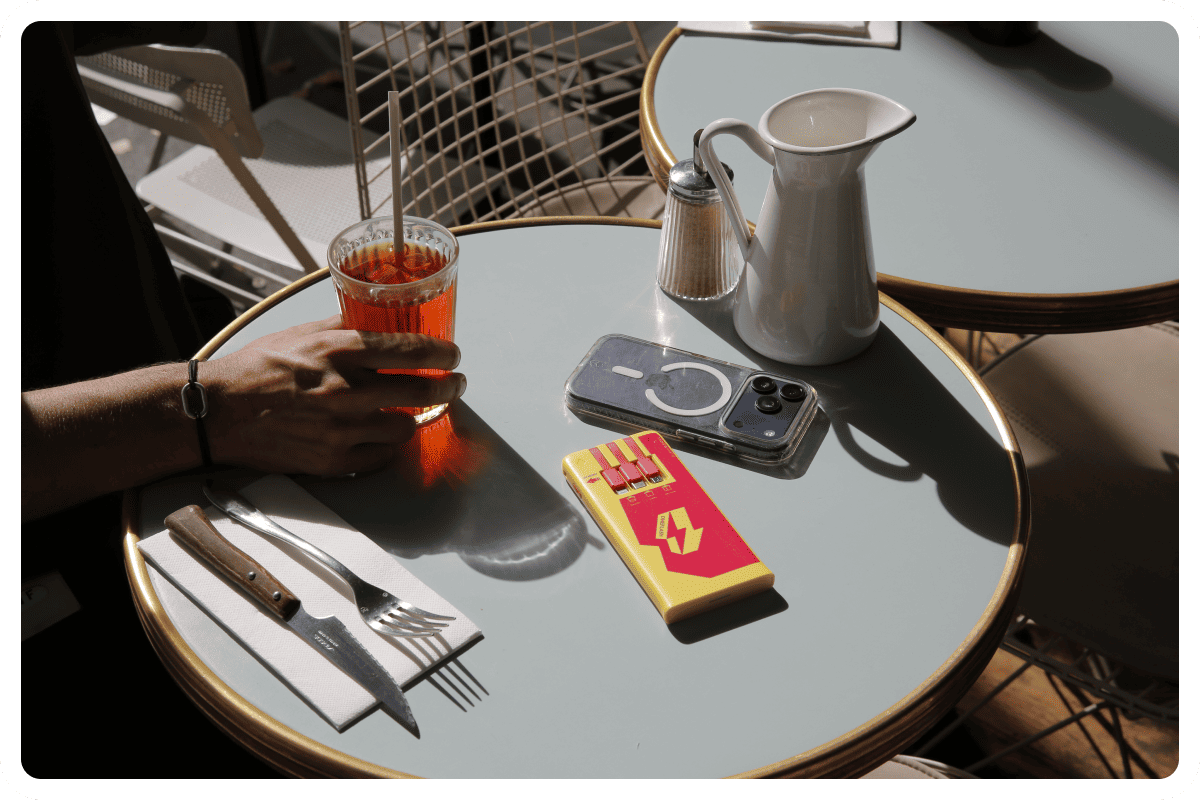
Standalone power bank station: phone charging at the restaurant
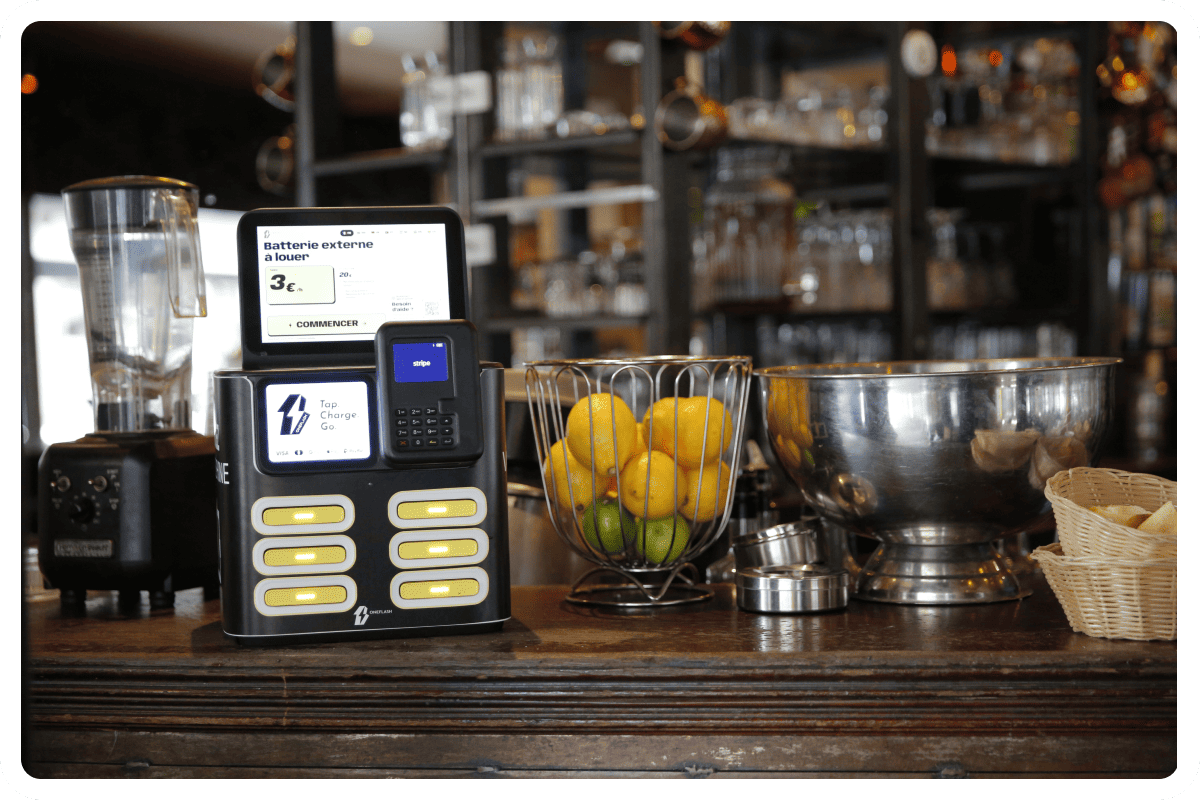
Customer loyalty in restaurants: bring guests back with phone charging
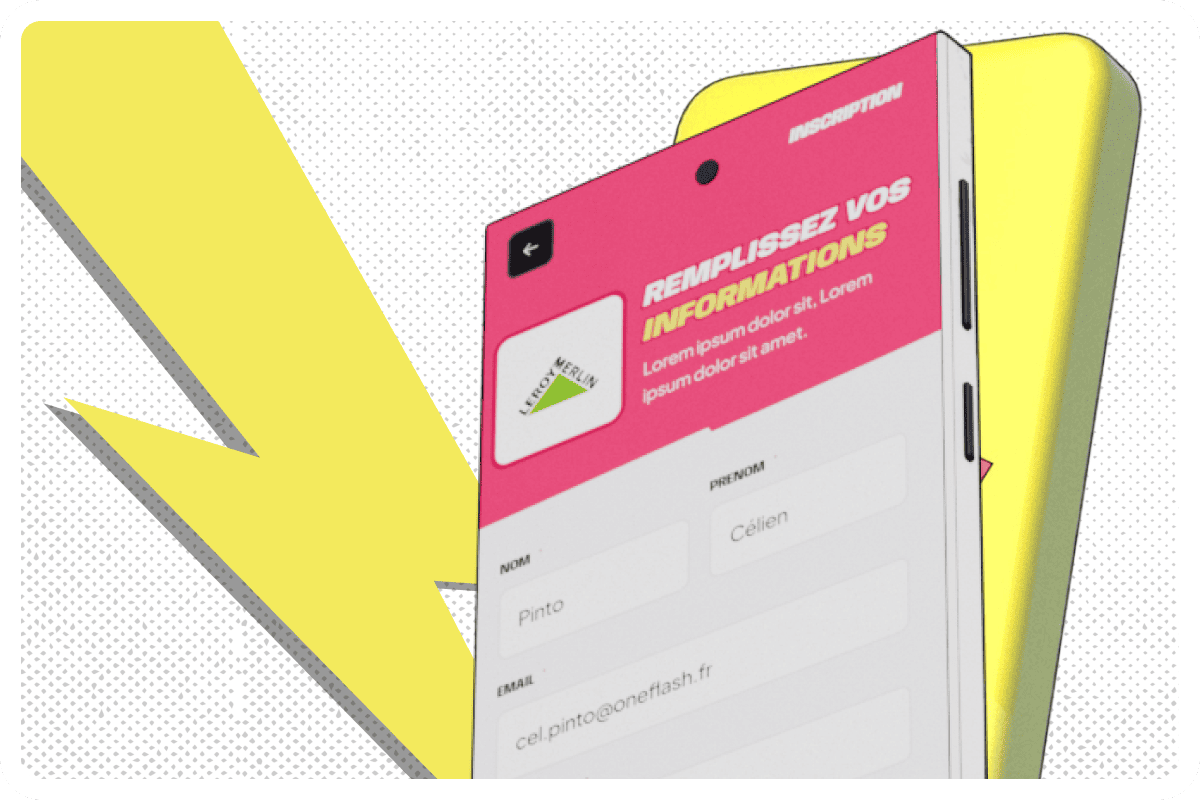
Customer knowledge: how to collect the right data
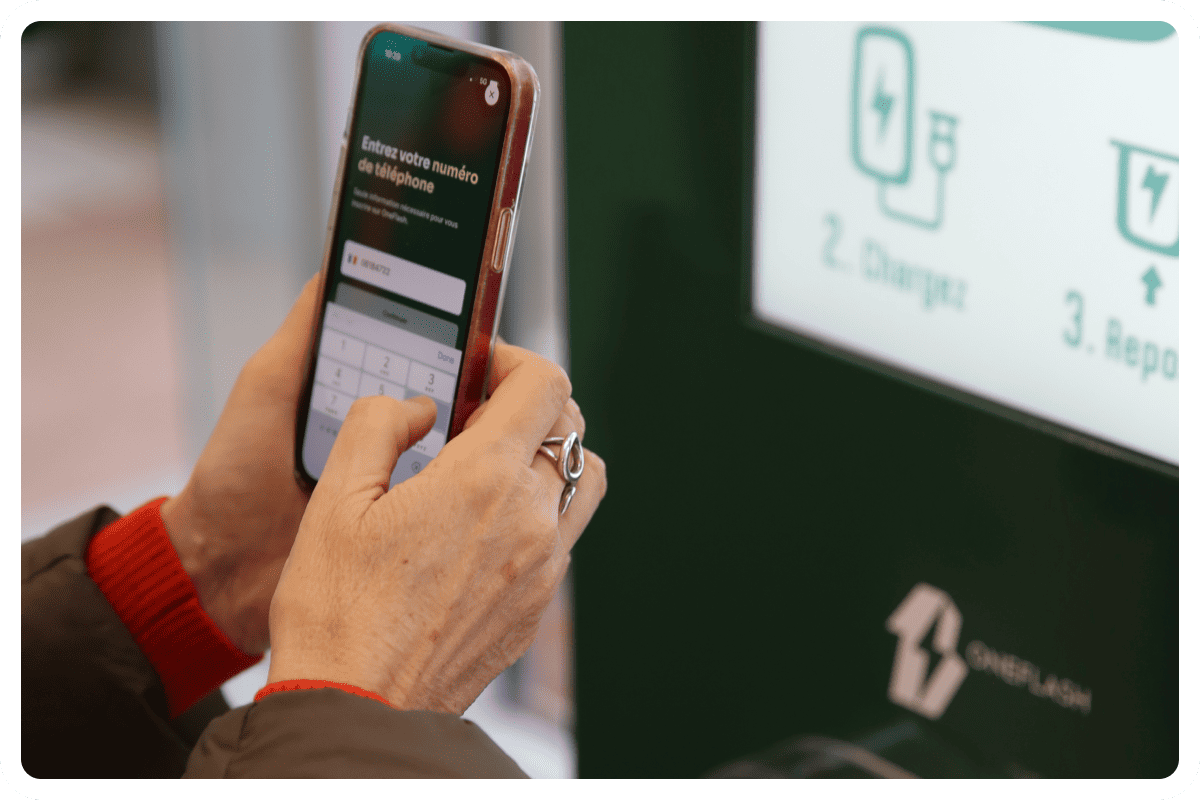
Marketing activation: turning every interaction into an engagement lever for your brand
.jpeg)
Phone lockers: the limits and the modern alternative
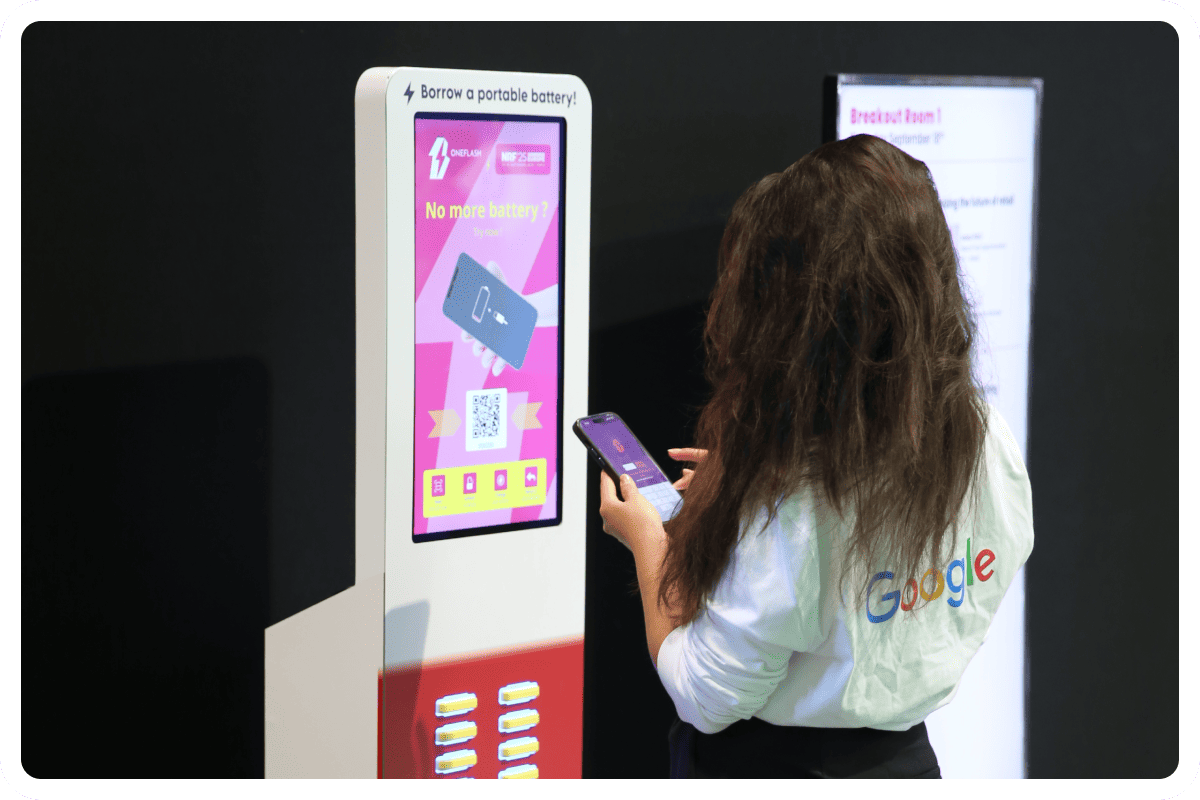
Charging stations in conference centres: equipping an event

Charging stations in theme parks: improving the visitor experience all day long
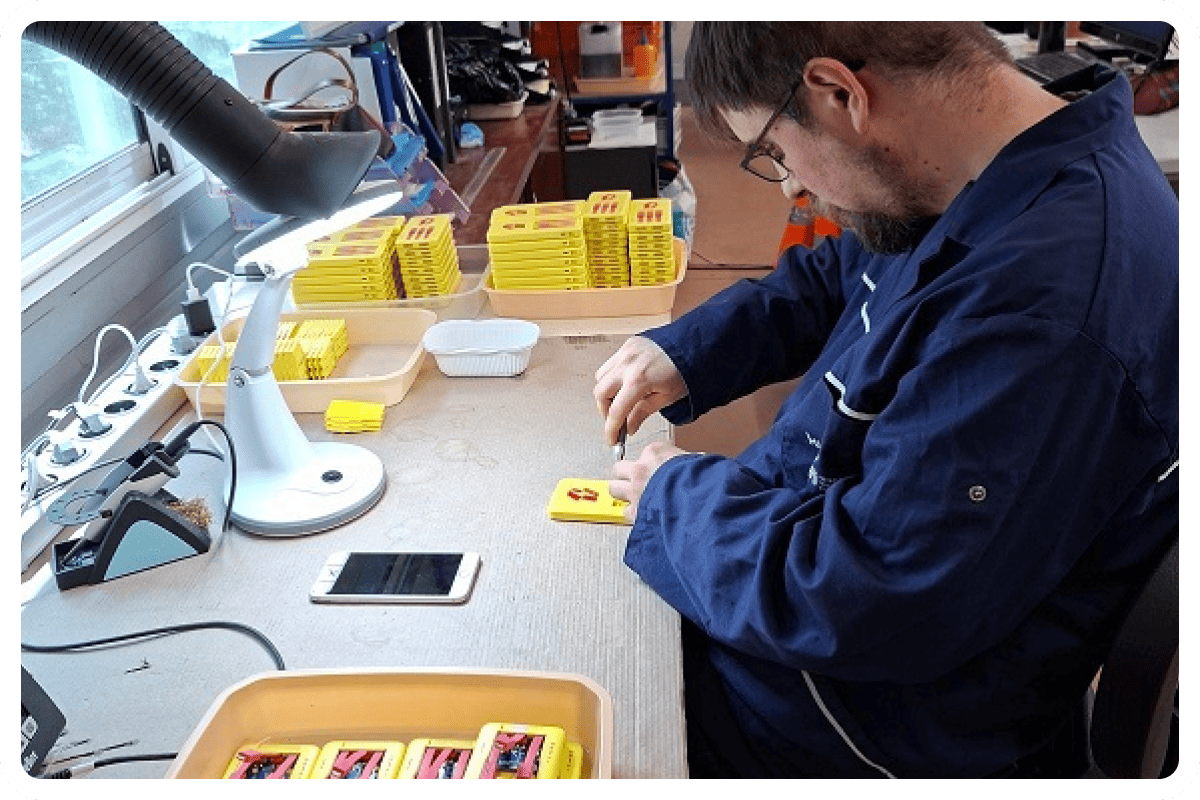
CSR approach: the mobile charging station, a concrete lever for businesses welcoming the public
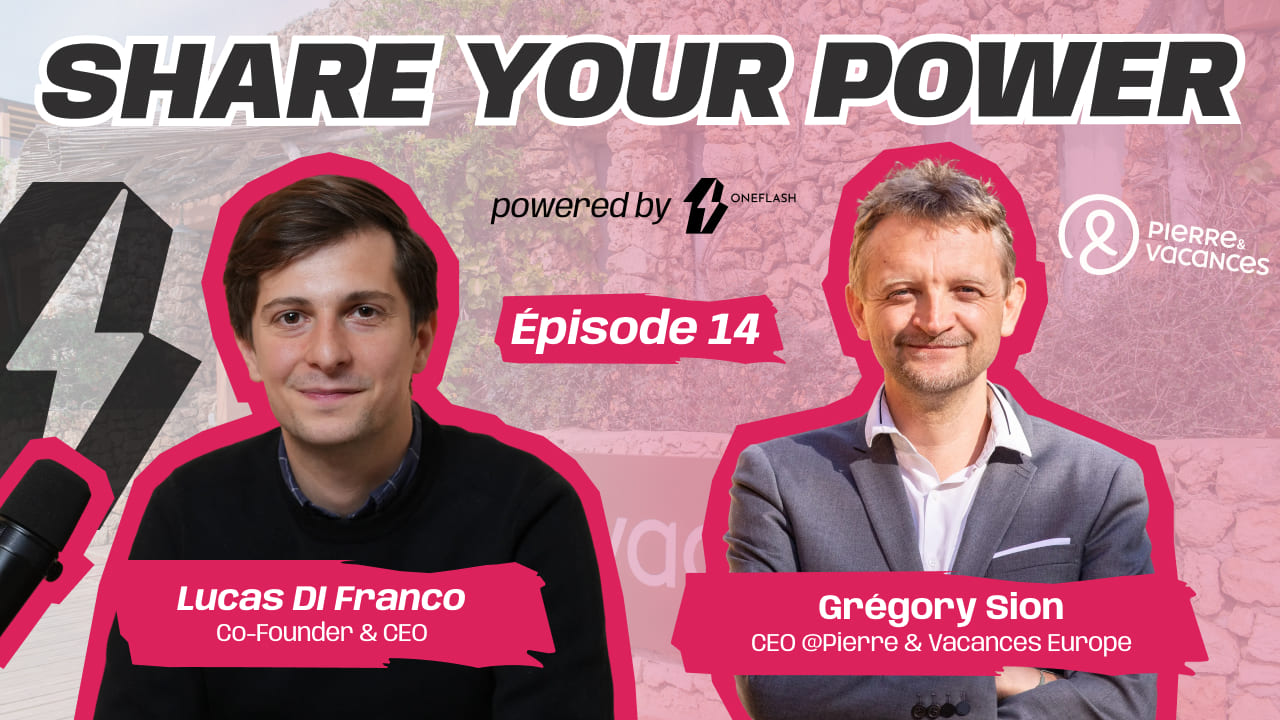
Grégory Sion (Pierre & Vacances): Share Your Power - Episode 14
Sébastien Manceau (European Camping Group): Share Your Power - Episode 13
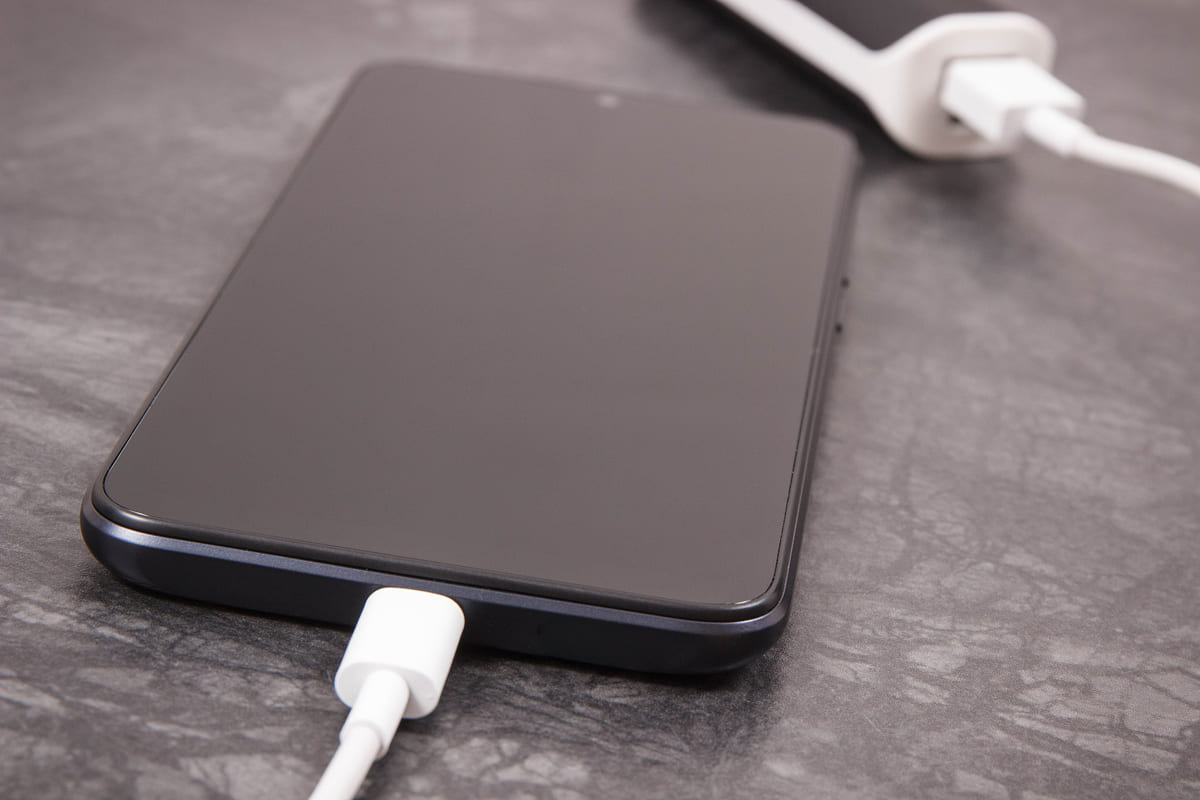
Mobile charging: every way to charge your phone easily
Dominique Thillaud (Compagnie des Alpes): Share Your Power - Episode 12
.jpeg)
Charging stations: the complete guide to choosing

Mike Hadjadj (La Retail Tech): Share Your Power - Episode 11
%2520(1).jpeg)
USB fast charging: the complete guide
Antoine de Tavernost (Auditoire): Share Your Power - Episode 10
Charging station rental: the complete guide
Power banks for mobile devices: the complete guide
Ask Jamy! How does a power bank work?
In-store customer experience tools: the levers to activate

Are portable power banks dangerous?
The best power bank station services